

Introduction to Coaching
Coaching is a powerful tool for personal and professional development, enabling individuals to unlock their potential and achieve their goals. Whether you are a manager, leader, or professional coach, mastering essential coaching skills is crucial to effectively support your team or clients on their growth journey. The coaching skill set involves more than just giving advice—it requires guiding individuals to discover their own solutions and build confidence.
Effective coaching conversations rely on a coaching approach that emphasizes active listening, empathy, and a non-judgmental stance. This approach creates a welcoming environment where clients feel safe to explore their challenges, aspirations, and opportunities for growth. Key coaching skills such as building rapport, establishing trust, and using clear, effective communication are foundational to fostering meaningful coaching relationships that inspire change.
What are coaching skills?
Coaching skills refer to the core competencies and behaviors that enable a coach to effectively guide and support clients or team members. These skills include active listening, powerful questioning, empathy, goal setting, providing constructive feedback, and fostering self-awareness. Mastery of these skills allows coaches to create a safe space for exploration, encourage critical thinking, and empower individuals to achieve personal and professional growth.
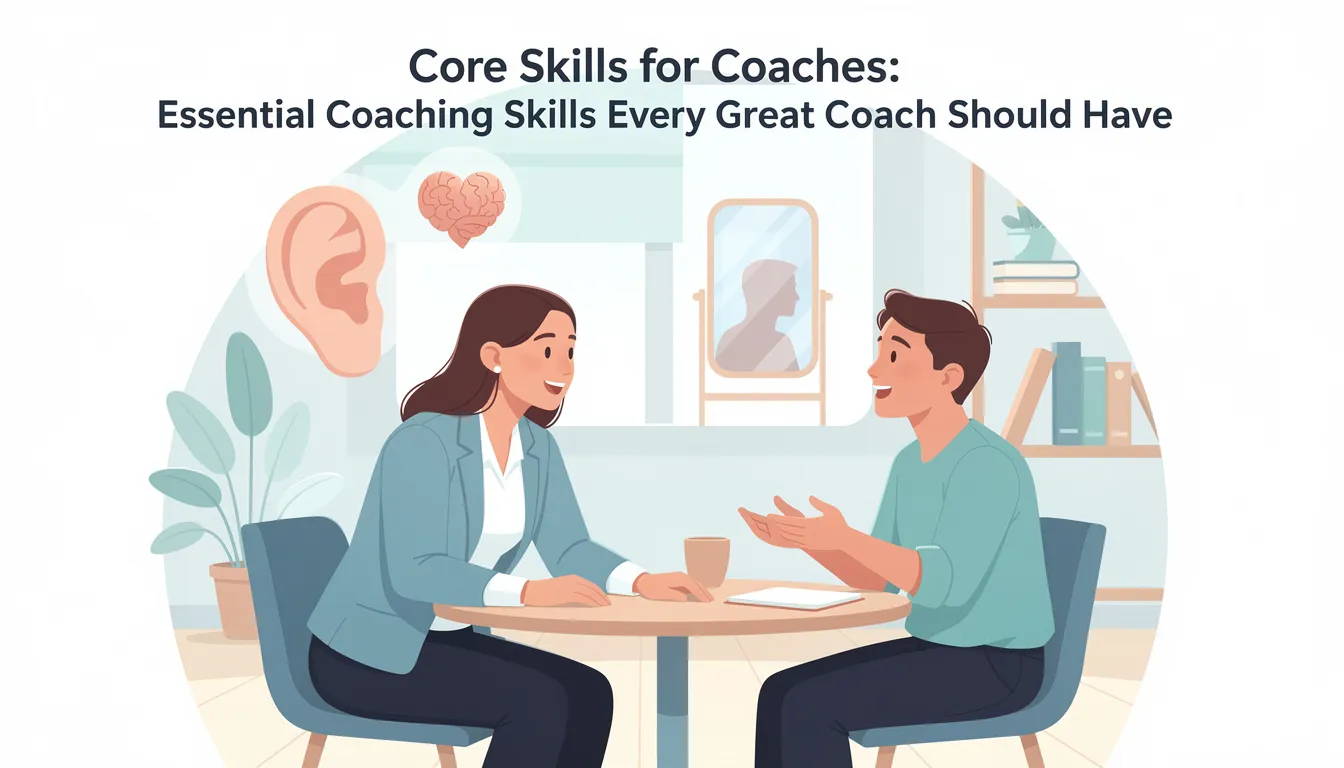
Core Skills for Coaches: Essential Coaching Skills Every Great Coach Should Have
Active Listening
Core skills for coaches include active listening, which enables coaches to fully focus on the client’s words, tone, and body language, providing a deeper level of understanding that goes beyond just hearing the spoken message.
Emotional Intelligence
Emotional intelligence allows coaches to recognize and manage both their own emotions and those of their clients. This skill is vital for navigating sensitive topics and building empathy, which strengthens the coaching bond.
Self-Awareness
Self-awareness and reflective practice help coaches remain objective and professional, avoiding biases that could hinder the coaching process.
In addition to these core skills, great coaches excel at:
-
Asking powerful, open-ended questions that encourage clients to think critically and explore new possibilities.
-
Providing constructive feedback framed as a growth opportunity rather than criticism, fostering self-reflection and continuous development.
What are the 5 C's of coaching?
The 5 C's of coaching represent core competencies that contribute to successful coaching relationships:
-
Connection: Establishing trust and rapport with clients.
-
Curiosity: Demonstrating genuine interest and asking powerful questions.
-
Clarity: Helping clients gain clear insights and set focused goals.
-
Commitment: Encouraging clients to take ownership of their growth and actions.
-
Challenge: Supporting clients to step outside their comfort zones and embrace new possibilities.
What are the 7 pillars of coaching?
The 7 pillars of coaching outline foundational principles for effective coaching:
-
Building rapport and trust
-
Active listening
-
Powerful questioning
-
Goal setting and action planning
-
Providing constructive feedback
-
Emotional intelligence
-
Encouraging reflection and self-awareness
These pillars collectively support a coaching process that is client-centered, empowering, and results-oriented.
Effective Communication: The Heart of a Coaching Approach

Verbal and Non-Verbal Communication
Effective communication is critical in coaching, encompassing both verbal and non-verbal elements. Coaches must use clear, concise language tailored to the client’s needs while maintaining a solutions-focused mindset. Non-verbal cues such as facial expressions, gestures, and tone of voice play a significant role in building rapport and trust.
Adapting Communication Styles
A flexible coaching approach requires adapting communication styles to suit different clients and situations. This might mean simplifying complex concepts, using analogies, or adjusting the pace of conversations to ensure understanding. Empathy and patience are key components of effective communication, enabling coaches to connect with clients on a deeper level and foster a welcoming environment for exploration and learning.
What are the 5 coaching techniques?
The five key coaching techniques commonly used to facilitate impactful coaching sessions include:
-
Active Listening: Fully engaging with the client’s communication to understand their perspective.
-
Powerful Questioning: Asking open-ended questions that promote reflection and insight.
-
Goal Setting: Collaborating to define clear and motivating objectives.
-
Providing Feedback: Offering constructive, growth-oriented feedback to support development.
-
Accountability: Encouraging clients to commit to actions and follow through on plans.
What is coaching ability?
Coaching ability refers to the capacity and skill set a coach possesses to effectively facilitate growth and transformation in others. It encompasses not only technical coaching skills but also interpersonal qualities such as empathy, patience, and adaptability. A coach’s ability influences how well they can engage clients, foster trust, and guide them through challenges toward their goals.
Is it coachability or coach ability?
While both terms relate to coaching:
-
Coachability describes a client’s openness and willingness to receive coaching, learn, and make changes.
-
Coaching ability refers to the coach’s skills and competencies in delivering effective coaching.
Both are essential for a successful coaching relationship.
Building Rapport: Essential Skills for Establishing Trust in Coaching

Building rapport is a critical aspect of effective coaching and involves establishing trust and a strong connection with clients. This foundation allows clients to feel safe sharing their thoughts, feelings, and challenges openly. Essential coaching skills for building rapport include:
-
Active listening
-
Empathy
-
Genuine interest in the client’s well-being
A great coach uses reflective practice to mirror the client’s words and emotions, validating their experiences and encouraging deeper self-reflection. Consistency, authenticity, and confidentiality are also vital for maintaining trust throughout the coaching relationship. When rapport is established, clients are more likely to engage fully in coaching sessions, leading to better outcomes and sustained personal growth.
How would you describe your coaching skills?
Describing coaching skills involves highlighting competencies such as:
-
Effective communication
-
Active listening
-
Emotional intelligence
-
Goal setting
-
Ability to foster trust and motivation
A skilled coach is adaptable, empathetic, and able to challenge clients constructively while providing support. They create a welcoming environment that encourages openness and self-discovery.
Emotional Intelligence: A Core Skill for Effective Coaching
Emotional intelligence is a core skill that enhances a coach’s ability to understand and respond to the emotional dynamics within coaching sessions. Coaches with high emotional intelligence can detect subtle emotional cues through facial expressions, body language, and tone, allowing them to address unspoken concerns and foster a supportive environment.
This skill also helps coaches manage their own emotional responses, maintaining professionalism and objectivity. By modeling emotional intelligence, coaches encourage clients to develop their own emotional awareness, improving stress management, interpersonal relationships, and decision-making. Emotional intelligence is indispensable for navigating complex coaching conversations with sensitivity and insight.
Essential Skills: Goal Setting and Facilitating Personal Growth
Goal setting is one of the most important essential skills in coaching. It involves collaborating with clients to define clear, realistic, and motivating objectives that align with their values and aspirations. Effective goal setting provides direction and focus, enabling clients to measure their progress and stay committed to their development.
A great coach guides clients through the goal-setting process using coaching models such as the GROW model, which stands for:
|
Step |
Description |
|---|---|
|
Goal |
Define what the client wants to achieve. |
|
Reality |
Explore the current situation and context. |
|
Options |
Consider possible strategies and alternatives. |
|
Will |
Commit to specific actions and next steps. |
This structured approach helps clients explore their current situation, consider new possibilities, and commit to actionable steps. Coaches encourage flexibility in goals to adapt to changing circumstances while maintaining forward momentum.
Facilitating personal growth through goal setting also includes celebrating achievements and learning from setbacks. By fostering a growth mindset, coaches empower clients to embrace challenges as opportunities for learning and transformation.
What does effective coaching mean?
Effective coaching means facilitating a process where clients are empowered to unlock their potential, develop new skills, and achieve meaningful goals. It involves a collaborative relationship built on trust, active listening, emotional intelligence, and the use of powerful questioning. Effective coaching balances challenge and support, encourages self-reflection, and leads to lasting personal and professional growth.
What are the 7 P's of coaching?
The 7 P's of coaching are guiding principles that help structure coaching interactions:
-
Purpose: Clarifying the reason for coaching.
-
Presence: Being fully attentive and engaged.
-
Partnership: Collaborating as equals.
-
Process: Following a structured coaching framework.
-
Power: Empowering the client.
-
Progress: Tracking development and achievements.
-
Perseverance: Encouraging commitment and resilience.
Active Listening: A Fundamental Coaching Skill
Practicing Active Listening
Active listening is one of the most critical coaching skills required to foster effective communication and build a strong coaching relationship. Unlike passive hearing, active listening involves fully engaging with the client’s words, tone, and non-verbal cues such as facial expressions and body language. This deep level of attention allows the coach to gain a better understanding of the client’s perspective, emotions, and underlying concerns.
A good coach practices active listening by:
-
Being fully present in the moment
-
Avoiding distractions
-
Demonstrating genuine interest and empathy
This skill helps create a welcoming environment where clients feel truly heard and valued, which encourages openness and honesty in coaching conversations.
Benefits of Active Listening
Active listening also involves reflecting and paraphrasing the client’s words to confirm understanding and encourage further exploration. By asking open-ended questions based on what the client shares, coaches guide clients to think critically and discover new insights. This process not only supports personal development but also enhances problem-solving abilities.
Additionally, active listening is essential for recognizing subtle emotional cues and shifts in the client’s mood, enabling the coach to respond with appropriate emotional intelligence. Through this skill, coaches build trust and rapport, laying the foundation for meaningful and productive coaching sessions.
Mastering active listening is a continuous practice that significantly enhances a coach’s ability to support clients effectively, making it a core competency in any coaching style or technique.
What skills does a good coach need?
A good coach needs a combination of interpersonal and technical skills including:
-
Active listening
-
Empathy
-
Emotional intelligence
-
Effective communication
-
Powerful questioning
-
Goal setting
-
Providing constructive feedback
-
Adaptability
-
Ability to build rapport and trust
These skills enable a coach to foster a supportive environment that encourages growth and accountability.
What are the skills and qualities of an effective coach?
Effective coaches possess skills such as:
-
Active listening
-
Emotional intelligence
-
Powerful questioning
-
Goal setting
Qualities include:
-
Empathy
-
Patience
-
Authenticity
-
Adaptability
-
Growth mindset
They are skilled at building trust, providing constructive feedback, and motivating clients to achieve their full potential.
What are the 9 essential skills?
The 9 essential coaching skills often highlighted include:
-
Active Listening
-
Powerful Questioning
-
Emotional Intelligence
-
Goal Setting
-
Providing Feedback
-
Building Rapport
-
Self-Awareness
-
Flexibility and Adaptability
-
Accountability and Follow-up
Effective Coaching: Integrating Essential Coaching Skills for Lasting Impact
Effective coaching integrates all essential coaching skills into a cohesive coaching approach that supports clients in achieving meaningful and lasting change. This includes:
-
Being fully present during coaching sessions
-
Practicing active listening
-
Using emotional intelligence
-
Applying powerful questioning techniques
A great coach balances empathy with challenge, encouraging clients to step outside their comfort zones while providing a safe space for exploration. Constructive feedback is delivered thoughtfully to promote self-awareness and continuous improvement. Building rapport and trust remains central throughout the coaching journey, enabling open and honest communication.
By mastering these essential coaching skills, coaches can inspire clients to unlock their potential, solve problems creatively, and achieve their goals. Effective coaching not only benefits individuals but also enhances team dynamics, leadership development, and organizational success.
What are the 5 P's of leadership?
The 5 P's of leadership are key qualities that effective leaders embody:
-
Purpose: Having a clear vision and direction.
-
Passion: Demonstrating enthusiasm and commitment.
-
People: Valuing and empowering team members.
-
Performance: Driving results and accountability.
-
Persistence: Showing resilience and determination.
What are the qualities of a leadership coach?
A leadership coach possesses qualities such as:
-
Strong emotional intelligence
-
Excellent communication skills
-
Ability to build trust and rapport
-
Strategic thinking
-
Empathy
-
Capability to challenge and support leaders
They help leaders develop self-awareness, enhance their leadership presence, and improve their decision-making and problem-solving abilities.
Frequently Asked Questions (FAQs) About Coaching Skills
What are coaching skills?
Coaching skills are the essential abilities and behaviors that enable a coach to effectively guide, support, and empower clients or team members. These skills include active listening, powerful questioning, empathy, goal setting, providing constructive feedback, and fostering self-awareness. Mastery of coaching skills allows coaches to create a safe and trusting environment where clients can explore challenges, develop new insights, and achieve meaningful personal and professional growth.
Why are coaching skills important?
Coaching skills are important because they form the foundation of effective coaching relationships. They help coaches build rapport and trust, communicate clearly, and facilitate critical thinking and problem-solving. Strong coaching skills empower individuals to unlock their potential, overcome obstacles, and take ownership of their development. For leaders and managers, these skills improve team engagement, performance, and retention by fostering a supportive and growth-oriented workplace culture.
What are the key coaching skills every coach should master?
Key coaching skills every coach should master include:
-
Active listening
-
Emotional intelligence
-
Powerful questioning
-
Goal setting
-
Providing constructive feedback
-
Building rapport
-
Adaptability
These skills enable coaches to understand clients deeply, guide them through reflection and discovery, and support them in taking effective action toward their goals.
How does active listening contribute to effective coaching?
Active listening is fundamental to effective coaching because it involves fully focusing on the client’s words, tone, and non-verbal cues such as facial expressions and body language. This deep engagement allows the coach to understand the client’s perspective, emotions, and underlying concerns. Active listening helps build trust and creates a welcoming environment where clients feel heard and valued, encouraging openness and honest communication.
What role does emotional intelligence play in coaching?
Emotional intelligence in coaching enables the coach to recognize and manage both their own emotions and those of their clients. This skill is essential for navigating sensitive topics, responding empathetically, and maintaining professionalism. Coaches with high emotional intelligence can detect subtle emotional cues and adjust their approach accordingly, fostering a supportive and insightful coaching relationship.
How can goal setting enhance the coaching process?
Goal setting enhances the coaching process by providing clear direction and focus for clients. It involves collaborating with clients to define realistic, motivating objectives that align with their values and aspirations. Effective goal setting helps clients measure progress, stay committed, and maintain momentum. Coaching models like GROW (Goal, Reality, Options, Will) provide structured frameworks to guide this process.
What is the difference between coachability and coaching ability?
-
Coachability refers to the client’s openness and willingness to receive coaching, learn, and make changes.
-
Coaching ability refers to the coach’s skills and competencies in delivering effective coaching.
Both are essential for a successful coaching relationship: the coach must have the ability to guide, and the client must be coachable to benefit fully from the process.
How do coaches build rapport with clients?
Coaches build rapport by:
-
Establishing trust
-
Demonstrating empathy
-
Showing genuine interest
-
Creating a safe, non-judgmental environment
Techniques such as reflective listening, mirroring the client’s language and emotions, and maintaining confidentiality contribute to a strong coaching bond. Building rapport encourages clients to engage fully and fosters open, honest communication.
What are some common coaching techniques?
Common coaching techniques include:
-
Active listening
-
Powerful questioning
-
Goal setting
-
Providing constructive feedback
-
Accountability
These techniques help coaches facilitate meaningful conversations, encourage client self-reflection, and support action planning and follow-through.
How can coaching skills benefit leaders and managers?
Coaching skills benefit leaders and managers by enhancing their ability to:
-
Motivate teams
-
Manage conflict
-
Develop talent
Skills such as effective communication, empathy, active listening, and providing feedback create a positive workplace culture and improve employee engagement and performance. Leaders who coach effectively foster resilience, adaptability, and continuous learning within their teams.
Can coaching skills be learned and developed?
Yes, coaching skills can be learned and developed through training, practice, and reflective learning. Many coaches enhance their skills by attending workshops, obtaining certifications, engaging in mentorship, and gaining real-world coaching experience. Continuous professional development is key to mastering and refining essential coaching skills.
What makes an effective coach?
An effective coach combines strong interpersonal skills—such as empathy, active listening, and emotional intelligence—with technical coaching competencies like powerful questioning, goal setting, and providing feedback. They create a trusting, supportive environment, challenge clients constructively, and adapt their coaching style to meet individual client needs. A good coach fosters client growth, accountability, and meaningful change.
How does a coaching approach differ from traditional teaching or mentoring?
A coaching approach differs from traditional teaching or mentoring by focusing on facilitating the client’s own discovery and problem-solving rather than providing direct advice or solutions. Coaches use open-ended questions and active listening to empower clients to find their own answers and develop self-efficacy. This client-centered approach encourages autonomy, reflection, and sustainable personal growth.
What is the GROW model and how is it used in coaching?
The GROW model is a widely used coaching framework that guides clients through four stages:
|
Step |
Description |
|---|---|
|
Goal |
Define what the client wants to achieve. |
|
Reality |
Assess the current situation and context. |
|
Options |
Explore possible actions and alternatives. |
|
Will |
Commit to specific steps and actions. |
It helps clients clarify their objectives, assess their current situation, explore possible actions, and commit to specific steps. The model provides structure to coaching conversations, making goal setting and problem-solving more effective and focused.
How important is feedback in coaching?
Feedback is vital in coaching as it helps clients gain awareness of their strengths and areas for improvement. Constructive feedback, when delivered thoughtfully and framed as an opportunity for growth, encourages self-reflection and motivates positive change. Effective feedback is specific, timely, and balanced, supporting clients’ development without judgment.
How can coaching skills be implemented in the workplace?
Coaching skills can be implemented in the workplace by:
-
Training managers and leaders to adopt a coaching mindset
-
Fostering open communication
-
Embedding coaching practices into regular interactions such as one-on-ones and performance reviews
Creating a culture that values feedback, continuous learning, and psychological safety supports the effective use of coaching skills at all organizational levels.
What are the benefits of developing coaching skills?
Developing coaching skills benefits individuals and organizations by:
-
Improving communication
-
Enhancing relationships
-
Fostering a growth mindset
-
Increasing engagement and productivity
For coaches and leaders, these skills enable more effective support of personal and professional development, leading to better decision-making, resilience, and overall success.
How can I start improving my coaching skills?
To start improving your coaching skills, focus on:
-
Practicing active listening
-
Asking open-ended questions
-
Providing constructive feedback
Seek training opportunities, observe experienced coaches, and engage in reflective practice to evaluate and refine your approach. Building self-awareness and emotional intelligence will also enhance your effectiveness as a coach.

0 comments