

Introduction
Executive coaching in London offers senior leaders a structured, goal-oriented partnership focused on unlocking leadership potential and enhancing performance in one of the world’s most demanding business environments. Whether you’re navigating a complex promotion transition, seeking to strengthen your leadership presence, or looking to build high-performing teams across global operations, London’s executive coaching landscape provides specialised support tailored to the unique pressures of leading in this international hub. Executive coaching can positively impact not only your professional growth but also your personal life, supporting overall well-being and life balance.
This article covers the full spectrum of executive coaching services available in London, from executive presence development to cross-cultural leadership support. The target audience includes C-suite executives, senior directors, VPs, and emerging leaders preparing for senior roles within FTSE-listed companies, financial services, tech scale-ups, and public sector organisations. We focus specifically on London-based coaching engagements and the particular challenges facing business leaders operating in this fast-paced, internationally diverse market.
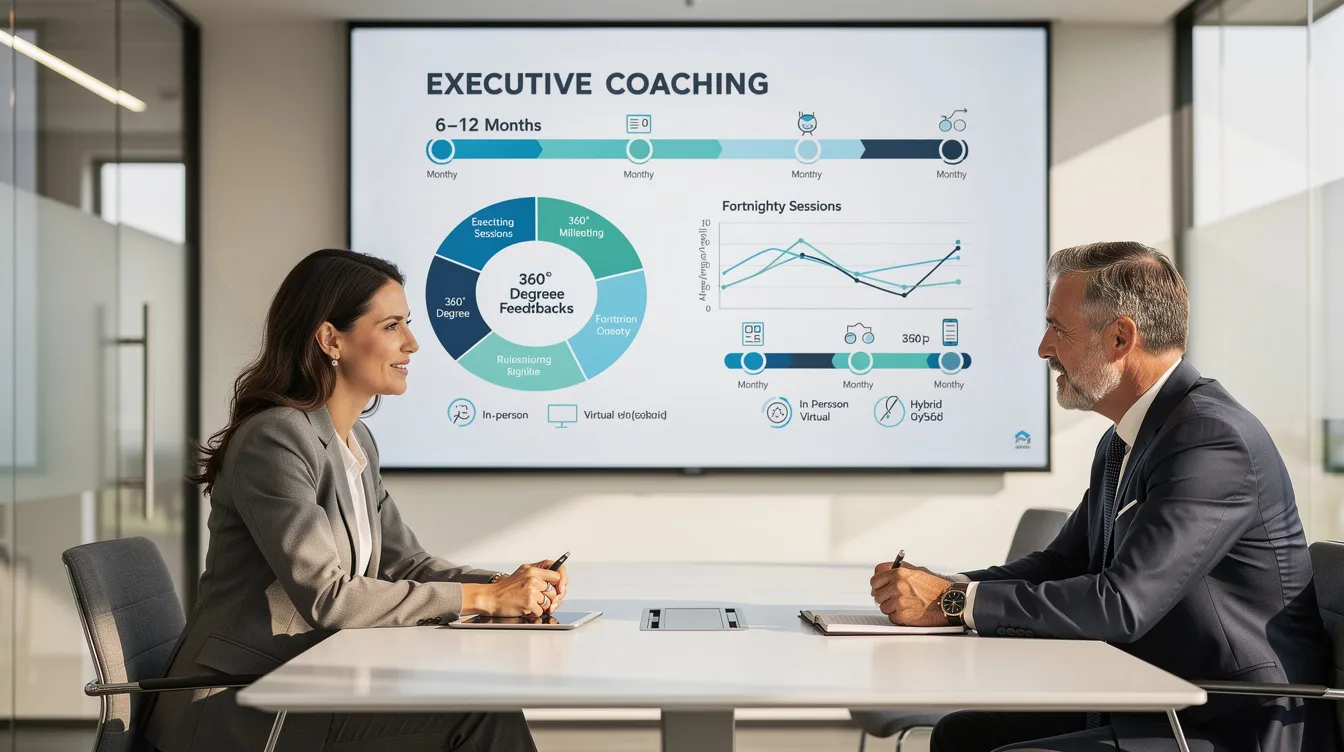
Executive coaching is a structured, goal-oriented partnership focused on unlocking leadership potential and enhancing performance, empowering leaders to find their own solutions through reflection and challenge. Coaches do not provide all the answers; instead, they act as a partner in the leader’s personal development journey, guiding self-discovery and growth. Typical engagements run 6-12 months, combining regular coaching sessions (monthly or fortnightly), diagnostic tools like 360-degree feedback and psychometric profiles, and flexible delivery formats including in-person, virtual, and hybrid options.
By reading this article, you will gain:
-
A clear understanding of London’s executive coaching landscape and how it differs from other development approaches
-
Knowledge of the specific types of executive coaching services available to senior executives
-
Practical guidance on choosing a great coach with relevant credentials and industry experience
-
Realistic expectations about investment ranges, session formats, and measurable outcomes
-
Insights into common challenges facing London leaders and how coaching addresses them
-
An understanding of how executive coaching supports personal development and can positively impact your life beyond the workplace
Understanding Executive Coaching in London

Executive coaching provides a confidential space for leaders to think clearly, navigate complexity, and rediscover the confidence and presence needed to lead effectively. Unlike consulting, which delivers external expertise and prescribed solutions, or mentoring, where a mentor offers personal guidance and shares their experience to support leadership development and personal growth, executive coaching facilitates self-awareness, behavioural change, and the development of a leader’s own solutions through powerful questioning and supported experimentation. Coaching differs from mentoring by focusing on enabling clients to find their own answers rather than providing direct advice.
In London’s competitive business environment, this distinction matters significantly. Most senior leaders already have access to consultants and mentors. What they often lack is reflective space, accountability, and the structured support needed to drive lasting behavioural change. A well-established coaching practice provides a structured, reflective, and supportive framework for ongoing development. Coaching serves as a valuable partnership for leaders seeking clarity, deepening self-awareness, and gaining new perspective on their challenges and opportunities, capitalising on opportunities in their leadership roles.
The London Executive Coaching Landscape

London remains one of the leading global hubs for executive leadership coaching, with a dense supply of high-calibre providers ranging from boutique practices led by former CEOs and board directors to established leadership advisory firms and peer-group coaching networks. Professional bodies including the ICF (International Coaching Federation) and EMCC (European Mentoring & Coaching Council) set standards that help organizations and individuals identify credentialed professionals.
The business environment in London is uniquely demanding. Financial services, tech, legal, creative industries, international NGOs, and government all operate here, often with global reach and complex stakeholder ecosystems. Executives face specific regulatory, cultural, and operational pressures that local coaching practices address. These include navigating matrix structures, managing cross-border teams, handling regulatory volatility, and meeting elevated expectations for leadership presence and strategic thinking. Coaching senior leaders in this context requires a tailored approach that goes beyond technical expertise, focusing on developing emotional intelligence, strategic influence, and the personal growth necessary for impactful executive leadership.
Who Benefits from Executive Coaching in London

The primary beneficiaries include CEOs, CFOs, COOs, senior directors, and VPs within FTSE-listed companies, private equity portfolio organisations, and rapidly scaling technology businesses. These leaders often carry the weight of significant responsibility, making effective support essential. Emerging leaders being prepared for promotion transitions also represent a significant client base, as organisations recognise the value of coaching support during critical career inflexion points.
London-based executives face particular leadership challenges: managing cross-cultural teams, navigating complex stakeholder relationships with investors, regulators, and global customers, and balancing global responsibilities with local team needs. These pressures drive demand for coaching services that specialise in transitions, executive presence, cross-cultural leadership, and board effectiveness—connecting directly to the specific coaching offerings available in this market, and helping leaders unlock their full potential during critical career transitions.
Types of Executive Coaching Services Available in London
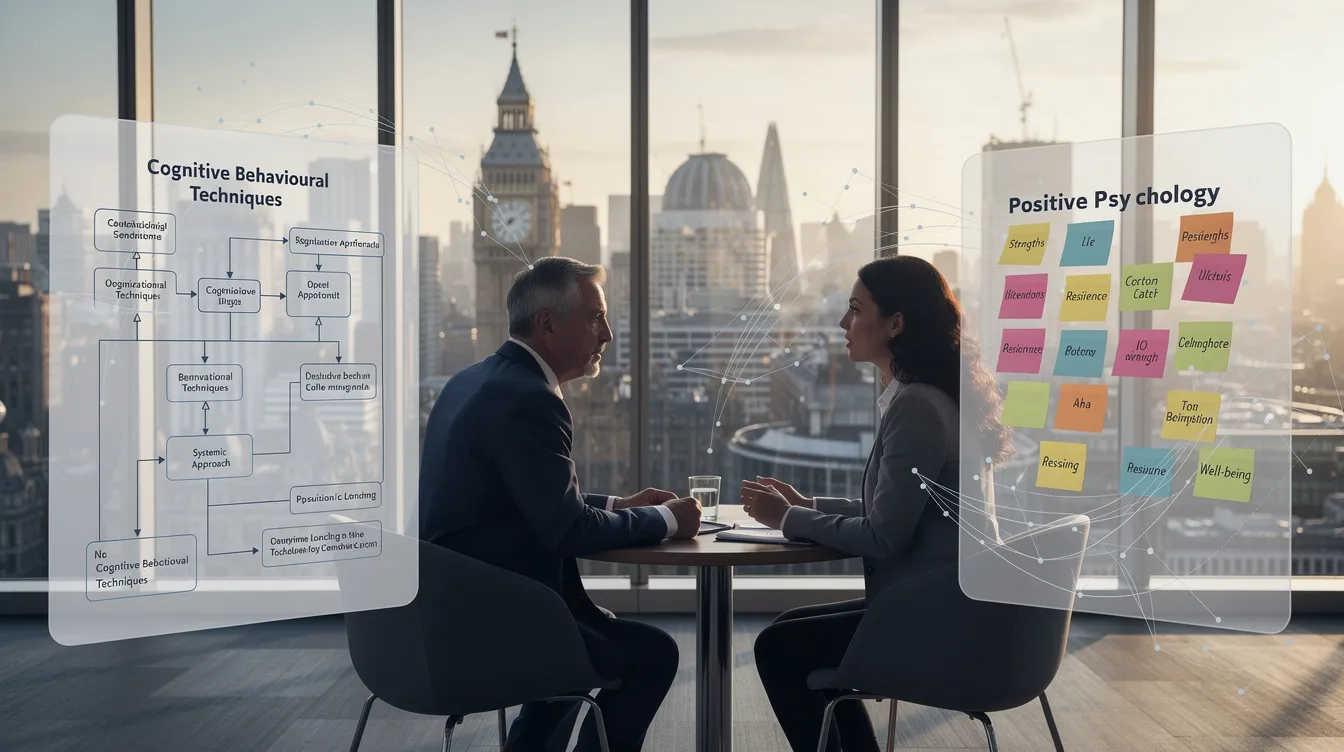
Building on this foundational understanding of London’s coaching landscape, several specialised coaching services address the distinct needs of senior executives operating in this environment. Each approach combines evidence-based methodologies, including cognitive behavioural techniques, positive psychology, and systemic approaches to enhance leadership skills. A structured coaching practice provides a reflective and supportive framework that supports ongoing personal development for senior leaders, encouraging deeper self-awareness and growth beyond surface-level skills.
Executive Presence and Leadership Impact Coaching
Leadership presence coaching focuses on building gravitas, influence, and visibility in London’s competitive business environment. This specialisation addresses how leaders show up in board meetings, stakeholder communications, media engagements, and cross-cultural negotiations. Coaches help refine communication, decision-making, and strategic thinking, thereby enhancing leadership skills in high-stakes interactions. Gaining new perspective is a key outcome of executive presence coaching, enabling leaders to approach challenges with greater clarity and a broader outlook.
Specific applications include coaching for presentations to investors and boards, developing influence without formal authority, and strengthening communication skills in complex stakeholder environments. The coaching experience typically involves behavioural profiling using personality assessments, 360-degree feedback, video practice of presentations, role plays, and storytelling development. Many coaching programs in London are designed to be flexible, offering both in-person and virtual sessions to accommodate the busy schedules of senior leaders.
Typical duration ranges from 3-6 months, with sessions every 2-4 weeks. Formats include one-on-one coaching, small group coaching, and peer coaching, with London-based coaches often charging premium rates for this specialisation, given the direct impact on career advancement and organisational influence.
Transition and Promotion Coaching
Transition coaching supports executives stepping into a new role, whether through internal promotion to director-level or C-suite positions, or joining a new organisation entirely. A specific focus is the first 90 days: establishing priorities, managing expectations, mapping stakeholders, and building early credibility.
Use cases include external hires adjusting to London corporate culture, internal promotions requiring rapid capability development, and leaders taking on expanded global responsibilities from London headquarters. The coaching journey typically involves intense engagement during the early months, then tapering as the executive establishes footing. Coaches use tools such as psychometrics to help leaders identify blind spots, understand their impact on others, and recognise cognitive biases that might impede their success in the transition.
This connects directly to presence coaching: leaders in transition often need simultaneous support for both establishing their new leadership role and projecting the confidence and competence that stakeholders expect.
Cross-Cultural and International Leadership Coaching
London is home to a variety of coaching services that cater to senior leaders operating in its uniquely international environment. Cross-cultural coaching develops cultural intelligence, enabling leaders to manage diverse teams effectively, negotiate across cultural boundaries, and adapt leadership styles for global contexts.
This specialisation supports expatriate executives, non-native English speakers taking on UK-based roles, and London leaders overseeing global functions across multiple time zones. Coaching often includes a focus on diversity, inclusion, and equity, supporting BAME leaders and internationally mobile executives navigating complex organisational dynamics.
Coaching strengthens empathy and interpersonal effectiveness, allowing leaders to manage conflict with compassion and build high-performing, resilient teams. Emotional intelligence coaching focuses on enhancing self-awareness and relational impact, particularly in high-pressure situations—essential capabilities for leaders working across cultural boundaries.
These coaching specialisations can be combined within a single engagement or accessed sequentially as leadership challenges evolve, creating a foundation for understanding the practical process of how coaching works in London.
How Executive Coaching Works in London
With a clear picture of available coaching services, executives and their organisations can understand the practical process to plan effective engagements. Tailored coaching programs often combine feedback, goal-setting, and regular sessions to ensure lasting behavioural change. Rather than providing all the answers, the coaching process focuses on asking powerful questions and guiding clients toward self-discovery and growth.
The London Executive Coaching Process
A three-way meeting is held among the coach, the executive (coachee), and the organisational sponsor to align stakeholder goals. This ensures clarity about expectations, boundaries of confidentiality, and success measures from the outset.
-
Initial consultation and needs assessment (30-60 minutes): The first session establishes chemistry, explores context, and identifies preliminary focus areas. The coach gathers data through 360-degree feedback and psychometric profiles to identify development areas and assess the executive’s impact on others.
-
Goal setting and coaching agreement establishment: Specific leadership or behavioural goals are defined, along with timelines and measures of success. This creates the structure for the coaching journey and establishes accountability.
-
Regular coaching sessions (typically 60-90 minutes monthly): Sessions leverage frameworks like the GROW Model to facilitate strategic solutions devised by the leader. Coaching provides a safe space to discuss high-stakes decisions and overcome leadership challenges. Sessions may occur fortnightly during intensive periods or transitions.
-
Progress review and adjustment (quarterly check-ins): Regular reviews assess whether goals are being met and adjust focus as circumstances evolve. This might include pulse surveys or stakeholder feedback to measure development.
-
Completion and transition planning: Toward the end of engagement, consolidation of learning and ongoing action plans prepares the executive for continued growth. Some relationships extend beyond 12 months or evolve into ongoing sounding board arrangements.
Session Formats and Locations in London
London coaching services offer flexibility in delivery format, with most providers supporting multiple options to accommodate executive schedules and preferences.
|
Format |
Location Options |
Best For |
|---|---|---|
|
In-person |
Central London offices, coaching facilities (Mayfair, City), neutral venues |
Deep work, relationship building, confidential discussions |
|
Virtual |
Video conferencing from any location |
Busy schedules, international travel, and follow-up sessions |
|
Hybrid |
Combination of in-person and virtual |
Maximum flexibility, ongoing engagements, cost optimisation |
In-person sessions signal organisational investment and facilitate deeper relationship building, particularly valuable during early coaching stages or when addressing sensitive leadership challenges. Virtual coaching gained significant acceptance since 2020 and offers cost efficiency without compromising outcomes for experienced coaching relationships. Hybrid approaches combine the benefits of both, using in-person sessions for major transitions or intensive work while maintaining momentum through virtual follow-ups.
The choice of format connects directly to the common challenges facing London executives, where scheduling complexity and global responsibilities often require creative solutions.
Common Challenges and Solutions for London Executives
Executive coaching creates a confidential space for leaders to think clearly, navigate complexity, and rediscover the confidence and presence needed to lead effectively, which is particularly valuable in high-pressure environments like London’s business sector.
Managing Stakeholder Complexity in Matrix Organisations
London executives frequently navigate multiple reporting lines, cross-functional dependencies, and layered governance, including boards, advisory committees, and regulatory bodies. The solution involves influence mapping to identify critical stakeholders, communication planning to manage expectations, and clarity of roles and responsibilities across organisational boundaries.
Coaching develops political savvy and strategic thinking about stakeholder relationships. Leaders learn to prioritise relationships based on impact, manage competing demands without compromising integrity, and build coalitions that support their strategic objectives. Clients report many benefits from executive coaching, including improved stakeholder relationships and faster traction in driving strategic outcomes.
Leading Through Economic Uncertainty and Market Volatility
Economic cycles, inflation, regulatory change, and geopolitical risk create ongoing uncertainty for London business leaders. Coaching supports the development of decision-making frameworks, scenario planning capabilities, and emotional intelligence to remain grounded during volatility.
Effective emotional intelligence coaching can help leaders navigate complex challenges, improve decision-making, and enhance their influence within organisations. The approach involves mindset shifts, reframing risk perspectives, and building personal resilience. Leaders develop the capacity to maintain strategic focus while managing their own stress responses and supporting team wellbeing.
Balancing Global Responsibilities with Local Team Needs
Many London executives oversee global functions while managing locally based teams, requiring adaptation of leadership style across cultures and time zones. Solutions include strengthening delegation capabilities, developing remote leadership skills, and creating communication rhythms that ensure inclusion across distributed teams.
Coaching for emotional intelligence often involves exploring deeper self-awareness, which can lead to more thoughtful choices about time allocation and leadership presence. Leaders learn to be fully present with local teams while maintaining strategic oversight of global operations—a balance that directly determines their effectiveness and their team’s performance.
These challenges underscore the importance of selecting the right executive coach with relevant experience in London’s particular business environment.
Choosing the Right Executive Coach in London
Selecting an excellent coach requires evaluation across several dimensions: credentials, industry experience, methodology, chemistry, and practical logistics.
Research credentials: Look for ICF accreditation (ACC, PCC, or MCC levels) or EMCC accreditation (Individual Practitioner, Senior, or Master Practitioner). These credentials indicate completion of rigorous training and adherence to professional standards. The EMCC Global also accredits coaching and mentoring programs and organisations, highlighting the distinction between a mentor—who provides personal guidance and shares experience—and a coach, who facilitates self-driven growth and development.
Schedule chemistry calls: The initial consultation tests fit, integrity, and communication style. Trust and psychological safety are fundamental to effective coaching relationships. Most coaches offer complimentary chemistry sessions, allowing executives to assess whether they feel empowered to engage openly. It is also important to choose a coach who acts as a true partner in your leadership development, collaborating with you to achieve meaningful results.
Evaluate industry experience: An excellent coach should understand your specific sector—whether financial services, technology, legal, or public sector—and the particular challenges of London business, including regulation, boards, and international stakeholders. Ask about relevant client experience and request anonymised case studies.
Confirm availability and location preferences: Can the coach accommodate your schedule? Are they London-based and available for in-person sessions when needed? What flexibility exists for ad hoc support between scheduled sessions?
Discuss measurement and ROI: Behavioural auditing involves evaluating demonstrable changes in communication, presence, and team performance. Understand how progress will be assessed, whether through 360-degree feedback, stakeholder interviews, or specific performance metrics.
Related topics worth exploring include group coaching for team dynamics, broader leadership development programs, and ongoing professional growth and development opportunities beyond individual coaching.
Frequently Asked Questions
What does executive coaching cost in London?
Per-session rates typically range from £300 to £1,000+ per hour, depending on coach seniority, scope, and format. For CEO-level or highly specialised coaching, rates can exceed £1,200 per hour. Budget providers or online coaching may start at around £198 per hour, while premium 90-minute leadership coaching sessions often cost approximately £360. Total investment for high-impact programs typically ranges from £10,000 to £60,000+ over 6-12 months, depending on seniority and package scope.
How long does an executive coaching engagement typically last?
Standard programs run 6-12 months, with sessions typically monthly or fortnightly. Shorter engagements of 3 months may support specific promotion transitions or first-90-day onboarding. Some executives maintain longer-term relationships extending beyond 12 months, evolving into ongoing sounding boards or advisory arrangements as their leadership role evolves.
What qualifications should I look for in a London executive coach?
Priority credentials include ICF certification (ACC, PCC, or MCC) or EMCC accreditation. Additional qualifications such as ILM Level 7 in Coaching and Mentoring, relevant business or executive experience, and sector-specific knowledge strengthen a coach’s capability. Evidence-based approaches and formal training in psychometric assessment tools indicate methodological rigour.
Can executive coaching be arranged through my organisation?
Yes, many organisations budget for executive coaching through HR, Talent, or Learning & Development functions. Company-sponsored coaching is common for high potentials and senior leaders, often with organisations maintaining a roster of approved coaches. Individual arrangements are also possible when executives seek support independently or prefer coaches outside their organisation’s network.
How do I measure the ROI of executive coaching?
Clients report many benefits from executive coaching, including increased clarity, stronger decision-making, more confident leadership presence, increased self-awareness, improved stakeholder relationships, and faster traction in driving strategic outcomes. Measurement approaches include 360-degree feedback before and after engagement, stakeholder interviews, performance metrics, promotion success rates, and team effectiveness indicators. Behavioural auditing evaluates demonstrable changes in communication, presence, and team performance over the coaching period.
Take the Next Step with Executive Coaching
What’s the key decision or growth opportunity you’re reflecting on right now?
Navigating complexity requires more than quick fixes—it demands structured thinking and a clear path forward.
Khalil Arouni, Executive Coach & Strategic Advisor, partners with leaders to create clarity, sharpen focus, and deliver measurable outcomes.
If you’re ready to move from uncertainty to decisive action, explore how Khalil can support your next step.
Visit Khalil’s page to learn more or book a session.
For targeted problem-solving, see Solve One Business Challenge.

0 comments