

Overview of leadership roles
Leadership roles refer to the positions and responsibilities undertaken by individuals who guide, influence, and support others within an organisation or team. Unlike managers, who primarily focus on overseeing processes and maintaining operational efficiency, effective leaders inspire and motivate team members by providing a compelling vision and clear direction. This article aims to explore the essential responsibilities of a leader, the skills required to succeed in a leadership position, and practical guidance for both new and experienced leaders seeking to enhance their leadership potential. This guide is designed for aspiring, new, and current leaders who want to understand and improve their leadership responsibilities.
Key responsibilities of a leader
The primary accountabilities of a leader revolve around setting a clear vision, making informed decisions, motivating the team, managing resources, and fostering a positive work environment. Prioritizing these responsibilities by their impact ensures that leaders focus on activities that drive long-term success for both the team and the entire organisation. Delegation is a core task, enabling leaders to empower team members by assigning tasks aligned with their strengths and growth opportunities. For example, a leader might delegate project management duties to a capable team member while focusing on strategic planning and stakeholder engagement.
Setting a clear vision
A leader’s foremost responsibility is to establish and communicate a compelling vision that aligns with the organisation’s mission. This vision provides direction and purpose, helping team members understand how their individual roles contribute to broader objectives. Clear vision-setting inspires commitment and guides decision-making at all levels.
|
Vision Element |
Description |
Impact on Team |
|---|---|---|
|
Alignment with Mission |
Ensures team goals support the organization's purpose |
Creates unified direction and shared purpose |
|
Clarity |
Clear and understandable vision |
Reduces confusion and increases focus |
|
Inspiration |
Vision that motivates and excites |
Boosts morale and commitment |
|
Communicated Regularly |
Frequent updates and reminders of vision |
Keeps vision top-of-mind and relevant |
Making informed decisions
Decisive leadership involves making critical decisions, often under pressure, to maintain project momentum. Leaders gather relevant data, consult with various stakeholders, and weigh potential risks before making well-informed choices. Methods such as structured brainstorming sessions or feedback surveys help incorporate diverse perspectives, ensuring decisions are comprehensive and aligned with organisational goals. Effective leaders also remain adaptable, ready to make necessary adjustments as circumstances evolve.
|
Decision-Making Step |
Description |
Tools/Methods |
|---|---|---|
|
Data Gathering |
Collect relevant information and insights |
Surveys, Analytics, Reports |
|
Stakeholder Consultation |
Engage team and key stakeholders for input |
Meetings, Focus Groups, Brainstorming Sessions |
|
Risk Assessment |
Evaluate potential risks and mitigation strategies |
SWOT Analysis, Risk Matrices |
|
Decision Execution |
Implement the chosen course of action |
Project Plans, Communication Plans |
|
Review and Adapt |
Monitor outcomes and adjust decisions if needed |
Feedback Loops, Performance Metrics |
Motivating and inspiring the team
Leaders motivate their teams by recognizing achievements, providing constructive feedback, and fostering an inclusive environment where everyone feels valued. Understanding what drives individual team members enables leaders to tailor their approach, boosting morale and encouraging peak performance.
|
Motivation Strategy |
Description |
Example Actions |
|---|---|---|
|
Recognition |
Acknowledge individual and team achievements |
Awards, Public Praise, Personal Thank Yous |
|
Constructive Feedback |
Provide actionable and supportive performance input |
Regular One-on-Ones, Performance Reviews |
|
Inclusivity |
Foster a culture where all voices are heard |
Open Forums, Anonymous Suggestion Boxes |
|
Personalized Support |
Understand individual motivators and needs |
Career Development Plans, Flexible Work Options |
Managing resources effectively
Effective resource management includes the allocation of budgets, time, and personnel while assessing potential risks. Leaders must ensure that resources are used efficiently to meet objectives without overburdening team members, balancing short-term demands with long-term sustainability.
|
Resource Type |
Management Focus |
Best Practices |
|---|---|---|
|
Budget |
Allocate funds to priority projects |
Regular Budget Reviews, Cost-Benefit Analysis |
|
Time |
Schedule tasks to optimize productivity |
Time-Blocking, Prioritization Frameworks |
|
Personnel |
Assign roles based on skills and capacity |
Skills Mapping, Workload Balancing |
|
Risk |
Identify and mitigate resource-related risks |
Contingency Planning, Risk Monitoring |
Fostering a positive work environment
Creating a supportive and respectful workplace culture is essential for employee satisfaction and retention. Leaders promote open communication, encourage collaboration, and prioritize employee well-being to build trust and engagement.
|
Environment Aspect |
Description |
Leader's Role |
|---|---|---|
|
Open Communication |
Encourage transparency and sharing of ideas |
Regular Updates, Open-Door Policy |
|
Collaboration |
Promote teamwork and collective problem-solving |
Cross-Functional Projects, Team Workshops |
|
Employee Well-being |
Support physical and mental health |
Wellness Programs, Flexible Schedules |
|
Respect and Inclusion |
Ensure all employees feel valued and respected |
Diversity Initiatives, Anti-Discrimination Policies |

Leadership skills to develop
Successful leaders cultivate a broad range of skills, including communicating effectively, emotional intelligence, negotiation, and time management. Developing durable skills such as emotional intelligence, negotiation, and effective communication is crucial for successful leadership. Building communication skills involves active listening, clear articulation of ideas, and adapting messages to different audiences. Improving emotional intelligence helps leaders understand and manage their own emotions and empathize with team members, fostering trust and collaboration. Mastering delegation and time management allows leaders to focus on strategic priorities while supporting individual contributors in their roles.
Communication skills
Effective communication ensures that goals, deadlines, and expectations are understood by all team members. Leaders must adapt their communication styles to suit different situations, audiences, and settings to ensure their messages are clear and understood. Open communication is fundamental to building trust within a team, and leaders should prioritize sharing updates and clarifying uncertainties to maintain clarity.
|
Communication Aspect |
Description |
Leader's Actions |
|---|---|---|
|
Active Listening |
Fully concentrate and understand team members' input |
Paraphrasing, Asking Clarifying Questions |
|
Clear Articulation |
Convey messages in a straightforward manner |
Use Simple Language, Avoid Jargon |
|
Adaptability |
Tailor communication style to audience and context |
Formal Reports, Informal Chats, Visual Aids |
|
Transparency |
Share relevant information openly |
Regular Briefings, Honest Updates |
Emotional intelligence
Emotional intelligence enables leaders to recognize and regulate their emotions while understanding and empathizing with others. This skill fosters stronger interpersonal relationships, reduces conflicts, and enhances team cohesion.
|
EI Component |
Description |
Benefit to Leadership |
|---|---|---|
|
Self-awareness |
Recognizing one's own emotions and their impact |
Improved decision-making and self-control |
|
Self-regulation |
Managing emotions constructively |
Maintains professionalism under stress |
|
Empathy |
Understanding others' feelings and perspectives |
Builds trust and rapport |
|
Social Skills |
Navigating social interactions effectively |
Enhances collaboration and conflict resolution |
Negotiation and conflict resolution
Leaders often negotiate resources, deadlines, and priorities both within their teams and with external stakeholders. Effective negotiation skills help achieve mutually beneficial outcomes. Additionally, managing conflicts constructively by listening without judgment and facilitating agreements strengthens team dynamics.
|
Negotiation Stage |
Description |
Techniques |
|---|---|---|
|
Preparation |
Understand needs, goals, and limits |
Research, Setting Clear Objectives |
|
Discussion |
Exchange information and viewpoints |
Active Listening, Open Questions |
|
Bargaining |
Explore options and concessions |
Win-Win Solutions, Compromise |
|
Closure |
Agree on terms and confirm commitments |
Written Agreements, Follow-Up |
|
Conflict Resolution Step |
Description |
Leader's Role |
|---|---|---|
|
Early Identification |
Spot conflicts before escalation |
Monitor Team Dynamics, Encourage Openness |
|
Impartial Listening |
Hear all parties without bias |
Facilitate Dialogue, Remain Neutral |
|
Mediation |
Guide parties toward mutually acceptable solutions |
Suggest Alternatives, Encourage Compromise |
|
Follow-Up |
Ensure resolution is maintained |
Check-In Regularly, Address Recurrences |
Time management and delegation
Balancing multiple responsibilities requires leaders to manage their time efficiently. Delegating tasks appropriately empowers team members, develops their skills, and allows leaders to focus on strategic initiatives.
|
Time Management Technique |
Description |
Benefits |
|---|---|---|
|
Prioritization |
Focus on high-impact tasks first |
Increases productivity and reduces stress |
|
Time Blocking |
Allocate specific time slots for activities |
Enhances focus and reduces distractions |
|
Delegation |
Assign tasks to appropriate team members |
Builds skills and frees leader’s capacity |
|
Avoiding Multitasking |
Concentrate on one task at a time |
Improves quality and efficiency |
Developing durable skills
Durable skills such as emotional intelligence, negotiation, and effective communication form the foundation of successful leadership. Investing in these skills enables leaders to adapt to changing environments and sustain high performance over time.
Essential roles every leader should play
Every leader should embrace several key roles to meet diverse demands. The strategic role involves setting a clear vision and aligning team efforts with organisational objectives. The operational role focuses on driving execution and managing resources efficiently. Effective resource management includes the allocation of budgets, time, and personnel while assessing potential risks. As a coach, the leader supports team members' development through guidance and feedback. Finally, the connector role entails building relationships across various stakeholders to foster collaboration and shared goals. Recognizing when to switch between these roles is vital for addressing different challenges effectively.
|
Leadership Role |
Primary Focus |
Key Activities |
|---|---|---|
|
Strategic Leader |
Vision and long-term planning |
Setting Goals, Aligning with Mission |
|
Operational Leader |
Day-to-day execution and resource management |
Monitoring Progress, Managing Budgets |
|
Coach |
Developing team members |
Providing Feedback, Mentoring |
|
Connector |
Building relationships internally and externally |
Networking, Facilitating Collaboration |
Consider taking a focused approach to your leadership challenges—Solve One Challenge in 60 Minutes with tailored strategies that deliver clarity and measurable results.
Team leader: daily duties and practices
Team leaders are responsible for overseeing daily activities, ensuring that the team fits together well and functions smoothly. Routine practices include conducting daily check-ins to monitor progress, addressing obstacles, and providing support where needed. Regular meetings, such as weekly alignment sessions and one-on-ones, help maintain clear direction and encourage open communication. These practices create a work environment where team members feel valued and motivated to achieve high performance.
Daily check-ins and progress monitoring
Conducting brief daily meetings allows team leaders to track ongoing tasks, identify potential issues early, and adjust priorities as necessary. This practice keeps everyone aligned and accountable.
Regular meetings and one-on-ones
Weekly alignment meetings help clarify goals and share updates, while one-on-one sessions provide opportunities for personalized feedback, coaching, and understanding individual team member needs.
Encouraging open communication
Creating safe spaces for team members to voice concerns and ideas fosters collaboration and innovation. Leaders should actively listen and respond constructively to feedback.
Setting SMART goals
Setting SMART (Specific, Measurable, Achievable, Relevant, Time-bound) goals ensures clarity and focus for the team. SMART goals are objectives that are Specific, Measurable, Achievable, Relevant, and Time-bound, providing a clear framework for goal-setting. Research consistently shows groups perform best when objectives are SMART, which motivates team members to succeed. Key aspects include:
|
SMART Criteria |
Description |
Example |
|---|---|---|
|
Specific |
Clear and unambiguous goals |
Increase sales by 10% in Q3 |
|
Measurable |
Quantifiable progress indicators |
Track monthly sales numbers |
|
Achievable |
Realistic and attainable objectives |
Based on market trends and team capacity |
|
Relevant |
Aligns with broader organisational priorities |
Supports company growth strategy |
|
Time-bound |
Defined deadline for completion |
Complete by September 30 |
By following these criteria, leaders can set effective goals that guide their teams toward success.
Recognizing strengths and contributions
Regularly acknowledging team members' unique strengths and contributions can significantly uplift team spirit and encourage them to take on bigger challenges.
Conflict management and team motivation
Early identification of challenges and effective mediation can help resolve disputes before they affect productivity. Leaders are responsible for managing internal conflicts and disputes between team members, often acting as the primary mediator when disputes arise. Effective conflict management involves listening to all views without judgment and helping the team reach agreements, which can create stronger bonding and learning opportunities within the group. Effective leaders inspire confidence and optimism, which helps to keep the team's morale high, especially during challenging situations.
Identifying and addressing conflicts early
Leaders should be vigilant in spotting signs of tension or disagreement and intervene promptly to prevent escalation.
Mediation and resolution techniques
Using impartial listening and facilitation skills, leaders help conflicting parties find common ground and mutually acceptable solutions.
Maintaining team morale
By fostering a positive atmosphere and recognizing achievements, leaders keep motivation high even during difficult times.
Decision making: frameworks and tools
Leaders can enhance their decision-making effectiveness by adopting frameworks such as the OODA Loop (Observe, Orient, Decide, Act), which supports rapid and iterative decisions. Tools like consensus-building techniques, including nominal group technique or multi-voting, help involve team members in the process. Leaders should also know when to escalate decisions to higher levels, particularly when issues exceed their authority or require broader organisational input.
The OODA Loop framework
The OODA Loop framework, standing for Observe, Orient, Decide, and Act, is a dynamic decision-making process designed to help leaders respond swiftly and effectively to changing situations. It begins with observing the environment to gather relevant information, followed by orienting oneself by analyzing the data and understanding the context. Next, leaders make decisions based on this orientation, and finally, they act on those decisions. This cyclical process encourages continuous feedback and adjustment, allowing leaders to remain agile and responsive in fast-paced or uncertain environments. By repeatedly cycling through these stages, leaders can anticipate challenges, adapt strategies, and maintain momentum toward organizational goals.
Consensus-building techniques
Consensus-building techniques are essential tools for leaders aiming to involve their teams in decision-making and foster collective ownership of outcomes. Methods such as the nominal group technique involve structured brainstorming where each team member contributes ideas independently before discussing and prioritizing them as a group. Multi-voting is another method where participants vote on options to narrow down choices democratically. These techniques encourage diverse input, reduce bias, and help the group reach agreements that reflect shared priorities. By engaging team members in consensus-building, leaders promote transparency, enhance commitment to decisions, and strengthen team cohesion.
Knowing when to escalate
Recognizing when to escalate decisions is a critical leadership skill that ensures issues are addressed at the appropriate level of authority. Leaders must be aware of their decision-making boundaries, understanding which matters they can resolve independently and which require input or approval from higher management or other stakeholders. Escalation is necessary when decisions have significant organizational impact, involve resource allocation beyond one’s control, or when a situation exceeds the leader’s expertise or authority. Timely escalation prevents bottlenecks, mitigates risks, and maintains alignment with broader organizational priorities, ensuring accountability and effective problem resolution.
Professional development for leaders
Creating an individual leadership development plan helps leaders identify skill gaps and set growth objectives aligned with their career aspirations. Mentorship and sponsorship activities provide valuable guidance and open doors to new opportunities. Stretch assignments challenge leaders to take on projects beyond their current expertise, promoting growth and a broader perspective on organisational goals and digital transformation initiatives.
Leadership development plans
Leadership development plans provide a structured framework for continuous growth by identifying specific skills leaders need to enhance. These plans set clear milestones and timelines, enabling leaders to track their progress and stay motivated. By leveraging available resources such as training programs, workshops, and online courses, leaders can systematically build competencies that align with their personal goals and organizational needs. Regularly reviewing and updating these plans ensures adaptability to evolving leadership challenges and opportunities.
Mentorship and sponsorship
Engaging with experienced leaders through mentorship and sponsorship offers invaluable insights that accelerate career advancement. Mentors provide personalized feedback, share lessons learned from their own experiences, and help mentees navigate complex situations. Sponsors go a step further by actively advocating for their protégés, opening doors to high-visibility projects and leadership opportunities. This relationship fosters professional growth, builds confidence, and expands a leader’s network, ultimately enhancing their influence within the organization.
Stretch assignments
Stretch assignments involve taking on challenging projects or roles that push leaders beyond their current expertise and comfort zones. These opportunities encourage learning by doing, allowing leaders to develop new skills, build resilience, and gain broader perspectives on organizational dynamics. Successfully completing stretch assignments boosts confidence and credibility, positioning leaders for higher responsibilities. Moreover, these experiences foster innovation and adaptability by exposing leaders to diverse challenges and problem-solving scenarios.
Qualities of a good leader
Great leaders demonstrate qualities such as integrity, accountability, empathy, resilience, and adaptability. Leaders must model values and lead with ethics and integrity, as these are core competencies that inspire trust and long-term loyalty among team members. A leader's ability to demonstrate integrity and commitment sets a standard for others to follow, influencing the organization's culture and ethical behavior. Building trust through consistent actions and transparent communication fosters a supportive work environment. Prioritizing employee health, safety, and long-term well-being can prevent burnout. Regular self-reflection and seeking feedback on one’s own performance enable leaders to identify areas for improvement and maintain alignment with the organisation’s strategic goals and values.
Integrity and ethics
Leaders who uphold strong moral principles create a culture of trust and accountability within their teams and organizations. Demonstrating integrity means consistently acting in alignment with ethical standards, being honest, and taking responsibility for decisions and actions. This behavior sets a powerful example for others to follow, fostering an environment where transparency and fairness are prioritized. Upholding ethics also involves making difficult choices that benefit the greater good, even when these decisions may not be the easiest or most popular. By modeling ethical conduct, leaders build long-term loyalty and credibility, which are essential for sustaining effective leadership and organizational success.
Empathy and emotional resilience
Understanding and supporting team members’ perspectives is vital for building strong relationships and fostering loyalty. Empathetic leaders actively listen to their team’s concerns, validate their feelings, and respond with compassion. This approach helps create a safe and inclusive environment where individuals feel valued and understood. Emotional resilience enables leaders to navigate challenges and setbacks without losing composure or motivation. By managing their own emotions effectively, resilient leaders can maintain a positive outlook and provide stability during times of uncertainty. Together, empathy and emotional resilience empower leaders to connect deeply with their teams, resolve conflicts constructively, and guide their groups through adversity with confidence.
Adaptability and continuous improvement
Great leaders embrace change as an opportunity for growth and innovation rather than a threat. They remain flexible in their thinking and approaches, willing to pivot strategies when circumstances evolve or new information emerges. Seeking regular feedback from team members, peers, and stakeholders allows leaders to identify areas for improvement and refine their leadership style accordingly. This commitment to continuous learning ensures they stay aligned with evolving organizational goals and market demands. Adaptable leaders encourage a culture of experimentation and learning within their teams, inspiring creativity and resilience. By fostering continuous improvement, leaders not only enhance their own effectiveness but also drive sustained success for their organizations.
Examples of leadership roles and titles
Managers are leaders responsible for organising work, motivating team members, and ensuring project success. Mentors guide others by sharing experience and supporting career development, while coaches focus on unlocking individual and team potential through tailored feedback and encouragement. Each role contributes uniquely to cultivating a high-performance culture within the organisation.
Managers
Managers focus on operational oversight, ensuring that day-to-day activities run smoothly and efficiently. They are responsible for allocating resources such as budgets, personnel, and time to meet project goals. Additionally, managers monitor team performance, provide feedback, and address any issues that may arise to maintain productivity and meet organizational standards.
Mentors
Mentors provide guidance and support by sharing their knowledge, experience, and insights to foster personal and professional growth in others. They help mentees navigate challenges, develop skills, and build confidence. Mentors also serve as role models, offering encouragement and constructive feedback to help individuals reach their full potential.
Coaches
Coaches facilitate skill development and motivation through personalized feedback and encouragement. They work closely with individuals or teams to identify strengths and areas for improvement, set goals, and develop action plans. Coaches create a supportive environment that promotes learning, accountability, and continuous improvement, ultimately enhancing overall performance.
Effective leadership: measuring success
Key performance indicators (KPIs) for leaders include team productivity, employee engagement, goal achievement, and stakeholder satisfaction. Implementing 360-degree feedback processes provides comprehensive insights into leadership effectiveness from multiple perspectives. Regular review intervals, such as quarterly evaluations, help leaders stay on track and make necessary course corrections.
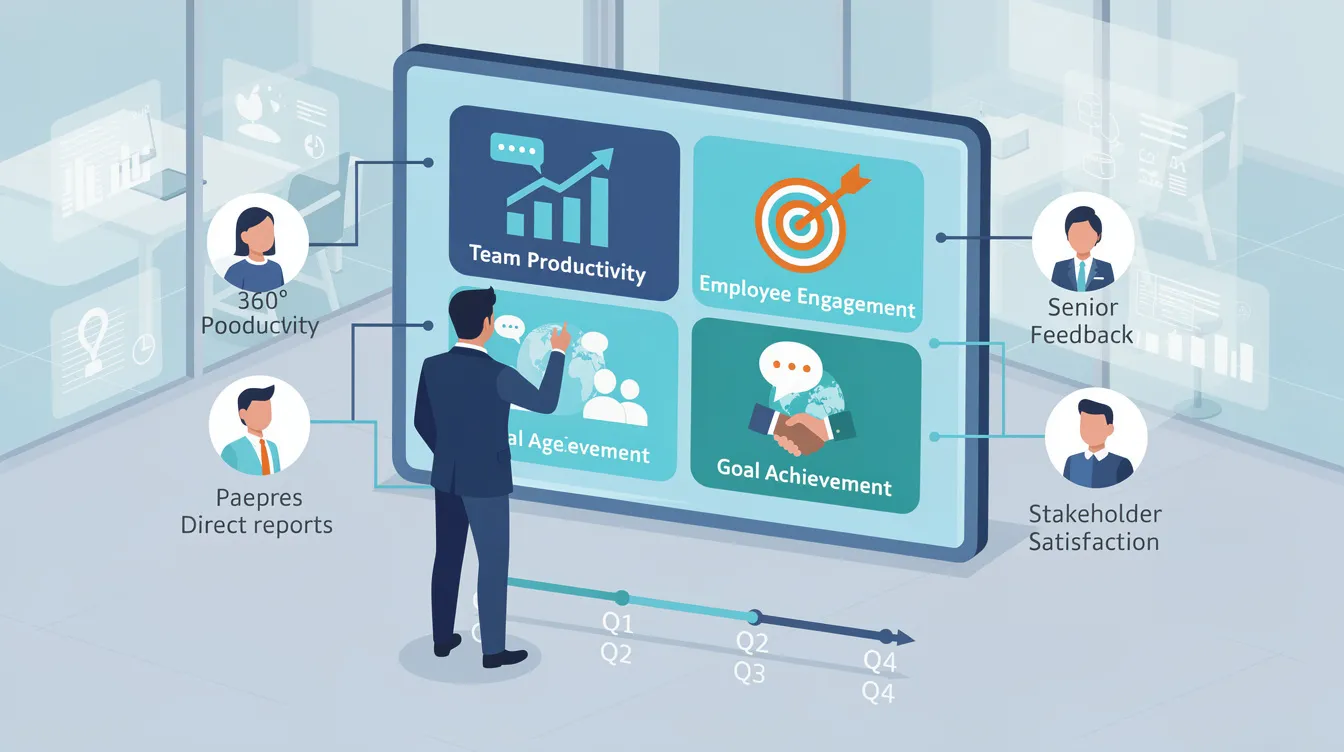
Key performance indicators
Key performance indicators (KPIs) are essential metrics that help quantify a leader’s impact on their team and organisation. Common KPIs include team productivity, which measures how efficiently the team meets its objectives; employee engagement, reflecting the motivation and commitment levels of team members; and goal completion rates, indicating how successfully the team achieves set targets. Tracking these indicators regularly provides leaders with actionable insights to adjust strategies and improve overall performance.
|
KPI |
Description |
Measurement Method |
|---|---|---|
|
Team Productivity |
Efficiency in meeting objectives |
Output vs. Targets, Project Completion Rates |
|
Employee Engagement |
Level of motivation and commitment |
Surveys, Turnover Rates |
|
Goal Achievement |
Success in reaching set goals |
SMART Goal Tracking, Performance Reviews |
|
Stakeholder Satisfaction |
Satisfaction of internal and external stakeholders |
Feedback Forms, Net Promoter Scores |
360-degree feedback
360-degree feedback involves collecting performance evaluations from a variety of sources, including peers, subordinates, supervisors, and sometimes even external stakeholders. This comprehensive approach offers a well-rounded perspective on a leader’s effectiveness, highlighting strengths and areas needing improvement. By receiving feedback from multiple viewpoints, leaders can better understand how their actions and decisions impact different groups, fostering self-awareness and promoting personal and professional growth.
Regular evaluations
Scheduled evaluations, such as quarterly or biannual reviews, are vital for maintaining continuous leadership development. These assessments provide structured opportunities to reflect on progress against goals, identify new challenges, and set actionable plans for improvement. Regular evaluations encourage accountability and help leaders stay aligned with organisational priorities, ensuring they remain effective in their roles over time.
Next steps for readers
Aspiring leaders should start by assessing their current skills and responsibilities using an action checklist that includes developing communication skills, seeking mentorship, and practicing delegation. Accessing further professional development resources, such as leadership training programs and workshops, supports continuous growth and readiness to take on expanded leadership roles.
Elevate your leadership impact by working directly with Khalil Arouni to unlock your team's full potential and drive measurable outcomes. Take decisive action now—Solve One Challenge in 60 Minutes and transform your leadership approach with expert guidance.
Embracing these steps prepares individuals to succeed in their leadership journey and contribute meaningfully to their teams and organisations.
Frequently Asked Questions (FAQs)
What are the core responsibilities of a leader?
The core responsibilities of a leader include setting a clear vision, making informed decisions, motivating and inspiring the team, managing available resources efficiently, and fostering a positive and inclusive work environment. Leaders also play a critical role in conflict resolution, providing regular feedback, and ensuring alignment with the organisation’s strategic goals.
How do management skills differ from leadership skills?
Management skills primarily focus on planning, organizing, and overseeing day-to-day operations to ensure efficiency and consistency. Leadership skills, on the other hand, emphasize inspiring and motivating people, creating a shared vision, and guiding teams toward achieving long-term goals. Many leaders today need to blend both skill sets to effectively lead people and manage resources.
Why is emotional intelligence important for leaders?
Emotional intelligence, a crucial soft skill, enables leaders to understand and manage their own emotions while empathizing with others. This fosters trust, improves communication, and helps resolve conflicts constructively. Leaders with high emotional intelligence are better equipped to offer guidance, adapt to change, and build strong, cohesive teams.
How can new leaders develop their leadership capabilities?
New leaders can develop their leadership capabilities by actively seeking professional development opportunities such as mentorship, coaching, and leadership training programs. Engaging in team building activities, taking on stretch assignments, and regularly soliciting feedback help new leaders enhance their problem solving and communication skills while gaining practical experience in leading people.
What role does a leader play in team building activities?
A leader’s role in team building activities is to facilitate collaboration, strengthen relationships, and improve communication among team members. These activities help align the team around a shared vision and foster a culture of trust and mutual support, which are essential for achieving goals and overcoming challenges together.
How do leaders ensure alignment with the bigger picture?
Leaders ensure alignment with the bigger picture by clearly communicating the organisation’s vision and strategic priorities, setting SMART goals, and regularly reviewing progress. They encourage input from team members to foster ownership and adapt plans as needed, ensuring that individual efforts contribute effectively to overall business objectives.
What challenges do many leaders struggle with today?
Many leaders struggle with balancing multiple roles, managing change, and maintaining team motivation during uncertain times. Additionally, some find it difficult to delegate effectively, provide regular feedback, and develop future leaders within their teams. Building resilience and adaptability is essential for leaders to navigate these challenges successfully.
How do leaders act as role models?
Leaders act as role models by embodying the organisation’s values, demonstrating integrity, accountability, and ethical behavior. By leading by example, they set the standard for team conduct, inspire confidence, and cultivate a culture of excellence and trust that motivates others to follow their lead.
Why is regular feedback important in leadership?
Regular feedback is vital because it helps team members understand their strengths and areas for improvement, promotes continuous learning, and supports professional growth. Leaders who offer constructive and timely feedback create an environment where employees feel valued and empowered to achieve their goals.
How can leaders effectively manage limited resources?
Effective leaders prioritize tasks based on strategic importance, allocate budgets and personnel thoughtfully, and monitor resource utilization closely. They also encourage innovation and creative problem solving to optimize available resources, ensuring that the team can achieve goals efficiently without unnecessary waste.

0 comments