

Getting more plumbing jobs in 2026 comes down to one thing: being visible where your customers are already looking. That means online. Whether you run a one-van operation or manage a team across multiple cities, a solid digital marketing strategy is now the difference between a full diary and waiting for the phone to ring. Every plumbing company needs a good marketing plan to attract new customers, and good marketing is a must for any trade business looking to drive more leads and boost their brand's reputation.
This guide walks you through everything a plumbing business needs to know about digital marketing for plumbers—from building a website that converts to dominating local search results and running paid ads that actually pay for themselves.
Why digital marketing matters for plumbers in 2026
In 2026, over 90% of UK homeowners search for phrases like “emergency plumber near me” on Google before they pick up the phone. Your online visibility is no longer a nice extra—it’s how you get work. If your plumbing company isn’t appearing in those search engines results, you’re handing jobs to competitors who are.
-
Even highly reviewed local plumbers in cities like London, Manchester and Birmingham lose daily work if they’re invisible online. A glowing reputation means nothing if potential customers can’t find you during a 2am boiler breakdown.
-
Digital marketing levels the playing field for small plumbing firms competing against large national franchises. By targeting high-intent local searches, a two-person team can capture the same emergency call-outs that bigger companies chase.
-
Consistent online marketing brings a steadier flow of boiler services, emergency call-outs and bathroom installations. Instead of feast-and-famine bookings, a proper plumbing marketing strategy creates predictable revenue month after month.
-
The plumbing and heating industry has shifted dramatically since 2020. Mobile search surged, and plumbers who ignored this shift now struggle to fill their schedules. In 2026, the businesses thriving are those treating their online presence as seriously as their Gas Safe certification.
Set clear goals for your plumbing marketing
Throwing time and money at “a bit of everything” online rarely works. Plumbing businesses that win in 2026 set specific, measurable targets—then track whether they’re hitting them.
-
Define concrete goals with numbers and deadlines. Examples: “Generate 30 extra boiler service jobs per month in Leeds by November 2026” or “Increase emergency call-out enquiries from Google by 40% within 6 months.”
-
Distinguish between lead goals and visibility goals. Lead goals focus on actions that generate revenue—phone calls, contact forms submissions, WhatsApp messages. Visibility goals track rankings, social followers and review volume. Both matter, but lead goals pay the bills.
-
Use tracking tools to measure what’s working. Google Analytics 4 shows website traffic and conversion paths. Google Business Profile Insights reveals how often you appear in local searches. Simple call tracking numbers let you attribute leads to specific channels—so you know whether that £500 ad spend brought in three jobs or thirty.
-
Review your goals quarterly. Seasonal demand shifts (winter boiler peaks, spring maintenance pushes) mean your targets should evolve. A plumbing marketing strategy that worked in January might need adjusting by April.
Build a user-friendly plumbing website
Your website is the digital shopfront for your plumbing business. For many potential customers—especially those searching on a phone during a leak emergency—it’s their first impression. Make it count.
-
Create separate service pages for each core offering: emergency plumbing, boiler repairs, boiler servicing, bathroom installations, leak detection, landlord gas safety checks. This helps search engines understand what you do and improves your chances of ranking for specific queries.
-
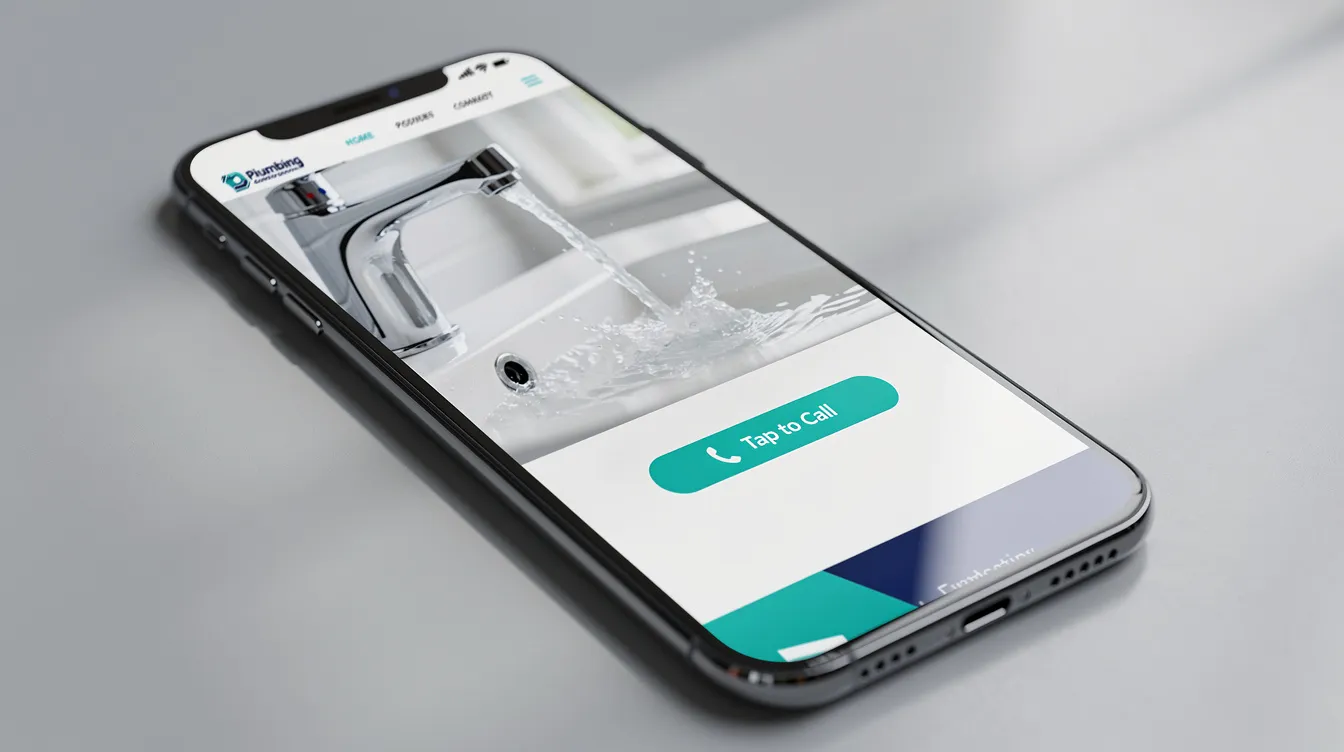
Feature clear contact details at the top of your homepage. Include a phone number with “Tap to call” functionality, an emergency line, and WhatsApp if you use it. Add strong calls to action like “Book a same-day engineer in Nottingham.”
-
Prioritise fast loading times—under 3 seconds. Use mobile-first design and simple navigation. A stressed customer with water pouring through their ceiling should find your phone number within 3 seconds of landing on your site.
-
Display trust elements above the fold: Gas Safe and CIPHE accreditation logos, insurance details, years in business, and review star ratings pulled from Google or Trustpilot.
-
Include a clear service area map or list of towns and postcodes you cover. Something like “Serving Bristol, Bath, BS1–BS16” tells customers immediately whether you can help.
Essential features every plumbing website should include
-
24/7 emergency contact info visible on every page for businesses offering out-of-hours call-outs.
-
Online booking form with fields for name, postcode, problem type (burst pipe, boiler issue, blocked toilet), preferred time, and photo upload option for quick triage.
-
Dedicated testimonials or reviews page featuring real customer testimonials with names, locations and dates (e.g. “Boiler repair in Glasgow, February 2026”).
-
FAQ section answering common questions about pricing, call-out fees, warranties and response times.
-
Privacy policy, terms and conditions and cookie notice to comply with UK GDPR requirements.
-
Clear links to social profiles (Facebook, Instagram) for customers who prefer messaging.
Local SEO for plumbers: show up where your customers search
SEO stands for Search Engine Optimisation, which improves the quality of your website to bring more targeted organic traffic. The goal of SEO is to rank your website as highly as possible in search engine results pages to increase traffic and leads. Local SEO focuses on improving your site's visibility in local search rankings, which is essential for plumbing businesses.
Local SEO helps your plumbing business appear when someone searches “plumber in Cardiff” or “boiler repair near me.” Done well, it places your business in the Google Maps pack at the top of google search results—the spot that generates more service calls than standard organic listings.
-
Strong local SEO can secure you a top-three map pack position, which correlates with 70%+ click-through rates according to industry benchmarks.
-
Target specific towns and neighbourhoods rather than broad “UK wide” terms. A small team covering Leeds will get better results targeting “plumber Headingley” than competing nationally.
-
Local SEO strategies require consistent effort but deliver compounding returns. The work you put in now continues generating quality leads months down the line.
Optimise your Google Business Profile (formerly GMB)
Your Google Business Profile is one of the most powerful free tools for any local business. Optimise it properly and you’ll appear in local searches, Google Maps and the knowledge panel when people search your business name.
-
Claim and fully complete your profile with accurate NAP (Name, Address, Phone), service areas, and opening hours—including emergency hours if relevant.
-
Use a descriptive business listing name that follows Google’s guidelines, e.g. “Jones Plumbing & Heating – 24/7 Emergency Plumber in Sheffield.”
-
Select all relevant categories: “Plumber”, “Heating contractor”, “Bathroom fitter” where applicable.
-
Upload high-quality photos of your vans, uniforms, team members, boiler installs and bathroom projects. Update these at least quarterly in 2026 to keep your profile fresh.
-
Post weekly updates with offers (e.g. “10% off boiler services booked before 31 October 2026”), seasonal tips and recent job highlights. Google rewards active profiles with better visibility.
-
Collect reviews consistently and respond to every single one with personalised replies mentioning the service and location. This signals to Google that you’re engaged and trustworthy.
On-page SEO for your plumbing service pages
On page SEO ensures each service page on your plumbing website targets relevant keywords that your customers are actually searching for.
-
Each key service page should target a specific keyword plus location: “Emergency plumber in Leeds” or “Boiler installation in Croydon.”
-
Include the target keyword naturally in the page title, H1 heading, first paragraph and meta description. Don’t force it—Google’s algorithms are sophisticated enough to detect keyword stuffing.
-
Write at least 800–1,200 words of helpful content per main service page. Describe your process, pricing approach, guarantees and common questions customers ask.
-
Add location signals like local landmarks or areas you cover: “We regularly work in Headingley, Chapel Allerton and Roundhay.”
-
Interlink between service pages and the homepage to strengthen relevance and help visitors navigate easily.
-
Use descriptive alt text on images: “gas-safe-registered-plumber-installing-combi-boiler-manchester” helps with search engine optimisation and accessibility.
Building local authority with citations and backlinks
Off page SEO builds your authority in Google’s eyes through citations and backlinks from other trusted websites.
-
Create consistent listings on reputable UK directories: Yell, Thomson Local, Checkatrade, MyBuilder and local chamber of commerce sites.
-
Ensure NAP details match exactly across all listings. Inconsistencies confuse Google’s local algorithm and can hurt your rankings.
-
Earn backlinks by providing boiler safety tips to local blogs, sponsoring local youth football teams, or supporting community events in exchange for a link on their websites.
-
Ask suppliers, bathroom showrooms and builders you work with to link to your site as a trusted local plumbing partner. These relationships often already exist—you just need to ask.
Paid ads for plumbers: get leads fast with PPC and Local Service Ads
Pay-per-click advertising on Google and Google Local Services Ads can bring immediate enquiries while your SEO efforts build momentum. For time-sensitive plumbing services like 24/7 emergencies, boiler breakdowns in winter 2026, and same-day leak repairs, paid ads often deliver the fastest path to more plumbing leads.
-
Set a clear monthly budget—typically £500–£1,500 for most local plumbing companies—and track cost per lead religiously to ensure ads remain profitable.
-
PPC advertising works best when combined with strong landing pages and conversion tracking. Without measurement, you’re guessing.
-
Agencies report 2-5x ROI when SEO and PPC work together, with paid ads capturing immediate demand while organic rankings grow.
Google Search & Local Service Ads for plumbing leads
Google Ads management doesn’t need to be complicated. Start with straightforward search campaigns targeting the phrases your customers actually type.
-
Target phrases like “emergency plumber [city]”, “boiler repair [postcode]”, “unvented cylinder engineer [city].”
-
Highlight USPs in your ad copy: “Gas Safe Registered”, “Arrive in under 60 minutes”, “No call-out fees.” Include call extensions so mobile users can tap to call directly.
-
Google Local Services Ads (available across most of the UK) show Google Guaranteed plumbers at the top of search results and charge per lead rather than per click. This shifts risk away from you—you pay for actual enquiries, not just clicks.
-
Build your Local Services profile with reviews, accurate service areas and photos. The more reviews you have, the higher you’ll rank within the Local Services results.
-
Use the call recording and dispute features within Local Services Ads to track lead quality and filter out spam or irrelevant enquiries.
Retargeting and seasonal plumbing campaigns
Not everyone who visits your website enquires immediately. Retargeting brings them back when they’re ready.
-
Use retargeting ads on Google and Facebook to follow up with people who visited your boiler or bathroom pages but didn’t fill in a contact form or call.
-
Plan seasonal marketing campaigns: boiler servicing offers in September/October before winter, power-flush promotions in spring, bathroom renovation ads in early summer when homeowners plan projects.
-
Create dedicated landing pages for each campaign with specific offers and deadlines. “10% off boiler services booked before 15 October 2026” creates urgency that drives action.
-
Exclude existing customers from acquisition campaigns and instead target them with tailored email marketing offers for repeat business.
Social media marketing for plumbing businesses
Most homeowners will check a plumber’s Facebook or Instagram before booking, especially for bigger jobs like full bathroom refits. Social media marketing isn’t about going viral—it’s about demonstrating professionalism, reliability and real-world results that build trust before you even arrive.
-
Facebook and Instagram remain the core platforms for UK plumbers in 2026. TikTok can work for those comfortable on camera, but focus on the platforms your local customers actually use.
-
Social proof matters. When potential customers see photos of your completed work, read customer stories and watch you explain a repair, they’re far more likely to pick up the phone.
Facebook & Instagram: building trust before you arrive
-
Post 3–4 times per week with a mix of before-and-after photos, short repair videos, boiler room transformations and customer testimonials (with permission).
-
Use Stories to show day-in-the-life content: arriving on jobs, explaining parts, flushing systems, cleaning up after work. This humanises your brand and builds connection.
-
Add local hashtags and geotags like #LondonPlumber, #BristolBoilerRepair and tag specific neighbourhoods to reach nearby homeowners.
-
Run low-budget local awareness ads (£3–£5/day) targeting homeowners within your service radius. Even small budgets generate meaningful website traffic when targeted correctly.
-
Respond quickly to DMs and comments. Many younger clients prefer messaging over calling, and fast responses signal professionalism.
Simple content ideas plumbers can post regularly
-
Weekly “Tip Tuesday” posts on preventing frozen pipes, bleeding radiators or spotting small leaks early.
-
Short explainer reels about the difference between combi, system and regular boilers, filmed on real jobs.
-
Customer story posts with a narrative structure: problem, solution, location and outcome (e.g. “Replaced 20-year-old boiler in Leeds LS6, January 2026”).
-
Behind-the-scenes posts highlighting training days, new tools, safety checks and team members to humanise the brand.
-
Seasonal reminders: boiler servicing in September/October, outdoor tap shut-off before freezing weather, power-flush offers in spring.
Online reviews, reputation and social proof for plumbers
In a competitive market, the difference between getting the job and losing it often comes down to who has the most—and best—reviews on Google and other platforms. Reputation management directly influences both your SEO rankings and conversion rates, especially for emergency work where customers quickly scan star ratings and recent comments.
-
Reviews act as social proof. When someone needs an emergency plumber at midnight, they’re choosing between three businesses in the map pack. The one with 127 five-star reviews wins over the one with 12.
-
Fresh reviews signal to Google that your business is active and trusted. This helps your local rankings and keeps you visible in search results.
How to consistently earn 5-star plumbing reviews
Building a strong online reputation requires a systematic approach, not hoping customers remember to leave feedback.
-
Ask for reviews immediately after successful jobs via SMS or WhatsApp with a direct Google review link. The closer to job completion, the higher your response rate.
-
Add review request cards or QR codes to invoices, leaving them with customers at the end of the job.
-
Train engineers to mention reviews politely when a customer expresses satisfaction—during a boiler handover is a natural moment.
-
Spread reviews across multiple platforms: Google, Facebook and trade platforms like Checkatrade or TrustATrader. Different customers search different places.
-
Never offer incentives that break platform rules. Focus instead on delivering standout service and clear communication that naturally inspires reviews.
Showcasing and responding to reviews
Earning reviews is only half the job. How you display and respond to them shapes how new customers perceive you.
-
Feature review snippets with names, locations and dates on your homepage and key service pages.
-
Create a dedicated “Reviews” or “Customer stories” page with filters by service type (boilers, bathrooms, emergencies).
-
Respond to all reviews—including negative ones—with calm, professional replies that acknowledge issues and explain how they were resolved. This demonstrates customer engagement and accountability.
-
Use review widgets or screenshots in marketing materials and social posts to reinforce social proof across channels.
-
Note that regular new reviews in 2026 signal activity to Google, ultimately leading to improved local rankings.
Other effective marketing tactics for plumbing companies
While digital should be the focus of your plumber marketing efforts, a blended approach using offline tactics can boost results—especially in tight-knit local communities where word-of-mouth still carries weight.
Offline branding and vehicle wraps
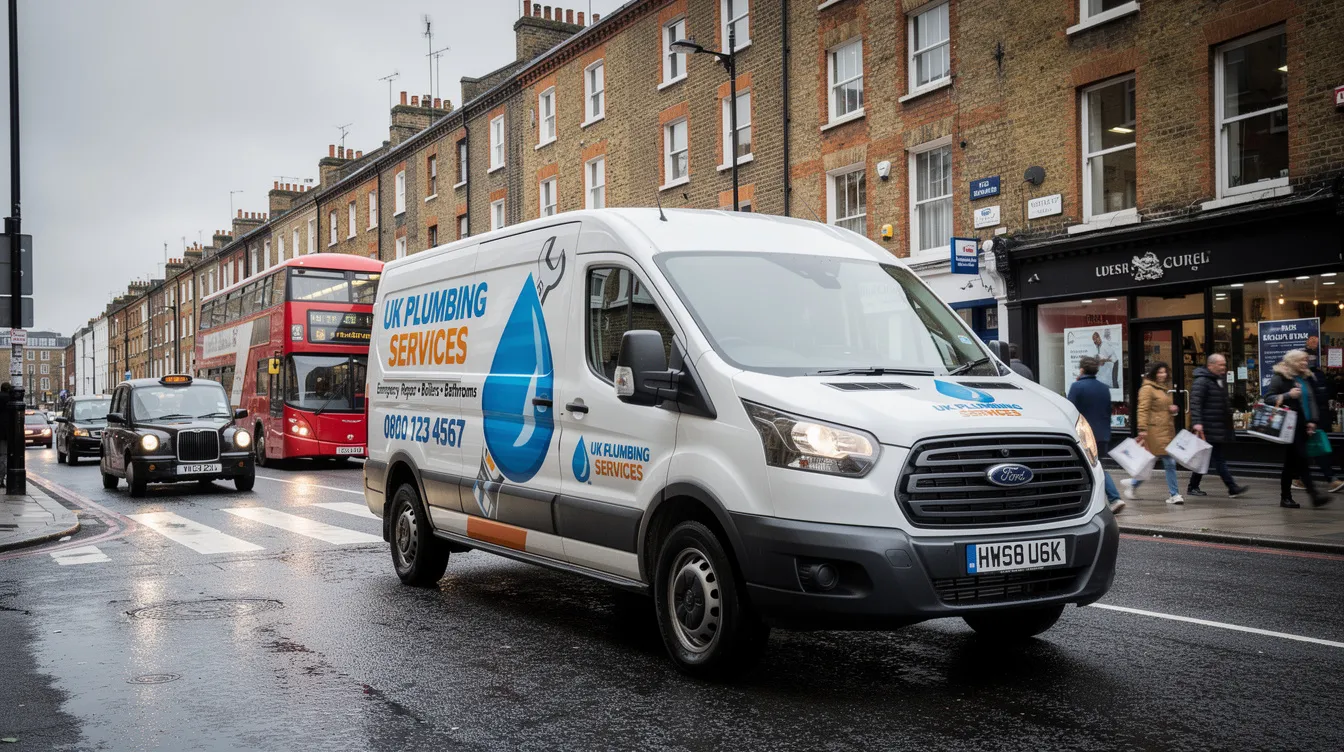
Your vans travel across your local area every day. Clear branding with your company logo, website and phone number transforms them into mobile billboards. Every traffic light and customer driveway becomes an advertising opportunity.
Targeted leaflet drops
After completing a job, deliver flyers to carefully chosen postcodes in that street. Mention recent work done “around the corner”—this local proof dramatically increases response rates compared to generic leafleting.
Partnerships with estate agents, letting agents and builders
Construction businesses, estate agents and letting agents regularly need reliable plumbers for maintenance and emergency work. These partnerships create steady pipelines of qualified leads without advertising spend.
Maintenance plans and service contracts
Offer yearly boiler services and landlord gas safety checks on contract. This stabilises income, deepens customer relationships, and provides built-in repeat business that doesn’t require constant marketing.
Email marketing
Send quarterly newsletters with seasonal tips, service reminders and special offers to previous customers. Your existing customer base is often your most profitable source of new clients through referrals and additional work.
Networking and local groups
Join BNI chapters, trade associations or local business groups to build referral networks. Face-to-face relationships with other business owners in your local plumbing market generate warm introductions that convert far better than cold enquiries.
Turning your plumbing marketing into a repeatable system
The plumbers who thrive in 2026 treat marketing as an ongoing system, not a one-off project. Comprehensive marketing packages and proven strategies only work when executed consistently.
-
Create a simple monthly checklist: website checks, Google Business posts, social content schedule, review requests and ad performance review. Consistency beats intensity.
-
Revisit goals every quarter to adjust budgets, refine targeting and double down on best-performing channels. What works in Q1 might need tweaking by Q3.
-
Track core metrics that matter: number of leads, cost per lead, average job value and repeat booking rate. These numbers tell you your true ROI—not vanity metrics like followers or impressions.
-
Use tailored strategies for different services. Emergency call-outs might perform best through Google Ads while bathroom refits convert better through Instagram. Your online marketing strategy should reflect these differences.
The best time to start was yesterday. The second-best time is now. Pick one digital tactic from this guide—whether that’s optimising your Google Business Profile, posting your first before-and-after on Instagram, or setting up a simple review request system—and implement it this week.
Your next new customer is already searching. Make sure they find you.
Frequently Asked Questions (FAQs) About Digital Marketing for Plumbing
Why does every plumbing company need a good marketing plan?
A good marketing plan is essential for any plumbing company aiming to attract new customers and stand out in a competitive market. Effective marketing drives more leads, boosts your brand's reputation, and ensures your business remains visible to potential customers actively searching for plumbing services online.
How important is mobile-friendliness for plumbing websites?
Over 70% of plumbing-related searches happen on mobile devices, making it crucial for your website to load quickly and be mobile-responsive. A mobile-friendly site ensures a seamless user experience on phones and tablets, helping convert visitors into leads by making it easy for them to find your contact information and request services on the go.
Should I use a bespoke website design or a templated site?
A bespoke website design tailored specifically to your plumbing business is far more effective at converting visitors into leads than a generic templated site. Custom designs can better reflect your brand identity, highlight your unique selling points, and provide a user-friendly experience that encourages potential customers to take action.
How important is local SEO for plumbing businesses?
Local SEO is paramount because most customers search for plumbing services with "near me" or location-specific terms. Ranking high in local search results—especially within the top five organic listings, where 67% of users click—is critical to driving quality leads and growing your customer base.
How long does it take to see results from SEO campaigns?
The duration of an SEO campaign can vary based on competition and strategy, but significant improvements are often seen within 3 to 6 months. Consistent SEO efforts focusing on both on-page and off-page optimisation help build your online authority and increase your visibility in search engines over time.
Is PPC advertising effective for plumbing businesses?
Yes, PPC advertising can be highly effective for generating immediate leads, especially for urgent plumbing services. However, PPC campaigns should be set up and managed by experts to ensure they are cost-effective and target the right keywords, audiences, and geographic areas to maximise return on investment.
How can video content help my plumbing marketing?
Creating problem-solution videos—such as demonstrating how to fix a minor leak or explaining boiler maintenance—can enhance engagement and build trust with potential customers. Videos showcase your expertise and professionalism, making viewers more likely to choose your services over competitors.
Why is review velocity important?
Review velocity refers to the number of new reviews your business receives regularly. Aiming for 20–25 new reviews per month is more effective than simply accumulating a high total number because fresh reviews signal to search engines and potential customers that your business is active, trustworthy, and providing excellent service.
Can SMS marketing benefit my plumbing business?
Yes, SMS marketing boasts a 98% open rate, making it an excellent tool for appointment reminders, emergency alerts, and review requests. Using SMS helps keep your customers engaged and can increase repeat business by ensuring timely communication.
How do I get started with digital marketing for my plumbing business?
Start by setting clear marketing goals and creating a user-friendly, mobile-responsive website optimised for local SEO. Combine this with a strong Google Business Profile, regular social media activity, and a mix of SEO and PPC advertising managed by professionals. Consistency and tracking results are key to long-term success in plumbing lead generation and business growth.

0 comments