

Introduction
Understanding how does search engine work is essential for anyone looking to improve website visibility and SEO performance. This comprehensive guide is designed for webmasters, SEO professionals, and curious users who want to grasp the inner workings of search engines. We will cover the entire scope of the search engine process, including crawling, indexing, ranking, and troubleshooting common issues. By learning how search engines discover, analyze, and rank web content, you can make informed decisions to optimize your site, enhance its presence in search results, and drive more organic traffic. Whether you manage a website, work in digital marketing, or simply want to know how your favorite search engine delivers results, this guide will provide the foundational knowledge you need.
What Is a Search Engine and How Does It Work?
A search engine is a sophisticated software system designed to provide hyperlinks to web pages and relevant information in response to a user’s query. Search engines are software systems that provide hyperlinks to web pages in response to user queries. When a user enters a query, the search engine does not search the live web in real-time; instead, it scans its vast search index—a digital library of information about web pages—that has been continuously updated by search engine crawlers, also known as search engine bots. The index of a search engine is a digital library of information about web pages. Search engines maintain a massive index that maps search queries to URLs, allowing for quick retrieval of relevant results.
A search engine is a software system that helps users find relevant web pages and information by crawling, indexing, and ranking content from across the internet. The index is a massive, organized database—a digital library—where information about web pages is stored and mapped to search queries for fast retrieval. A crawler (also known as a spider, bot, or search engine bot) is an automated program that systematically browses the web to discover new and updated pages, feeding this information into the search engine’s index. The combination of this extensive crawling, indexing, and advanced search engine algorithms allows the search engine to deliver the most relevant results quickly and accurately.
How Does a Search Engine Really Work?
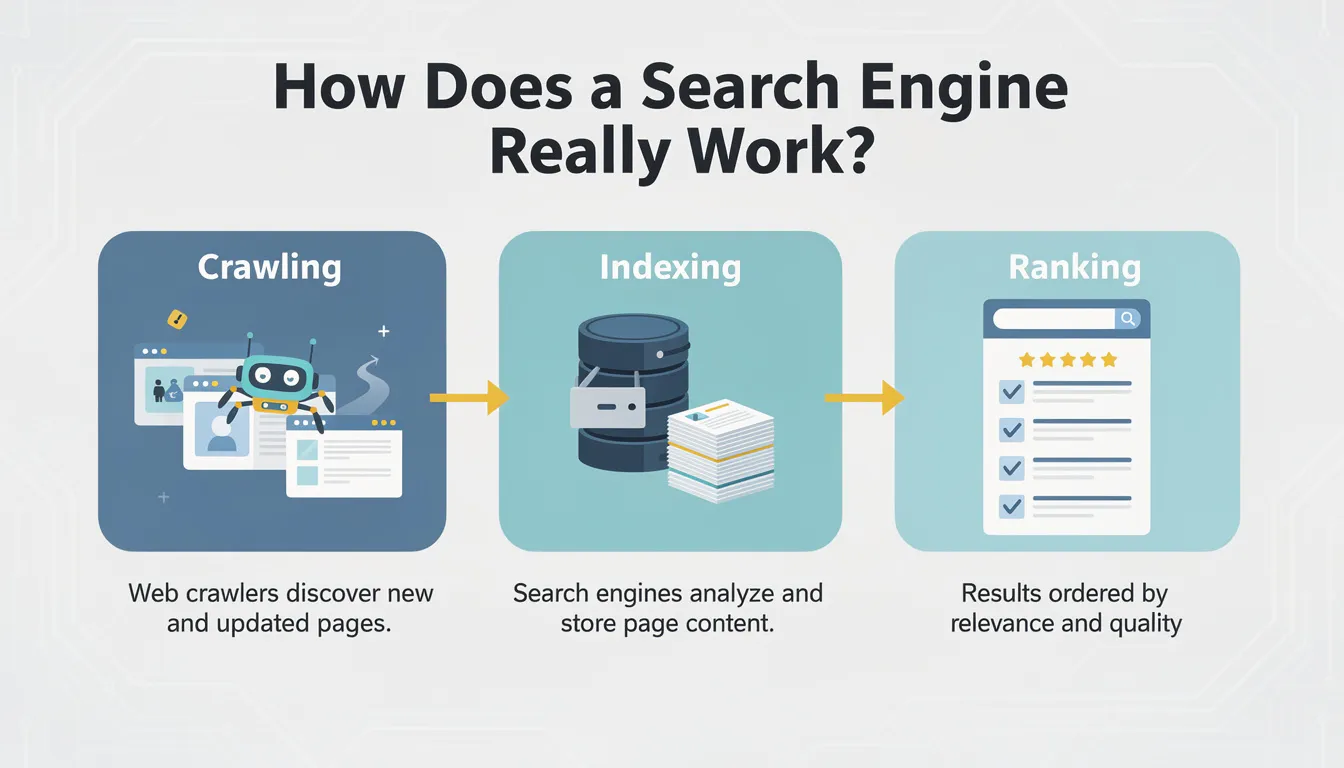
Search engines work by crawling, indexing, and serving web content to users. These three primary functions form the backbone of how search engines operate:
-
Crawling is the first stage of the search engine process where web crawlers or search engine bots discover new and updated pages on the internet.
-
Indexing is the process where search engines analyze and store the content of crawled pages in their index.
-
Ranking is the final stage where search engines determine the order of search results based on relevance and quality.
Behind the scenes, search engines work through a multi-step process. First, web crawlers systematically browse the internet, following links to discover new and updated web pages. Then, the content of these pages is indexed, meaning it is analyzed and stored in a massive database. When a user enters a query, the search engine processes the query by interpreting its intent using algorithms and machine learning models. It then searches its index for the most relevant pages containing the particular word or phrase, ranks them based on hundreds of factors, and presents the results in an organized manner. This entire process happens in a fraction of a second, enabling users to receive fast and accurate results.
Can You See If Someone Googled You?

While search engines record queries for improving services and ad targeting, they do not provide users with information about who has searched for them. Privacy policies prevent revealing individual search histories to others. However, you can monitor your online presence using tools like Google Alerts, which notify you when new content mentioning your name appears on the web.
How Search Engine Crawling and Indexing Work
Search engine crawling is the foundational process where search engine crawlers or search engine bots traverse the internet to find new pages or updated content. These bots follow internal links within a site and external links from other sites to discover all the pages they can access. However, not all pages are crawlable; some may be blocked by a robots.txt file or require login credentials. Once crawled, the content is analyzed and stored in the search index during the indexing phase. Indexing involves processing the written content, images, videos, meta tags, and other elements such as header tags to understand what each page is about. Pages that meet quality and relevancy standards are included in the index, while duplicate content, duplicate pages, or low-quality pages may be excluded.
How Do Search Engines Find My Websites?
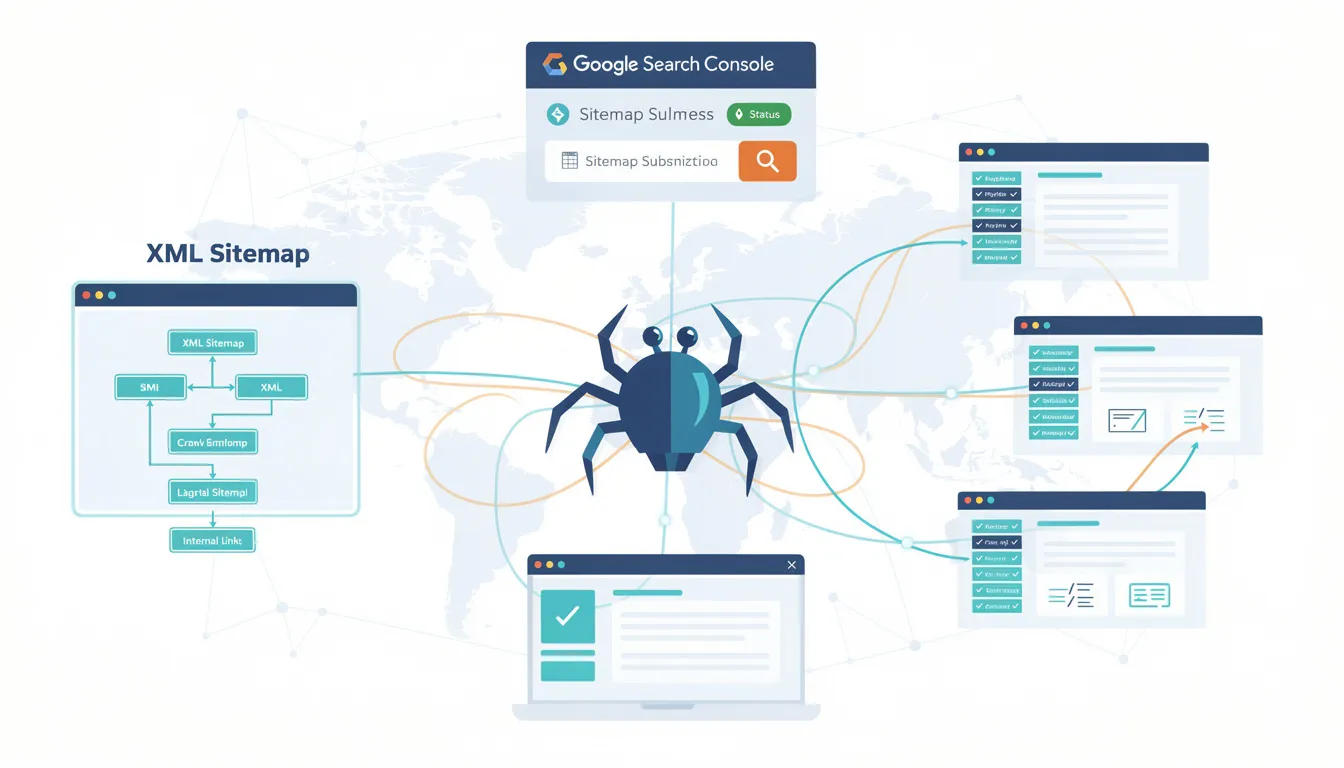
Search engines find websites primarily through crawling. They start by discovering URLs from known pages, sitemaps, and external links. Webmasters can help by submitting XML sitemaps through tools like Google Search Console, which provide structured lists of URLs for crawlers to explore. Additionally, ensuring your site has a clear internal linking structure and is accessible without restrictions allows crawlers to find and index your content efficiently.
How Do Search Engines Work Step by Step?
The process typically follows these steps:
-
Crawling: Search engine bots discover web pages by following links and sitemaps.
-
Rendering: Pages are rendered similar to how browsers display them, including executing JavaScript.
-
Indexing: Content is analyzed and stored in the search index.
-
Ranking: Algorithms evaluate indexed pages and rank them based on relevance, quality, and authority.
-
Serving Results: The search engine delivers the ranked results to the user, including local results when relevant.
This cycle repeats continuously to keep the index fresh and relevant.
Where Does Google Search Get Its Information?
Google gathers information from billions of web pages across the internet by crawling sites using Googlebot, its primary search engine bot. It also incorporates data from specialized indexes for images, videos, news, and local business listings. This comprehensive approach allows Google to provide diverse and relevant search results.
Why Am I Being Asked If I'm a Robot on Google?
Sometimes, Google presents CAPTCHA challenges to verify that a user is human and not an automated bot. This usually happens when unusual traffic patterns are detected from a particular IP address or device, which may indicate automated scraping or suspicious activity. It's a security measure to protect Google's services and ensure fair use.
How Often Do Google Robots Crawl a Site?
The frequency of crawling depends on several factors, including the site's popularity, update frequency, and crawl budget allocation. Popular and frequently updated sites may be crawled multiple times a day, while smaller or static sites might be crawled less often. Webmasters can influence crawl frequency by updating content regularly and using tools like Google Search Console to monitor crawl stats.
What Is Indexing in Google Search?
Indexing is the process where Google analyzes the content of crawled pages and stores relevant information in its search index. This enables quick retrieval of pages in response to user queries. Indexing considers page content, meta tags, images, videos, and other elements to understand the page's topic and quality.
What Are the Three Types of Indexing?
There are generally three types of indexing:
-
Full Indexing: Entire page content is analyzed and stored.
-
Partial Indexing: Only select parts of a page, like metadata or key sections, are indexed.
-
No Indexing: Pages are deliberately excluded from indexing using directives like "noindex" meta tags.
These help search engines manage the quality and relevance of their index.
How Often Does Google Do Indexing?
Indexing is a continuous process that happens as new pages are crawled and existing pages are updated. The speed of indexing can vary from a few minutes to several days, depending on the site's authority, content freshness, and crawl budget.
How Search Engines Rank URLs: Understanding the Ranking Factors
After pages are indexed, search engines rank URLs based on their relevance to a user’s query. The ranking process is driven by complex search engine algorithms that consider hundreds of ranking factors. These factors include the quality and originality of the written content, the authority of the page as indicated by backlinks or more links from other sites, user engagement metrics, and the overall user experience. Internal links within the own site also help search engines understand the site structure and distribute link equity. Additionally, local search signals such as the user’s location and device type influence rankings for location-based queries. Search engines strive to provide the most relevant and accurate results by filtering out link spam, duplicate content, and other manipulative tactics like keyword stuffing.
What Are Search Engine Rankings?
Search engine rankings refer to the position a web page holds in the search engine results pages (SERPs) for a particular query. Higher rankings generally lead to more visibility and traffic. Rankings are determined by evaluating relevance, authority, and user satisfaction signals.
How Does Google Decide What Comes Up First?
Google uses advanced algorithms that consider factors such as content relevance, page authority (backlinks), user engagement, freshness of content, and site usability. Machine learning models like RankBrain help Google interpret query intent and adjust rankings dynamically to deliver the most useful and accurate results.
How Does Google Know Exactly What I Want to Search?
Google analyzes the keywords entered, user location, device type, search history, and contextual signals to understand the intent behind a query. It uses natural language processing and machine learning to interpret ambiguous or complex queries, aiming to provide personalized and relevant results.
How Does the Google Search Bar Work?
The Google Search bar acts as the interface where users input queries. As users type, it provides autocomplete suggestions based on popular searches and personalized data. Upon submission, the query is processed by Google's algorithms to retrieve and rank relevant results from Google's index.
How Does Google Decide What Search Results You Really Want?
Google combines query analysis, user context, content relevance, and quality signals to determine the best matches. It also considers factors like location and device to tailor results. Continuous algorithm updates ensure that results improve over time based on user feedback and engagement.
What Are Search Engine Rankings?
Search engine rankings indicate the order in which search results appear for a given query. These rankings are influenced by factors such as keyword relevance, backlinks, site authority, content quality, and user engagement metrics.
Google Search and Its Unique Role in the Search Engine Ecosystem
Google Search dominates the search engine market, handling over 90% of web searches worldwide. Its search engine algorithms, including the well-known PageRank and machine learning components like RankBrain, continuously evolve to improve the quality of search results. Google maintains a massive search index, updated regularly by Googlebot, its primary search engine crawler. Google also integrates specialized search features such as Google Maps, featured snippets, and local packs to enhance user experience. For webmasters and SEO professionals, tools like Google Search Console provide valuable insights into crawl errors, indexing status, and how many pages are indexed, helping optimize site visibility.
What Is the Top 5 Search Engine?
As of recent data, the top five search engines by market share are:
-
Google
-
Bing
-
Yahoo!
-
Baidu
-
Yandex
Each serves different markets and offers unique features.
What Is the Best Alternative to Google?
Alternatives to Google include Bing, DuckDuckGo, Yahoo!, and Ecosia. DuckDuckGo is notable for its privacy-focused approach, not tracking user searches or personal data.
Who Is Stronger Than Google?
Currently, no search engine surpasses Google in global market share and influence. However, regional players like Baidu in China and Yandex in Russia dominate their respective markets.
Crawl Budget: Maximizing Efficiency of Search Engine Crawlers
Crawl budget refers to how many pages a search engine crawler will crawl on a site during a given time period. Since crawling is resource-intensive, search engines allocate crawl budget to prioritize crawling of important and frequently updated pages. Optimizing crawl budget involves ensuring that crawlers are not wasting time on duplicate pages, low-value content, or pages blocked by robots.txt files. Proper use of canonical tags and XML sitemaps can guide crawlers to the most relevant pages. Managing crawl budget effectively helps ensure that new pages and updates are discovered and indexed promptly, improving the overall search visibility of the site.
How to Detect Google Bots?
Google bots identify themselves with specific user-agent strings. Webmasters can check server logs to detect visits from Googlebot by looking for these user-agent identifiers. Additionally, reverse DNS lookup can verify if an IP address belongs to Google to prevent spoofing.
How Search Engine Algorithms Work
Search engine algorithms are complex sets of rules and calculations that determine which web pages to show in response to a user’s query and in what order. These advanced algorithms analyze numerous factors to evaluate the relevance, quality, and authority of web pages. They consider signals such as the presence and placement of keywords in the content and meta tags, the number and quality of backlinks from other pages, user engagement metrics, site usability, and the freshness of the content. Modern search engines employ machine learning components like Google’s RankBrain to better understand the intent behind queries and to continuously improve result relevancy. These algorithms also detect and penalize manipulative tactics like keyword stuffing, link spam, and duplicate content. Because search engine algorithms are constantly evolving, SEO strategies must adapt to maintain and improve rankings.
The Process of Crawling and Indexing
Crawling and indexing are the foundational processes that enable search engines to discover, analyze, and organize the internet’s content. Crawling involves search engine crawlers—automated software programs also known as spiders or bots—systematically browsing the web by following links from one page to another. These web crawlers explore websites by accessing discovered URLs, including new pages and updated content, while respecting directives like the robots.txt file that can allow or disallow crawling of certain pages.
Once a page is crawled, the search engine moves to the indexing phase. Indexing means processing and storing the content of the page in the search index, a massive database that maps discovered URLs to relevant information. During indexing, the search engine analyzes the page’s written content, images, videos, meta tags, header tags, and other elements to understand the page’s topic and quality. Pages that meet the search engine’s quality standards are included in the index, while low-quality or duplicate pages may be excluded. This process ensures that when users perform a search, the search engine can quickly retrieve and rank the most relevant pages from its index rather than searching the live web in real-time.
What Does Web Search Indexing Mean?
Web search indexing refers to the process of collecting, parsing, and storing data to facilitate fast and accurate information retrieval. It allows search engines to quickly scan their index to find pages relevant to a user’s query instead of searching the live web.
What Does Web Search Indexing Mean on LinkedIn?
On platforms like LinkedIn, search indexing organizes user profiles and content so that searches within the platform return relevant results quickly. This internal indexing is similar in principle to web search indexing but is tailored to the platform’s specific data.
Should I Allow Web Indexing?
Allowing web indexing means permitting search engines to crawl and include your site’s pages in their search results. This is generally recommended for public content to increase visibility. However, sensitive or duplicate content may be excluded using meta tags or robots.txt directives to prevent indexing.
What Does Search Indexing Do?
Search indexing enables search engines to organize and store web content efficiently, making it possible to retrieve relevant pages quickly when users perform searches.
Does 96.55% of Content Get No Traffic from Google?
Studies have shown that a vast majority of web content receives little to no organic traffic from Google. This underscores the importance of SEO strategies to improve content visibility and ranking.
How to Avoid Being Indexed by Google?
To prevent pages from being indexed, webmasters can use meta tags like "noindex," disallow crawling via robots.txt, or password-protect content. These measures ensure that sensitive or duplicate pages do not appear in search results.
What Is Indexing in SEO with an Example?
Indexing in SEO refers to the inclusion of a webpage in a search engine’s index. For example, when a new blog post is published and crawled by Googlebot, Google analyzes and stores it in its index, making it retrievable for relevant queries.
How Do I Ask Google to Index a Website?
Webmasters can request indexing through Google Search Console by submitting a sitemap or using the URL Inspection tool’s “Request Indexing” feature to prompt Google to crawl and index specific pages.
More Posts: Enhancing Site Visibility Through Content Expansion
Creating more posts and fresh content is a proven strategy to increase the number of indexed pages and improve a site’s authority. However, it is crucial to maintain high-quality, helpful content that addresses relevant queries from users. Search engine crawlers discover new posts through internal links and sitemaps, so structuring content with clear navigation and linking strategies is essential. Avoiding duplicate content and ensuring each post targets unique keywords can prevent indexing issues. Regularly publishing more posts also signals to search engines that the site is active, which can positively impact crawl frequency and rankings.
Local Search: Optimizing for Location-Based Queries
Local search is a specialized area where search engines rank local businesses and services based on relevance, distance, and prominence. Google maintains a proprietary index of local business listings that power local search results, including the local pack and Google Maps listings. Claiming and optimizing your Google My Business listing is vital to local SEO success. Ranking factors for local search include accurate business information, positive reviews, consistent citations across indexed sites, and engagement metrics such as user interactions. Local search results are influenced by the user’s location and device, making local SEO an important strategy for businesses serving specific geographic areas.
Troubleshooting Crawling and Indexing Issues
To maintain healthy site visibility, it is essential to monitor and troubleshoot crawling and indexing issues. Tools like Google Search Console provide reports on crawl errors, including server errors and dead links, which can prevent search engine crawlers from accessing all the pages. Common issues include 404 errors, server errors, and pages blocked by robots.txt or meta tags like noindex. Duplicate content and duplicate pages can also affect indexing. Using canonical tags and cleaning up URL parameters helps search engines understand the preferred version of pages. Regularly auditing your XML sitemap and ensuring it only includes canonical URLs improves crawl efficiency and indexing accuracy.
Conclusion: Mastering How Search Engines Work for Better SEO
Key Takeaways
-
Understanding how does search engine work—from crawling and indexing to ranking—is fundamental for effective SEO.
-
Search engines rely on search engine crawlers to discover and index web content, then use sophisticated algorithms to rank URLs and serve the most relevant results to user searches.
-
Optimizing crawl budget, creating quality content, managing duplicate content, and targeting local search are key strategies to improve visibility.
Action Steps for SEO Success
-
Leverage tools like Google Search Console to monitor crawling and indexing health.
-
Address crawl errors and indexing issues promptly.
-
Regularly publish high-quality, unique content.
-
Optimize for local search by maintaining accurate business listings and gathering positive reviews.
-
Use canonical tags and manage URL parameters to avoid duplicate content issues.
By mastering these processes, site owners can enhance their presence in organic results and achieve top rankings on search engines.
Contact Sterling Media & Communications for Expert SEO and Digital Marketing Services
If you're ready to take your website's visibility and search engine rankings to the next level, Sterling Media & Communications is here to help. With years of experience in SEO, content marketing, and digital strategy, SMC offers tailored solutions designed to boost your online presence and drive more organic traffic. Whether you need help optimizing your crawl budget, resolving indexing issues, or crafting high-quality content that resonates with your audience, Sterling Media & Communications provides expert guidance every step of the way.
Visit smcww.co.uk today to learn more about their comprehensive services and how they can support your business goals. Don’t miss the opportunity to work with a trusted partner dedicated to delivering measurable results and helping your site achieve top rankings on search engines. Contact Sterling Media & Communications now and start your journey toward greater online success!
Frequently Asked Questions (FAQs) About How Search Engines Work
What is a search engine?
A search engine is a software system that helps users find relevant web pages and information by crawling, indexing, and ranking content from across the internet.
How do search engine crawlers work?
Search engine crawlers, also known as spiders or bots, systematically browse the web by following links to discover new and updated web pages for inclusion in the search engine's index. These crawlers operate based on algorithms that determine which pages to crawl, how often to crawl them, and how many pages to fetch from each site, optimizing their efforts to cover the most important content efficiently.
Why is crawling important for search engines?
Crawling allows search engines to find and access web pages so they can analyze and store their content in the search index, enabling quick retrieval during user searches.
What is indexing in search engines?
Indexing is the process of analyzing and storing web page content, including text, images, and meta tags, in a massive database called the search index to facilitate fast and relevant search results. Common indexing issues include duplicate content, low-quality content, and pages marked with a noindex directive, all of which can prevent pages from being properly indexed.
Do all crawled pages get indexed?
No, not all crawled pages are indexed. Search engines exclude pages with duplicate content, low quality, or those blocked by directives like noindex tags or robots.txt files. Additionally, server errors such as 5xx errors, which indicate the server failed to fulfill a request, can hinder crawling and indexing by preventing crawlers from accessing the content.
How do search engines rank web pages?
Search engines use complex algorithms that evaluate hundreds of ranking factors such as content quality, backlinks, user engagement, and relevance to determine the order of search results. Among these factors, weighted signals like the Experience, Expertise, Authoritativeness, and Trustworthiness (E-E-A-T) of content creators play a crucial role in assessing the quality and reliability of pages. Furthermore, search results are tailored in real-time based on the user's location, device type, and previous search history to provide the most relevant and personalized experience.
What is crawl budget and why does it matter?
Crawl budget is the number of pages a search engine crawler will visit on a site within a certain timeframe. Optimizing crawl budget ensures important pages are crawled and indexed efficiently.
How can I improve my site’s visibility in local search results?
Optimizing for local search involves maintaining accurate business information, claiming your Google My Business listing, gathering positive reviews, and ensuring consistent citations across indexed sites.
What tools can help monitor crawling and indexing issues?
Google Search Console is a free tool that provides insights into crawl errors, indexing status, and site performance, helping webmasters troubleshoot and optimize their site’s search presence.
Why is avoiding duplicate content important for SEO?
Duplicate content can confuse search engines, leading to indexing issues and lower rankings. Using canonical tags and managing URL parameters helps ensure the preferred version of content is indexed.
What is the history of search engines?
The concept of search engines dates back to 1945 when Vannevar Bush envisioned an information retrieval system called the memex, which bears resemblance to modern search engines. The first documented search engine, Archie, was created in 1990 by Alan Emtage to index FTP archives. In 1993, the first web robot called the World Wide Web Wanderer was developed to measure the size of the World Wide Web. The following year, in 1994, WebCrawler became the first search engine to allow users to search for any word within any web page, marking a significant advancement. Google's introduction of the PageRank algorithm in 1998 revolutionized search by ranking pages based on the number and quality of links pointing to them, greatly improving result relevance. Despite the dot-com bubble of the late 1990s, which saw many search engine companies rise and fall, Google emerged as the dominant leader in the 2000s. By 2022, Google held approximately 90% of the global search engine market share, far surpassing competitors like Bing and Yahoo!, solidifying its position as the primary gateway for web searches worldwide.

0 comments