

Introduction to SEO Hyperlinks: What They Are and Why They Matter
SEO hyperlinks, encompassing both internal and external links, play a pivotal role in enhancing website performance and boosting search engine rankings. In 2026, high-quality backlinks from authoritative and relevant websites remain one of the strongest ranking factors, underscoring the importance of a robust linking strategy. Link building, the process of acquiring backlinks from other websites, is crucial for improving a site's authority and rankings, and it complements internal linking efforts for comprehensive SEO.
This guide is designed for website owners, digital marketers, and SEO professionals seeking to improve their site's search engine performance through effective hyperlink strategies.
Internal links connect pages within the same website, helping both search engines and users navigate a website efficiently, improving crawlability and user experience. External links, on the other hand, provide credibility and context by connecting your content to trustworthy sources. Understanding the significance of SEO hyperlinks is essential for developing an effective internal linking strategy that strengthens your site’s SEO value.
A solid internal linking strategy improves site structure, distributes link equity, and ultimately boosts your presence in search engine results pages (SERPs). A strong linking strategy is essential for improving your site's SEO.
Understanding Internal Links and Their Role in SEO
What Are Internal Links?
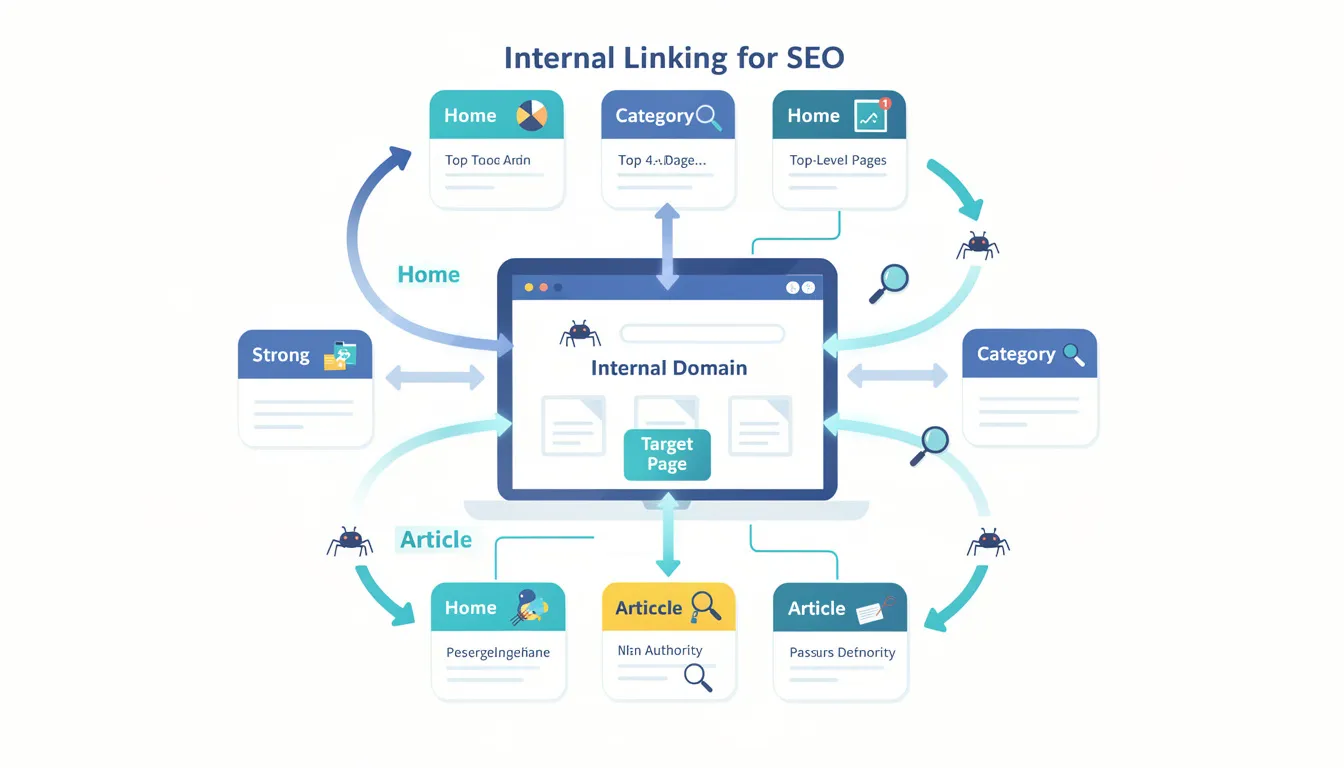
Internal links are hyperlinks that point to pages on the same domain. Internal linking plays a crucial role in connecting multiple pages within the same domain, helping search engines understand your website’s hierarchy and how different pages relate. Internal links also help search engines navigate your site structure more effectively. When you link from one page to another on your site, you pass authority—or link value—from the linking page to the linked to page. This process enhances the visibility and ranking potential of key target pages.
Benefits of Internal Linking for SEO
A strong internal linking structure is one of the simplest yet most powerful SEO strategies you can build. It enhances crawl paths, increases crawl frequency, and ensures that every page on your entire website is accessible to search engine crawlers. Moreover, internal links can prevent orphan pages—pages that have no internal links pointing to them—by making sure all your valuable content is connected to other pages on your site and is discoverable.
How Internal Links Improve User Experience
Internal links also improve user navigation by guiding visitors to related blog posts, product pages, or service pages, encouraging longer site visits, reducing bounce rates, and facilitating desired actions such as sign-ups or purchases. Good internal linking encourages users to explore for longer, which not only improves engagement but also sends positive signals to search engines about your site’s relevance and value.
Types of Internal Links and Their Functions
Different Types of Internal Links
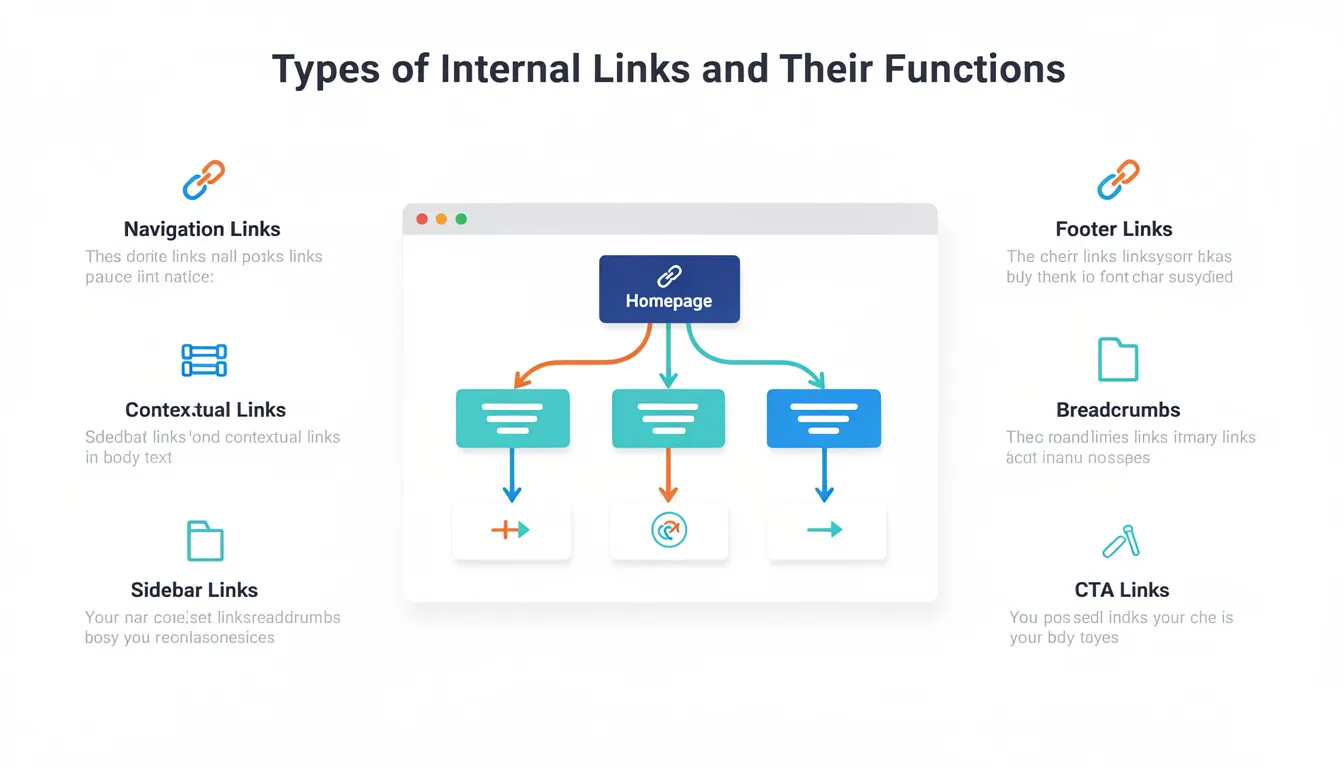
Internal links come in various types, each serving a unique purpose within your site’s architecture:
-
Navigational links help visitors access key sections of a site, such as the homepage, blog, or main category pages. These links are typically found in menus and headers, providing clear pathways for users and search engines to understand your site structure.
-
Contextual links appear naturally within the body of your content. These links guide readers to related topics or supporting information, enhancing topical authority and user experience. Natural placement of contextual links within body text carries more SEO weight than links hidden in footers or sidebars.
-
Footer links usually lead to important informational or legal pages, such as privacy policies, terms of service, or contact information. While they may not hold as much SEO weight as contextual links, they contribute to overall site crawlability and accessibility.
-
Sidebar links often include widgets highlighting recent posts, popular articles, or related content. These links help users discover more relevant content and reduce the number of clicks needed to access deeper pages on your site.
-
Category links organize content into logical groups, making it easier for both users and search engines to navigate related topics.
-
Product links appear on product and service pages, guiding users to related offerings and helping search engines understand product relationships.
-
Internal link modules leverage shortcuts through deep linking to reference other parts of a website more quickly, enhancing discoverability especially on large sites.
In addition to the types of internal links, it's important to consider the types of anchor text used in hyperlinks. Choosing the right type of anchor text—such as exact match, partial match, branded, generic, or naked URLs—can significantly impact your SEO strategy and improve user experience.
Using a balanced mix of these internal link types helps create a comprehensive and user-friendly site structure that benefits both visitors and search engines.
Building a Solid Internal Linking Structure: How Many Internal Links Should You Use?
An effective internal linking structure balances the number of internal links on each page to avoid over-optimization while maintaining natural navigation. While Google can crawl hundreds of links on a page, too many links can dilute link equity and overwhelm users. It’s important to use internal links judiciously to enhance user navigation and optimize on page SEO performance.
Creating topic clusters—where comprehensive pillar pages link to detailed spoke articles—reinforces your site’s topical authority. This structure helps search engines understand the context of your content and improves navigation by grouping related pages together.
Regularly auditing your internal links with tools like Google Search Console helps identify broken links, low-priority pages receiving too many links, and opportunities to add more internal links to high-value pages with low link counts. Regularly auditing for broken links ensures all links enhance user experience and help search engines understand site hierarchy. This ensures a balanced and effective linking structure that maximizes SEO value and user experience.
Developing an Effective Internal Linking Strategy
A strong internal linking strategy prioritizes linking to important pages on your site using descriptive, keyword-rich anchor text that clearly indicates what the destination page is about. Including the target keyword in your anchor text helps search engines understand the relevance and context of the destination page. Anchor text helps users by providing clarity about where the link leads, improving navigation and overall user experience. Avoid generic phrases like “click here” and instead use relevant anchor text that helps users and search engines understand the linked content.
This strategy distributes link equity effectively, boosting page authority and improving your site’s overall SEO performance. When you link from high-authority or popular posts to newer or less visible pages, you pass on SEO strength where it’s needed most, helping those pages rank better.
Using “nofollow” strategically for links you do not fully endorse can prevent authority dilution and maintain the quality of your link profile.
The Power of Contextual Links in SEO
Contextual links are one of the most powerful tools in a solid internal linking strategy, as they are embedded directly within the main content of a web page and point to other relevant pages on the same site. Unlike navigational or sidebar links, contextual links appear naturally within the flow of your content, making them highly valuable for both users and search engines.
For search engines, contextual links provide important signals about the relationship between different pages and topics on your site. When you strategically place contextual links to related pages, you help search engines understand the hierarchy and relevance of your content, making it easier for search engine crawlers to navigate and index your site efficiently. This not only improves crawlability but also ensures that link equity is distributed to key pages, boosting their page authority and increasing their chances of ranking higher in search engine results pages.
From a user perspective, contextual links enhance navigation by guiding visitors to additional relevant content, keeping them engaged and encouraging them to explore more of your site. This seamless user journey not only improves the overall experience but also increases the likelihood that users will find the information they need, reducing bounce rates and supporting your SEO performance.
Incorporating contextual links into your internal linking strategy is essential for maximizing the SEO value of your entire website. By connecting relevant pages within your content, you create a logical site structure that benefits both users and search engines, ultimately driving better rankings and greater visibility for your most important web pages.
Anchor Text: How It Helps Search Engines Understand Your Content
Anchor text is the clickable phrase that describes where the link leads and is important for both SEO and user experience. Anchor text is the clickable phrase in a hyperlink and is critical for SEO and user experience. Descriptive anchor text helps search engines understand the relevance and context of the linked page, boosting its ranking potential for target keywords.
Types of Anchor Text
Using a variety of anchor text types—such as exact match, partial match, branded, and naked URLs—maintains a natural internal linking structure and prevents over-optimization penalties. Exact match anchor text uses the precise keyword you want the target page to rank for, and can be effective when used sparingly and in the right context. Incorporating the exact phrase within anchor text can further improve keyword relevance and help boost search engine rankings for that term.
Best Practices for Anchor Text
However, relying too heavily on exact match or overusing the same keywords can lead to over optimized anchor text, which may trigger search engine penalties. To avoid this, diversify your anchor text and ensure it fits naturally within the content. Contextual links, which appear naturally within your content, carry more SEO weight than links hidden in footers or sidebars.
Relevant links keep users engaged, reducing bounce rates and increasing time on site, which are positive signals for SEO.
Internal and External Links: Understanding Their Roles and Differences
Internal and external links both serve important but distinct roles in SEO. Internal links connect pages within the same site, guiding search engines and users through your site’s content. External links point to authoritative sources on other sites, enhancing your site’s credibility and trustworthiness.
When creating internal links, it’s crucial to always link to the same page—using a single, stable URL for each destination. This avoids issues with duplicate or dynamically generated URLs, ensures consistent internal link structure, and helps maintain proper link equity flow throughout your site.
Balancing internal and external links effectively helps you build a robust SEO hyperlink profile that supports your site’s authority and user experience. Linking to reputable external sources provides further context and builds credibility, complementing your internal linking efforts.
Best Practices for Internal Linking and Anchor Text Optimization
-
Use descriptive, keyword-rich anchor text that clearly indicates the linked page’s content.
-
Avoid over-optimization and excessive linking to keep your structure natural and user-friendly.
-
Connect relevant pages to provide context and keep users engaged.
-
Audit internal links regularly to find and fix broken links and optimize link distribution.
-
Prioritize linking to key pages to pass authority where it’s needed most.
-
Create topic clusters to build topical authority and improve user experience.
-
Place contextual links naturally within your content for maximum SEO benefit.
-
Use varied anchor text to avoid confusion and improve clarity.
-
Ensure internal links help search engine crawlers find and index all pages, especially those deep within your site.
Common Mistakes to Avoid in Your Internal Linking Strategy
-
Over-optimizing anchor text or using the same anchor text for multiple links.
-
Creating broken links that frustrate users and waste link equity.
-
Excessive internal linking that dilutes page authority.
-
Relying only on automated internal linking tools, which can create unnatural link structures.
-
Neglecting to monitor and update internal links, leading to missed SEO opportunities.
Measuring Success: How to Identify Pages and Track Your Internal Linking Performance
To measure the effectiveness of your internal linking strategy, follow these steps:
-
Use tools like Google Search Console and Google Analytics to track key metrics such as page authority, link equity distribution, and search engine rankings.
-
Regularly audit your internal links to identify broken links and ensure all important pages are being linked to appropriately.
-
Analyze which pages are receiving the most internal links and adjust your strategy to distribute link equity where it’s needed most.
-
Make data-driven adjustments to your internal linking structure to enhance SEO performance and website visibility.
Conclusion and Final Thoughts on SEO Hyperlinks and Internal Linking Structure
Internal linking is a fundamental component of SEO success. A well-planned internal linking strategy improves website structure, increases link equity, and boosts search engine rankings. By following best practices, avoiding common mistakes, and regularly auditing your links, you can create a website that both users and search engines love.
Ready to elevate your website’s SEO with a strong internal linking strategy and expert digital marketing services? Contact Sterling Media & Communications at smcww.co.uk today to discover how our tailored SEO solutions can help your business grow and thrive in competitive search engine results pages.
Frequently Asked Questions about Internal Links and SEO Hyperlinks
Q1: Why are internal links important for SEO?
Internal links are crucial because they help search engines discover, crawl, and index all the pages on your website. By linking relevant pages together, you establish a clear site structure that highlights your most important content. This not only improves your site’s visibility in search engine results but also enhances user experience by guiding visitors to related and valuable content.
Q2: How can I control and optimize internal links?
One of the biggest advantages of internal links is that they are fully within your control. Unlike external backlinks, which depend on other websites, you can add, modify, or remove internal links anytime to improve your site’s SEO. This flexibility allows you to strategically distribute link equity, prioritize key pages, and ensure that search engines and users can easily navigate your site.
Q3: What role does internal linking play in user engagement?
Relevant internal links keep users engaged by guiding them to additional related content within your site. This reduces bounce rates and increases the time visitors spend on your website—both of which are positive signals to search engines that your site provides valuable and relevant information. Effective internal linking encourages exploration and can lead to higher conversion rates.
Q4: How often should I audit my internal links?
Regular audits of your internal links are essential to maintain a healthy website structure. Checking for broken links prevents frustrating user experiences and ensures search engines can follow your site hierarchy without interruption. It’s recommended to perform internal link audits at least once or twice a year, or more frequently if you add or update content often.
Q5: Are internal links easier to manage than external links?
Yes, internal links are much easier to manage because you have complete control over them. You can quickly update anchor text, add new links to fresh content, or remove outdated links without relying on external websites. This makes internal linking a powerful and flexible SEO strategy that you can continuously optimize to improve your site’s performance.

0 comments