

Introduction to Social Media Marketing and Its Role in SEO Strategy for Better Search Results
Social media marketing has become an indispensable part of any comprehensive digital marketing strategy. It not only enhances your online presence but also plays a vital role in improving search engine rankings. Platforms like Facebook, Twitter, Instagram, TikTok, and LinkedIn offer unique opportunities to connect with your target audience, drive traffic, and increase brand visibility.
This guide is designed for digital marketers, business owners, and content creators looking to leverage social media for improved SEO results. Understanding the connection between social media and SEO is essential for maximizing your online visibility and staying competitive in today's digital landscape.
What is Social Media for SEO?
Social media SEO is the practice of optimizing social media profiles and posts to improve visibility in search results. Social SEO is the practice of optimizing your social content to help people find you when they search on social media platforms. Social media SEO also involves using search engine optimization tactics in social media posts to increase visibility.
A well-planned social media marketing strategy involves creating and sharing high quality content that resonates with your audience. This content can include blog posts, videos, infographics, and more, designed to engage users and encourage sharing. By actively promoting your content on social media channels, you help build brand authority and trust, which are key social signals that influence SEO efforts.
Moreover, sharing new links on social media accelerates the indexing process by search engines, helping your website content appear faster in Google search results. Social media platforms are increasingly being used as social search engines themselves, especially by younger demographics like Gen Z, who often discover brands and products through social media posts rather than traditional search engines. This shift highlights the growing importance of social media for SEO.
Understanding Search Engines and the Importance of Relevant Keywords in Social Media SEO Strategy
Search engines such as Google use complex algorithms to rank web pages based on relevance, authority, and user experience. Search engine optimization (SEO) is the practice of optimizing your website and online content to rank higher in search engine results pages (SERPs).
Understanding how search engines work and the factors that influence rankings is crucial for developing an effective SEO strategy. Social media contributes to SEO by driving qualified referral traffic to your website, increasing user engagement and dwell time, which are positive signals for search intent and ranking.
Active social media engagement also leads to an increase in branded searches, signaling trust and credibility to search engines. Additionally, Google Search Console data shows that Google has been indexing public social media posts, allowing these posts to appear in search results and further enhance your online visibility.
Social media content typically has a longer lifespan than traditional blog posts because it continues to circulate and attract organic traffic over time. Furthermore, social media helps in building backlinks, which are essential for improving your website’s authority and search rankings.
Creating a Social Media SEO Strategy Using Relevant Keywords and Optimized Social Posts Across Social Media Channels

A successful social SEO strategy should align closely with your overall business goals and objectives. Start by identifying your target audience and understanding their preferences and behaviors on various social media networks.
Each social media platform has its own algorithm and user dynamics, so tailoring your content and approach to each is essential. For example, what works on Instagram may not perform as well on LinkedIn or TikTok.
Your strategy should include keyword research to incorporate relevant keywords naturally into your social media bios and posts, boosting their discoverability in both social media search engines and traditional search engines.
Creating high-quality blog posts, guides, videos, and infographics generates link-worthy content that can be shared across social media accounts. Collaborating with influencers can amplify your reach and attract quality backlinks from their audiences, further enhancing your SEO efforts.
Key Social Media Channels and Their Impact on SEO Efforts and Search Results
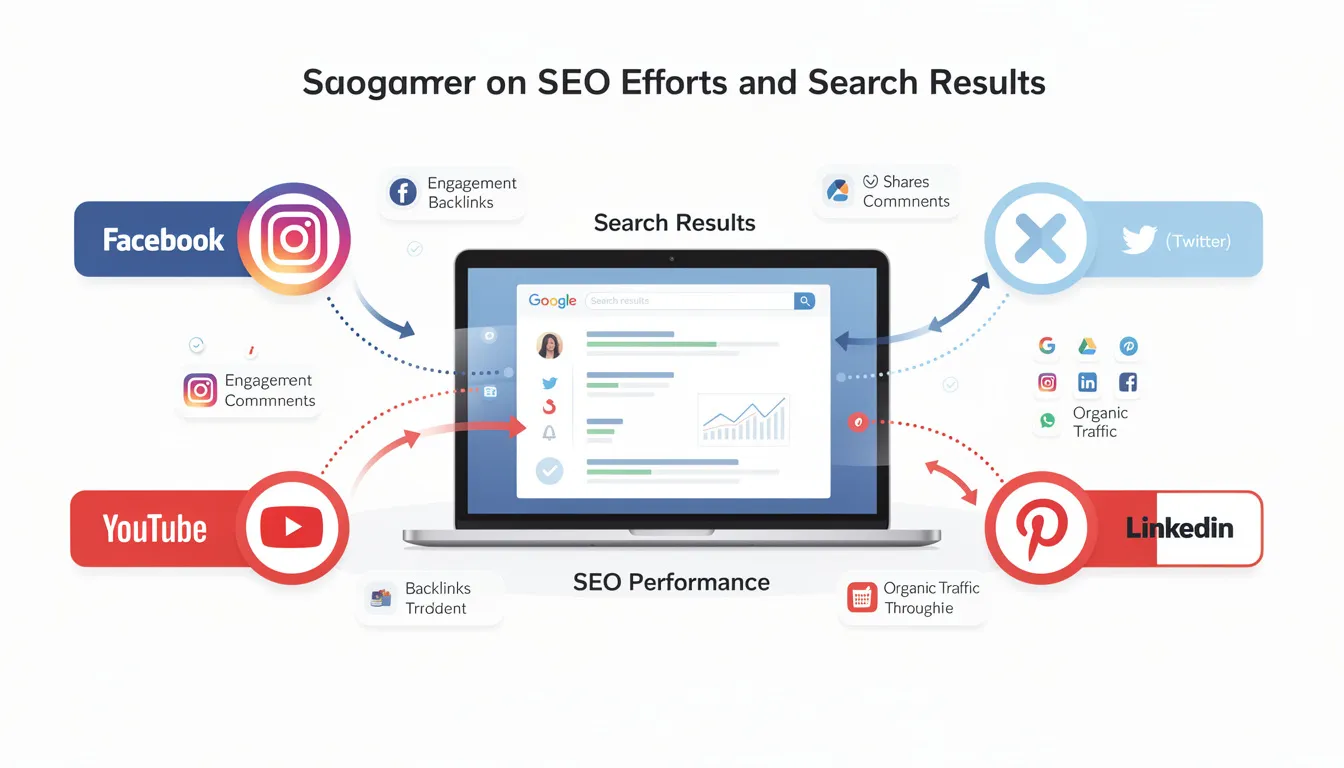
Facebook: Leveraging Social Media Links and Content for SEO
Facebook remains one of the largest social media platforms, offering extensive reach for businesses. Optimizing your Facebook page with relevant keywords in the About section, posts, and captions improves discoverability within Facebook’s own search engine and external search engines like Google. Regular posting and engagement help increase visibility, while Facebook’s integration with Google means your public posts and pages can appear in Google search results. Utilizing Facebook Groups related to your niche can also build community engagement and increase brand authority.
Instagram: Using Relevant Keywords and Social Media Content to Boost SEO
Instagram is a powerful platform for visual content and is increasingly functioning as a social search engine. Using relevant keywords in your bio, captions, and hashtags improves your content’s chances of appearing in Instagram search results. Instagram also supports alt text for images, which boosts accessibility and SEO. Instagram Reels and Stories can be optimized with keywords and hashtags, enhancing visibility. Since Instagram content is now indexed by Google, optimized posts can appear in Google search results, increasing your brand’s reach beyond the platform.
TikTok: Optimizing Social Posts with Relevant Keywords for SEO Success
TikTok has rapidly become a key platform for discovery, especially among younger audiences. Its search engine uses keywords, hashtags, and trending sounds to surface relevant content. Creating content that incorporates trending keywords and hashtags helps your videos get discovered both on TikTok and in Google’s Short Videos search tab. TikTok’s algorithm favors engagement and relevance, so producing authentic, keyword-rich content can boost your SEO indirectly by driving traffic to your website and social profiles.
LinkedIn: Enhancing SEO with Optimized Profiles and High Quality Content
LinkedIn is essential for B2B marketing and professional branding. Optimizing your LinkedIn profile and company page with industry-specific keywords increases visibility in LinkedIn searches and Google results. Publishing articles and posts on LinkedIn that include relevant keywords helps you rank for professional and niche search queries. LinkedIn also allows for rich media such as videos and presentations, which can improve engagement and time spent on your profile, signaling authority to search engines.
Twitter (X): Using Social Media Algorithms and Relevant Keywords to Improve Search Results
Twitter’s real-time nature makes it ideal for sharing timely content and engaging with trending topics. Using relevant keywords and hashtags in tweets improves their discoverability within Twitter’s search and on Google, as public tweets are indexed by search engines. Engaging actively with followers and participating in conversations increases your profile’s visibility and can drive traffic to your website.
YouTube: Integrating SEO Strategy with Video Content for Maximum Visibility
As the world’s second-largest search engine, YouTube is crucial for video SEO. Optimizing video titles, descriptions, tags, and transcripts with relevant keywords helps your videos rank in both YouTube and Google search results. Creating engaging, high-quality videos increases watch time and user engagement, which are key ranking factors. Embedding YouTube videos on your website can also enhance your site’s SEO by increasing dwell time and providing valuable content.
Pinterest: Using High Quality Content and Relevant Keywords to Boost SEO
Pinterest functions as a powerful visual search engine, making it essential for brands with visually appealing products or content. Optimizing your pins with relevant keywords in titles, descriptions, and hashtags increases their visibility in Pinterest search results as well as Google image search. Creating boards around niche topics and regularly updating your content helps maintain engagement and drives referral traffic to your website.
Additional Social Media Channels for SEO Impact
By leveraging these additional social media platforms alongside the major ones, you can create a comprehensive social media for SEO strategy that reaches diverse audiences, enhances brand visibility, and drives meaningful traffic to your website:
-
Blogger
-
Tumblr
-
Medium
-
Reddit
-
Quora
-
Snapchat
Leveraging Social Media Features and Algorithms to Enhance SEO Efforts
Keyword Integration Across Social Media Profiles and Social Posts
Incorporate relevant keywords naturally into your social media bios, captions, hashtags, and image alt texts. This alignment helps both social media search algorithms and traditional search engines understand your content’s relevance, improving visibility.
Use of Hashtags to Boost Discoverability in Social Media Marketing
Hashtags categorize content and make it easier for users to find posts related to specific topics. Using a mix of popular and niche hashtags improves discoverability on social platforms and can increase your content’s reach.
Alt Text for Images: Enhancing Accessibility and Social Media SEO
Adding descriptive alt text to images improves accessibility and helps social platforms and search engines interpret the content of your visuals, boosting your social media SEO.
Engaging Content and Community Interaction to Influence Social Media Algorithms
Encouraging likes, comments, shares, and saves signals to social media algorithms that your content is valuable, increasing its reach. Active engagement also fosters community trust and can lead to more branded searches, which positively influence SEO.
Consistent Branding and Profile Optimization Across Social Media Channels
Maintaining consistent profile names, images, and messaging across various social media platforms helps search engines verify your brand’s legitimacy, improving your overall online visibility.
Monitoring and Adapting Your Social Media SEO Strategy for Ongoing SEO Efforts

Use social media analytics tools and Google Analytics to track engagement, referral traffic, and conversions from social media. Monitor trending topics and audience behavior using social listening tools to keep your content relevant and optimized for current search queries.
Regularly update your profiles and content to maintain high engagement and visibility. Collaborate between your SEO and social media teams to align strategies and maximize the impact of your social media SEO efforts.
By incorporating these platform-specific strategies and leveraging social media features effectively, you can significantly enhance your SEO performance, increase your online visibility, and connect with your audience across various social media platforms.
Pillar: Proper Usage of Social Media for SEO Success
Understanding how to effectively use social media for SEO is essential for maximizing your digital marketing efforts. This pillar provides a detailed guide for clients to grasp the proper usage of social media in the context of SEO, ensuring every action contributes positively to search engine optimization.
1. Establish a Consistent and Authentic Social Media Presence
Your social media presence acts as a digital extension of your brand. Consistency across all social media pages—including profile names, images, bios, and contact information—helps search engines verify your brand’s authenticity and improves brand recognition among social media users and potential customers.
Maintain an authentic voice that resonates with your target audience. Authentic engagement fosters trust, encourages community interaction, and generates valuable social signals that indirectly boost SEO.
2. Develop a Comprehensive Content Strategy Focused on SEO
A robust content strategy is the backbone of social media for SEO. This includes: SEO-optimised content,
-
Keyword Research: Conduct thorough SEO keyword research to identify relevant search queries your audience uses. Incorporate these keywords naturally into your social media bios, posts, captions, hashtags, and image alt text.
-
Content Variety: Use a mix of blog posts, videos, infographics, tutorials, and user-generated content to engage different segments of your audience and cater to platform preferences.
-
Quality Over Quantity: Prioritize high quality content that provides value, answers questions, and solves problems. Valuable content is more likely to be shared, generating backlinks and increasing your content’s lifespan.
-
Content Pillars: Organize your content around key themes or pillars that align with your brand and SEO goals. This helps establish your authority in specific topics and improves search engine rankings.
3. Optimize Social Media Profiles for Search Visibility
Ensure all profile fields are fully completed with consistent and accurate information. Use relevant keywords in your bio and descriptions to improve discoverability in both social media search engines and traditional search engines.
Add website links and contact information that align with your website’s SEO strategy. Use custom link hubs to manage multiple links efficiently without compromising social media SEO.
4. Leverage Social Media Features to Enhance SEO
-
Hashtags: Use a strategic mix of popular and niche hashtags to categorize your content and improve its discoverability. Avoid overusing hashtags to prevent appearing spammy.
-
Alt Text: Always add descriptive alt text to images to enhance accessibility and provide search engines with context about your visuals.
-
Video Captions and Subtitles: Include relevant keywords in video captions and subtitles to improve video SEO on platforms like YouTube, TikTok, and Instagram.
-
Engagement: Encourage comments, shares, and saves to signal content value to social media algorithms, increasing content reach and visibility.
-
Cross-Promotion: Collaborate with influencers and other brands to expand your audience and build backlinks, which support SEO efforts.
5. Monitor and Adapt Your Social Media SEO Efforts
Use analytics tools to track social media engagement metrics, referral traffic, and conversions. Monitor trending topics and audience sentiment using social listening tools to stay ahead of market demands and adjust your content strategy accordingly.
Regularly audit your social media profiles and content to ensure they remain optimized and aligned with your SEO goals. Collaborate closely with your social media manager and SEO team to ensure a cohesive social strategy that maximizes social media impact SEO.
6. Integrate Social Media and SEO Teams for Holistic Strategy
Encourage collaboration between your SEO specialists and social media managers to share valuable insights, keyword data, and performance reports. This integration fosters a unified social strategy and content strategy that leverages the strengths of both disciplines, enhancing overall brand visibility and search rankings.
Frequently Asked Questions (FAQs) About Social Media for SEO, Search Engines, and Social Media Marketing
What is social media for SEO and why is it important in a comprehensive marketing strategy?
Social media for SEO refers to the practice of using social media channels to enhance your website’s visibility in search engines. By sharing high quality content and optimized social posts, you can drive traffic to your website, increase brand awareness, and improve your search engine rankings. Social media platforms themselves also act as search engines, especially for younger audiences, making social media SEO a critical component of any marketing strategy.
Definition:
Social media SEO is the practice of optimizing social media profiles and posts to improve visibility in search results. Social SEO is the practice of optimizing your social content to help people find you when they search on social media platforms. Social media SEO also involves using search engine optimization tactics in social media posts to increase visibility.
How do social media algorithms affect my SEO efforts and content visibility?
Social media algorithms prioritize content that is engaging, relevant, and timely. When your social media content receives likes, comments, shares, and saves, it gains more visibility on the platform. This increased engagement can lead to higher referral traffic to your website, which positively impacts your SEO efforts by signaling content relevance and authority to search engines.
What role do relevant keywords play in social media marketing and SEO strategy?
Relevant keywords are essential for both social media marketing and SEO because they help your content appear in search results on social platforms and traditional search engines. Incorporating target keywords naturally into your social media bios, captions, hashtags, and alt text improves content discoverability and aligns your social media SEO strategy with broader search optimization goals.
How can I optimize my social media profiles and links for better search rankings?
To optimize your social media profiles, complete all profile fields with consistent and accurate information, including your business name, contact details, and website links. Use relevant keywords in your bio and descriptions, maintain consistent branding and profile images across social media channels, and include clear calls-to-action. Regularly update your profiles and add alt text to images to improve accessibility and SEO.
Can social media links improve my website’s SEO and drive traffic?
While most social media links are nofollow and do not directly pass SEO authority, they drive qualified referral traffic to your website and increase content visibility. This traffic can lead to higher user engagement, longer dwell times, and increased chances of backlinks from other websites, all of which indirectly benefit your website’s SEO.
How often should I post social media content to support my SEO strategy and social media marketing goals?
Posting frequency depends on the social media channel and your audience, but consistency is key. Regularly publishing high quality content keeps your audience engaged and signals to social media algorithms that your profile is active. This helps increase your content’s visibility and drives more traffic to your website, supporting your SEO efforts.
What types of social media content perform best for social media SEO?
High-quality content that is engaging, informative, and shareable performs best. This includes blog posts, videos, infographics, tutorials, and user-generated content. Content that incorporates relevant keywords and aligns with trending topics tends to get more visibility in social media search results and traditional search engines.
How can I measure the success of my social media SEO efforts and marketing strategy?
Use social media analytics tools to track engagement metrics such as likes, shares, comments, reach, and follower growth. Additionally, monitor website traffic from social media channels using tools like Google Analytics. Tracking conversions and keyword rankings can also help evaluate how your social media SEO strategy impacts your overall marketing goals.
By incorporating these social media strategies into your SEO efforts, you can build a robust online presence that drives traffic, enhances brand authority, and improves your rankings on both social media search engines and traditional search engines. Embrace social media for SEO as a powerful extension of your digital marketing strategy to connect with your audience where they are searching and engaging today.

0 comments