

Introduction to Artificial Intelligence and Generative AI
Artificial intelligence (AI) refers to the development of computer systems capable of performing tasks that typically require human intelligence, such as understanding natural language, recognizing images, and generating content. A significant advancement within AI is generative AI, a branch that uses deep learning models to create new content based on patterns and structures learned from vast datasets. Generative AI models are a type of machine learning models that learn from large datasets to generate new content. Unlike traditional AI models that analyze and interpret data to make decisions or predictions, generative AI models generate novel outputs such as text, images, music, and even software code. These models, including large language models (LLMs) and foundation models, are trained on extensive amounts of unlabeled data, enabling them to understand and mimic complex data patterns. These models can also be fine-tuned with smaller amounts of labeled data using supervised learning techniques. Human feedback, such as reinforcement learning from human feedback (RLHF), is often used to align generative AI models with human preferences and improve their responses. The rise of deep learning has been pivotal in this field, allowing generative AI to extend beyond simple data types to complex forms like speech and images. Generative AI models work by synthesizing information and generating new content based on user queries. Applications of generative AI span language translation, text summarization, and creating content that is high-quality and tailored to user needs, revolutionizing how machines assist humans in creative and analytical tasks.
Deep Generative Models and AI Models Explained

Deep generative models are a class of machine learning AI models that leverage neural networks to produce new content. These models rely on advanced AI algorithms to learn the underlying distribution of training data and generate highly realistic outputs such as images, videos, and text. Among the most notable deep generative models are Generative Adversarial Networks (GANs), Variational Autoencoders (VAEs), diffusion models, and transformer-based foundation models. Some transformer-based foundation models are very large models with hundreds of billions of parameters, requiring specialized hardware and datacenter infrastructure.
Generative Adversarial Networks (GANs)
Generative Adversarial Networks consist of two neural networks—the generator and the discriminator—that are trained simultaneously in a competitive setting. The generator creates synthetic data by transforming random noise into samples resembling the training dataset, while the discriminator evaluates these samples to distinguish between real and fake data, pushing the generator to improve its outputs continuously. GANs are particularly known for generating realistic images that are often indistinguishable from real photographs. GANs have been widely applied in computer vision, robotics, and entertainment, creating highly realistic images of faces, objects, and scenes used in virtual reality and art. Generated images produced by GANs are also used in digital art, deepfakes, and synthetic media, raising ethical and regulatory concerns. Image generators are trained on large datasets, which has led to legal debates over the use of copyrighted images in training data.
Variational Autoencoders (VAEs)
Variational Autoencoders probabilistically encode data by modeling latent space as a probability distribution, enabling smooth sampling and interpolation between data points. They consist of an encoder that maps input data to mean and variance parameters of the latent distribution and a decoder that reconstructs data samples from points sampled within this space. VAEs excel in noise reduction, data compression, and generating diverse variations of input data.
Diffusion Models
Diffusion models generate new data by progressively adding controlled noise to an initial data sample and then reversing this process through denoising steps to produce coherent outputs. Their iterative approach allows creation of highly realistic images, videos, and other complex data, making them significant for image generation tasks.
Transformer-Based Foundation Models
Transformers have become the backbone of many generative AI models due to their unique encoder-decoder architecture and self-attention mechanisms. They process entire input sequences simultaneously, weighing the importance of each part of the data to capture context and long-range dependencies efficiently. Transformers have largely replaced traditional recurrent neural networks (RNNs) for processing sequences, as they can handle entire sequences at once and capture long-range dependencies more effectively than RNNs, which process data sequentially.
Foundation models built on transformers, such as the GPT series, are trained on vast unlabeled datasets and can generate highly realistic text and other content types. Their versatility allows them to perform multiple tasks including language translation, summarization, creative writing, and code generation, often with minimal fine-tuning.
The field of generative AI continues to evolve with the development of new models and architectures that further expand its capabilities.
Generative AI Engines
Generative AI engines are at the forefront of artificial intelligence technology, harnessing the power of large language models and advanced machine learning algorithms to deliver human-like responses to a wide range of user queries. These engines—such as ChatGPT, Perplexity, and Gemini—are built on sophisticated generative AI models that have been trained on massive datasets, enabling them to recognize patterns, understand context, and generate content that is both relevant and engaging.
By leveraging natural language processing and deep learning, generative AI engines can interpret complex questions posed in natural language and provide answers that are contextually accurate and tailored to the user’s intent. Unlike traditional search engines that simply retrieve links to relevant websites, generative AI engines synthesize information from their training data to generate original responses, whether in the form of text, images, or other multimedia formats.
The core strength of these engines lies in their ability to learn from vast amounts of training data, allowing them to continuously improve their understanding of language and user needs. As a result, generative AI engines are transforming how individuals and businesses access information, automate tasks, and create high quality content. Their applications span customer support, digital marketing, education, and beyond, making them essential tools in the modern digital landscape.
Generative AI Adoption Across Business Processes and Industries
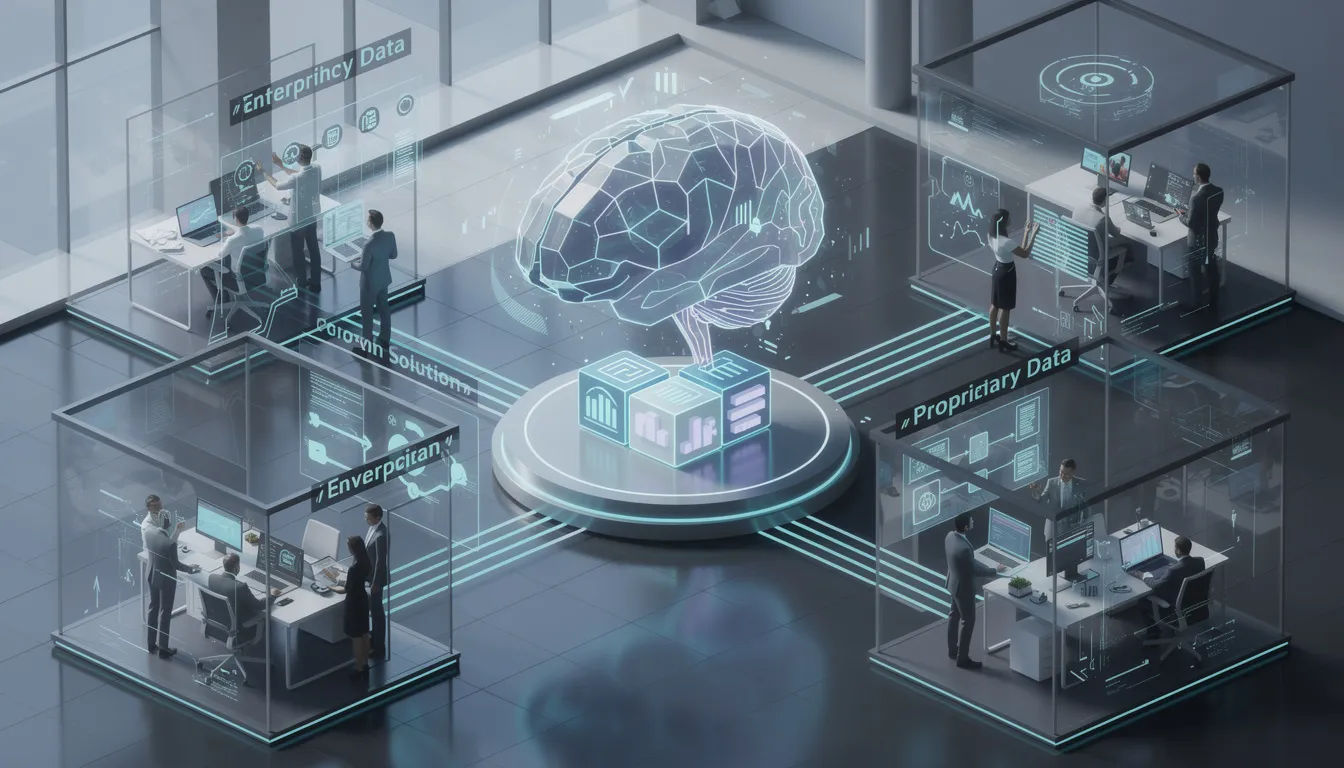
Generative AI has seen rapid adoption across diverse industries, transforming workflows and enabling new capabilities in business processes. Organizations are increasingly leveraging enterprise data and proprietary data to fine-tune generative AI models for customized solutions, often using techniques that avoid expensive retraining.
Healthcare and Drug Discovery
In healthcare, generative AI accelerates drug discovery by modeling molecular structures and simulating protein sequences, as well as generating automated clinical notes to improve efficiency. It also analyzes medical images to assist diagnosis.
Finance and Fraud Detection
The finance sector leverages generative AI for real-time fraud detection, automated regulatory reporting, risk assessments, and automating report generation, enhancing operational efficiency and compliance.
Media, Entertainment, and Content Creation
Media and entertainment benefit from generative AI by reducing video production times from weeks to hours, generating scripts, composing music, creating visual effects, and building evolving virtual worlds. Generative AI also generates blog posts, articles, social media captions, ad copy, and images while maintaining brand voice and personalization.
Software Development and Customer Service
Software developers use generative AI to generate code snippets, debug programs, write documentation, and create test cases. Customer service experiences are enhanced by AI-powered chatbots that provide instant, human-like, personalized responses, reducing support response times by up to 60%.
Manufacturing, Logistics, and Education
Generative AI optimizes product designs, simulates testing scenarios, and improves supply chain management in manufacturing. It facilitates dynamic routing in logistics and predictive maintenance to reduce equipment downtime. Educational platforms use generative AI to create adaptive learning curricula, 24/7 AI tutors, personalized learning plans, and automated grading systems.
Synthetic Data and Privacy
Synthetic Data, artificially generated datasets, are used to train models in sensitive fields where real-world data is limited or protected by privacy and copyright laws, enabling robust and trustworthy AI development.
Content Quality and Generative AI: Creating High Quality Outputs
The quality of content generated by generative AI models is heavily influenced by the quality of training data and the architecture of the models themselves. While these models can produce highly realistic and relevant content, it is crucial to evaluate outputs for accuracy, bias, and relevance. Generative AI can inadvertently reflect and amplify cultural biases present in training data, necessitating careful oversight. Moreover, as generative AI becomes more prevalent in journalism and content creation, concerns arise over misinformation, fake news, and ethical implications. Despite these challenges, generative AI offers the potential to create high-quality content at scale, supporting creative writing, marketing copy, social media captions, and more, while maintaining brand voice and personalization.
What Does Generative AI Mean for Generative Engine Optimization (GEO)?
Understanding Generative Engine Optimization
Generative Engine Optimization (GEO) is the process of optimizing content on web pages to ensure it is properly displayed and cited by AI-driven search engines and generative AI platforms such as ChatGPT, Perplexity, and Google Gemini. Unlike traditional search engine optimization (SEO), which aims to improve rankings in search engine results pages, GEO prioritizes making content accessible and authoritative enough to be integrated into AI-generated answers.
Differences Between GEO and Traditional SEO
GEO differs from SEO in that it focuses on ensuring content gets cited or integrated into AI-generated answers rather than just ranking on traditional search engine results pages. It requires a deeper understanding of topics, products, and user intent compared to traditional SEO’s focus on keyword matching.
Key Components of Effective GEO
-
High-Quality, In-Depth Content: Creating authoritative, comprehensive content is essential to GEO success.
-
Technical SEO: Ensuring websites are set up for easy crawling and indexing by AI models through fast site speed, mobile-friendliness, secure connections, and structured data markup like schema.
-
Content Structure and Accessibility: Content should be well-structured, formatted for accessibility, and easy for AI to crawl and parse.
-
Content Freshness: Regularly updating content is important as large language models often browse the internet to inform their responses.
-
Schema Markup: Using schema markup improves the chances of content being interpreted properly by AI models, increasing visibility in AI-generated responses.
Purpose and Benefits of GEO
The purpose of generative engine optimization is to improve the visibility of a website within popular large language models (LLMs) and enhance brand awareness online. High-quality content optimized for GEO enhances user experience and increases the chances of being featured in AI-generated responses, driving organic traffic and improving reputation.
How Sterling Media & Communications Can Help with GEO
As generative engine optimization becomes an increasingly vital aspect of digital marketing—often replacing traditional SEO in driving traffic and building authority—Sterling Media & Communications offers expert guidance to help businesses navigate this evolving landscape. Our team specializes in crafting tailored GEO strategies that align with the latest AI-driven search algorithms and generative AI platforms.
We assist clients by:
-
Developing authoritative, in-depth content that resonates with both users and AI engines, ensuring your brand is positioned as a trusted source in your industry.
-
Implementing advanced technical SEO practices that optimize site speed, mobile usability, security, and structured data markup, making your website fully accessible and understandable to generative AI systems.
-
Structuring and formatting content to maximize crawlability and interpretability by AI, using clear headings, bullet points, and schema markup to highlight key entities and information.
-
Maintaining content freshness through ongoing audits and updates, keeping your website relevant and favored by large language models that prioritize recent information.
-
Monitoring AI-generated search results and citations to track your brand’s visibility and influence within generative AI responses, allowing for data-driven adjustments to your GEO strategy.
By partnering with Sterling Media & Communications, businesses can confidently adapt to the shift from traditional SEO to GEO, leveraging generative AI technology to enhance their online presence, increase organic traffic, and build lasting authority in their markets. Our expertise ensures that your content not only ranks well in conventional search engines but also becomes a prominent source for AI-generated answers, securing a competitive edge in the new era of digital discovery.
Implications and Challenges of Generative AI
While generative AI offers transformative benefits, it also presents significant challenges and ethical considerations.
Workforce and Job Market Impact
Generative AI may lead to mass replacement of human jobs across sectors, raising concerns about workforce displacement.
Cybersecurity and Ethical Concerns
Generative AI has been exploited for cybercrime, including creating deepfakes, fake news, and fraudulent content, which undermine trust and security. Ethical concerns also extend to voice generation AI, which can be misused to produce controversial or harmful statements.
Privacy and Intellectual Property
Models can inadvertently ingest and reproduce personal or copyrighted information, complicating privacy and intellectual property rights.
Environmental Impact
Generative AI has a substantial carbon footprint due to the high energy consumption required for training and operation. The widespread adoption of generative AI tools haeos further contributed to increased energy consumption and raised additional environmental concerns.
Societal and Regulatory Responses
Governments, businesses, and individuals have responded with protests, legal actions, and calls to regulate or pause AI development to address these risks.
The Future of Generative AI: Foundation Models, Prompt Engineering, and Agentic AI
The future of generative AI is poised for continued growth and deeper integration into business processes and daily life.
Foundation Models and New Architectures
Foundation Models (FMs) are very large AI models trained on vast and diverse unlabeled data. New generative AI models and architectures will emerge, improving accuracy, reducing biases, and expanding capabilities across creative writing, software development, healthcare, finance, and education.
Prompt Engineering
Prompt Engineering is the skill of crafting optimal inputs to guide generative AI models toward desired outputs, enhancing model effectiveness and user experience.
Agentic AI
Agentic AI models independently manage multi-step tasks, make decisions, and execute workflows without human prompting, increasing AI autonomy and usefulness.
Integration into Critical Infrastructure
By 2026, generative AI is expected to transition into critical infrastructure embedded in design, software, and communication systems, fundamentally reshaping industries and human-computer interaction.
This comprehensive overview explains what does generative AI mean, details deep generative models and AI models, explores generative AI adoption and business processes, highlights content quality importance, and delves into generative engine optimization, implications, and future directions of generative artificial intelligence.
If you're looking to harness the power of generative AI to elevate your brand's digital presence and optimize your content for the future of search and AI-driven platforms, Sterling Media & Communications is here to help. Visit smcww.co.uk to discover how their expert team can guide your business through the evolving landscape of generative AI technology and generative engine optimization, ensuring your content stands out in AI-generated responses and reaches your target audience effectively.
Frequently Asked Questions (FAQs) about Generative AI
What are diffusion models in generative AI?
Diffusion models are a type of generative AI that create new data by iteratively making controlled random changes, or noise, to an initial data sample. This process progressively alters the sample, and then the model reverses these changes through a denoising procedure to produce a coherent and realistic new output. Diffusion models are particularly effective for generating high-quality images, videos, and other complex data types.
Why is technical SEO important for generative engine optimization (GEO)?
Technical SEO plays a crucial role in generative engine optimization by ensuring that websites are structured and configured to be easily crawled and indexed by AI models. This includes optimizing site speed, mobile-friendliness, secure connections (SSL), and implementing structured data markup like schema. Proper technical SEO allows generative AI systems to access and interpret website content accurately, increasing the likelihood of that content being featured in AI-generated responses.
What is Retrieval-Augmented Generation (RAG), and how does it improve generative AI outputs?
Retrieval-Augmented Generation (RAG) is a technique that enhances generative AI by grounding its responses in trusted internal data sources. By retrieving relevant information during the generation process, RAG reduces the occurrence of hallucinations—where AI produces inaccurate or fabricated content—resulting in more reliable and factual outputs.
How is generative AI used in education?
Generative AI is transforming education by creating personalized learning plans tailored to individual student needs and automating grading systems. These adaptive technologies help provide customized instruction and feedback, making learning more effective and accessible.
In which sectors has generative AI been adopted?
Generative AI has been widely adopted across numerous sectors, including software development, healthcare, finance, entertainment, customer service, sales and marketing, art, writing, product design, and education. Its versatility enables innovation and efficiency improvements in diverse business processes and creative endeavors.
Can generative AI reflect biases?
Yes, generative AI can reflect and amplify cultural biases present in its training data. Since models learn from large datasets that may contain biased representations, outputs can inadvertently perpetuate stereotypes or unfair assumptions, highlighting the need for careful oversight and bias mitigation strategies.
How is generative AI affecting journalism?
The ability of generative AI to produce large volumes of content with minimal effort is impacting journalism by changing how news and articles are created. While it offers efficiency, it also raises concerns about misinformation, quality control, and ethical standards in media production.
What are the privacy and intellectual property challenges with generative AI?
Generative AI models can inadvertently ingest personal or copyrighted information during training and later reproduce it in generated content. This creates unique challenges for privacy protection and intellectual property rights, necessitating ongoing legal and ethical considerations.
What is the future outlook for generative AI?
By 2026, generative AI is expected to become critical infrastructure embedded in design, software, and communication systems. This integration will further reshape industries, enhance automation, and expand AI’s role in daily life and business operations.

0 comments