

Introduction to On-Page SEO
This guide is for website owners, digital marketers, and anyone looking to improve their site's search engine performance. Mastering on-page SEO is essential for increasing your website's visibility, attracting more organic traffic, and achieving your business goals.
The correct term is on-page SEO, which is the industry standard and refers to the practice of optimizing webpage content for search engines and users. On-page SEO is the practice of optimizing webpage content for search engines and users, focusing on high-quality, user-centric content, relevant keywords, and technical elements like fast page speed and mobile-friendliness. This practice is crucial for improving search engine rankings and driving more organic traffic to your website. Unlike off-page SEO, which focuses on external signals like backlinks, on-page SEO is entirely under your control and directly impacts how search engines and users perceive your website.
On-page SEO is important because it can improve your rankings and traffic for individual pages targeting specific keywords. Content is the primary driver of search success and should satisfy search intent by matching the user's query goal. Understanding on-page SEO is essential for any website owner or digital marketer looking to increase their online visibility and reach their target audience effectively. It involves optimizing various elements on a webpage, including title tags and meta descriptions, header tags, URLs, content, images, and internal links. These on-page factors collectively help search engines understand the page’s topic and relevance, which can significantly boost your search rankings.
By mastering on-page SEO, you can improve your website’s search engine rankings, drive more targeted traffic, and increase conversions. Implementing a strong on-page SEO strategy ensures that your website content is both user-friendly and optimized for search engines, providing a seamless experience for visitors and improving your site's authority.
What is On-Page Search Engine Optimization?
On-page SEO is the practice of optimizing webpage content for search engines and users. It encompasses all the elements that you can control directly on your website, including content quality, keyword usage, HTML source code, and site architecture. The goal is to make your web pages more understandable and relevant to both users and search engines.
On-page SEO involves optimizing content and HTML source code for search engines, focusing on high-quality, user-centric content, relevant keywords, and technical elements like fast page speed and mobile-friendliness. It includes a variety of techniques such as optimizing title tags, meta descriptions, header tags, URL structures, images, and internal links. These elements work together to signal to search engines what your page is about and how it matches user queries. Effective on-page SEO helps ensure that your content meets user intent and provides a positive user experience, which are key factors in ranking higher on SERPs.
What is an On-Page SEO Technique?
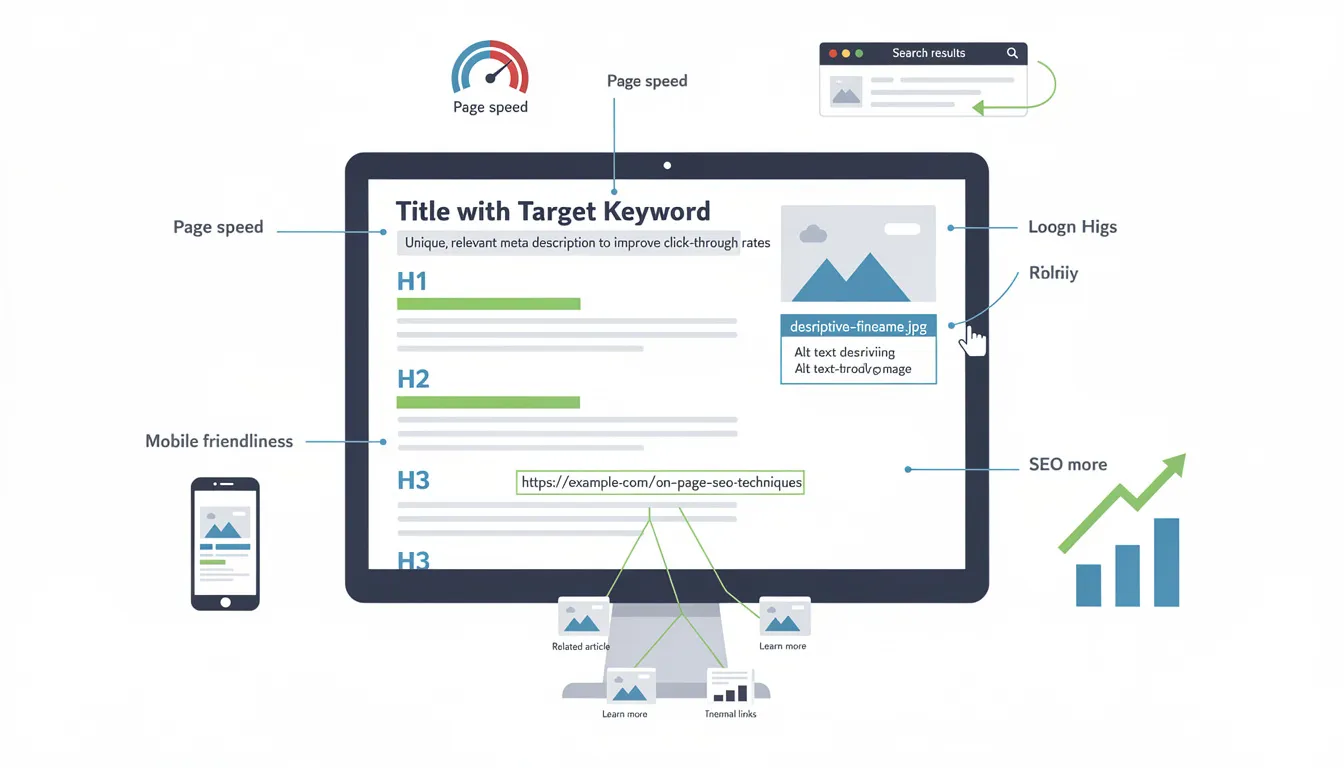
An on-page SEO technique refers to any method used to optimize the content and HTML source code of a webpage to improve its ranking in search engine results. Examples include:
-
Placing target keywords strategically in the title tag, headers, and body content.
-
Writing unique, relevant meta descriptions to improve click-through rates.
-
Structuring content with header tags (H1, H2, etc.) for readability and SEO.
-
Optimizing images with descriptive filenames and alt text.
-
Creating SEO-friendly URLs that include keywords and use separate words with hyphens.
-
Enhancing page load speed and mobile-friendliness to improve user experience.
-
Using internal links to connect relevant pages and help search engines crawl the site.
These techniques collectively improve a webpage’s relevance, authority, and usability, helping it rank higher in search engine results.
What are the 4 Types of SEO?
SEO can be broadly categorized into four main types:
-
On-Page SEO: Optimization of individual web pages, focusing on content and HTML source code to improve rankings and user experience.
-
Off-Page SEO: Activities outside your website, such as link building, social media marketing, and brand mentions, which build authority and trust.
-
Technical SEO: Optimization of backend website elements like site speed, mobile-friendliness, indexing, crawlability, and security (HTTPS) to ensure search engines can access and understand your site.
-
Local SEO: Strategies to optimize your online presence for local search queries, helping businesses attract customers in specific geographic areas.
Each type plays a vital role in a comprehensive SEO strategy, working together to improve your website’s visibility and performance.
What is an Example of On-Page and Off-Page SEO?
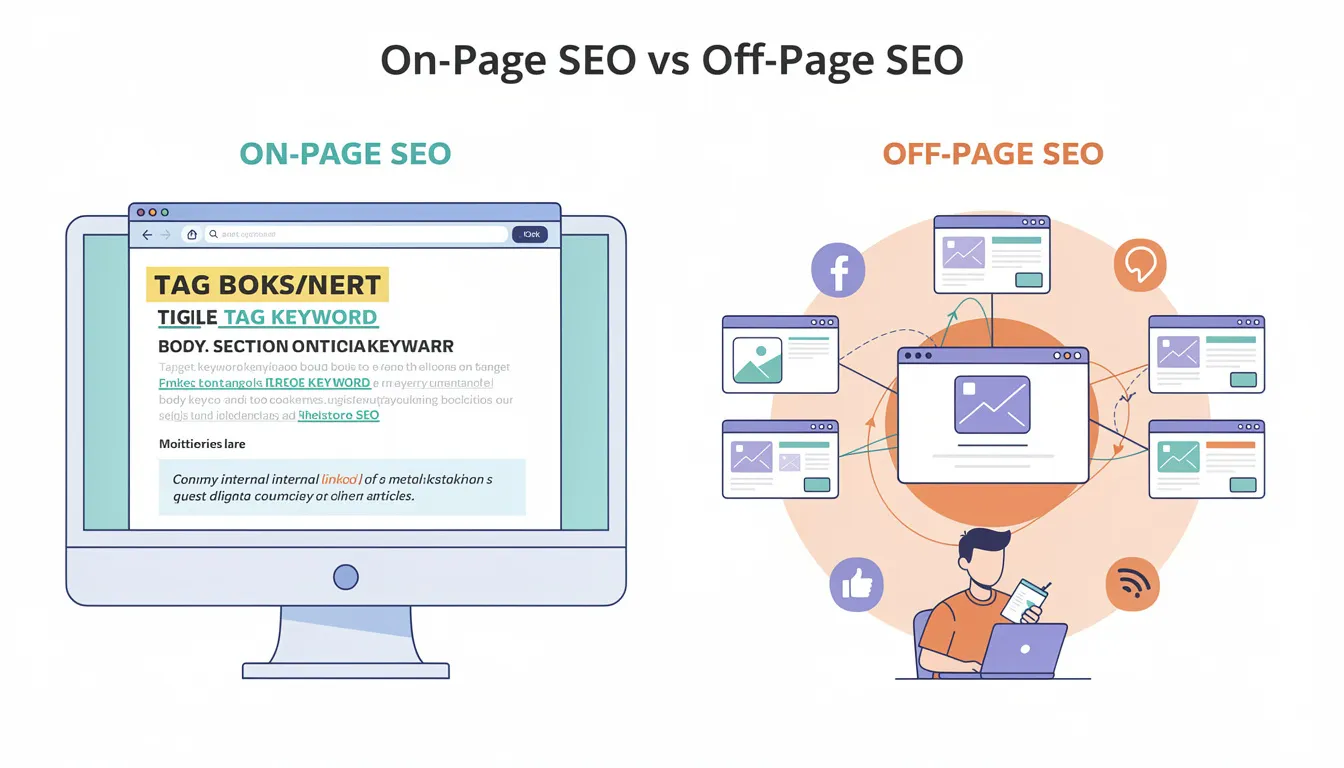
An example of on-page SEO is optimizing a blog post by including the target keyword in the title tag, headers, and body content, adding relevant internal links, and writing a compelling meta description.
An example of off-page SEO is acquiring backlinks from authoritative external websites, engaging in social media marketing, or guest posting on other websites to increase your site’s authority and referral traffic.
Both on-page and off-page SEO are essential for a well-rounded SEO strategy.
What is On-Page SEO Services?
On-page SEO services are professional offerings that focus on optimizing the individual pages of a website to improve search engine rankings and user experience. These services typically include:
-
Keyword research and integration.
-
Optimization of title tags, meta descriptions, and header tags.
-
Content creation and enhancement to match search intent.
-
URL structure optimization.
-
Image optimization with descriptive alt text.
-
Internal linking strategy development.
-
Technical improvements like page speed and mobile responsiveness.
Businesses often hire SEO agencies or specialists to perform these services to ensure their website is fully optimized for search engines and users.
Does On-Page SEO Work?
Yes, on-page SEO works and is a fundamental component of any effective SEO strategy. By optimizing the elements on your web pages, you make it easier for search engines to understand your content and match it with relevant search queries. This leads to higher rankings, increased organic traffic, and better user engagement.
While on-page SEO alone may not guarantee top rankings—since off-page factors like backlinks also play a role—it is entirely within your control and provides a strong foundation for SEO success.
How to Improve SEO On-Page?
Steps to Improve On-Page SEO
-
Conduct thorough keyword research to identify relevant keywords that match search intent.
-
Optimize title tags and meta descriptions with target keywords and compelling copy.
-
Use header tags (H1, H2, H3) to structure content logically and include keywords where appropriate.
-
Write high-quality, unique, and engaging content that provides value to users.
-
Optimize images with descriptive filenames and alt text.
-
Create SEO-friendly URLs with separate words using hyphens.
-
Implement internal linking to related and important pages.
-
Ensure your website is mobile-friendly and loads quickly.
-
Use structured data (schema markup) to help search engines better understand your content.
-
Regularly update and audit your pages to maintain optimization.
Following these best practices can significantly enhance your on-page SEO performance.
Understanding Search Intent
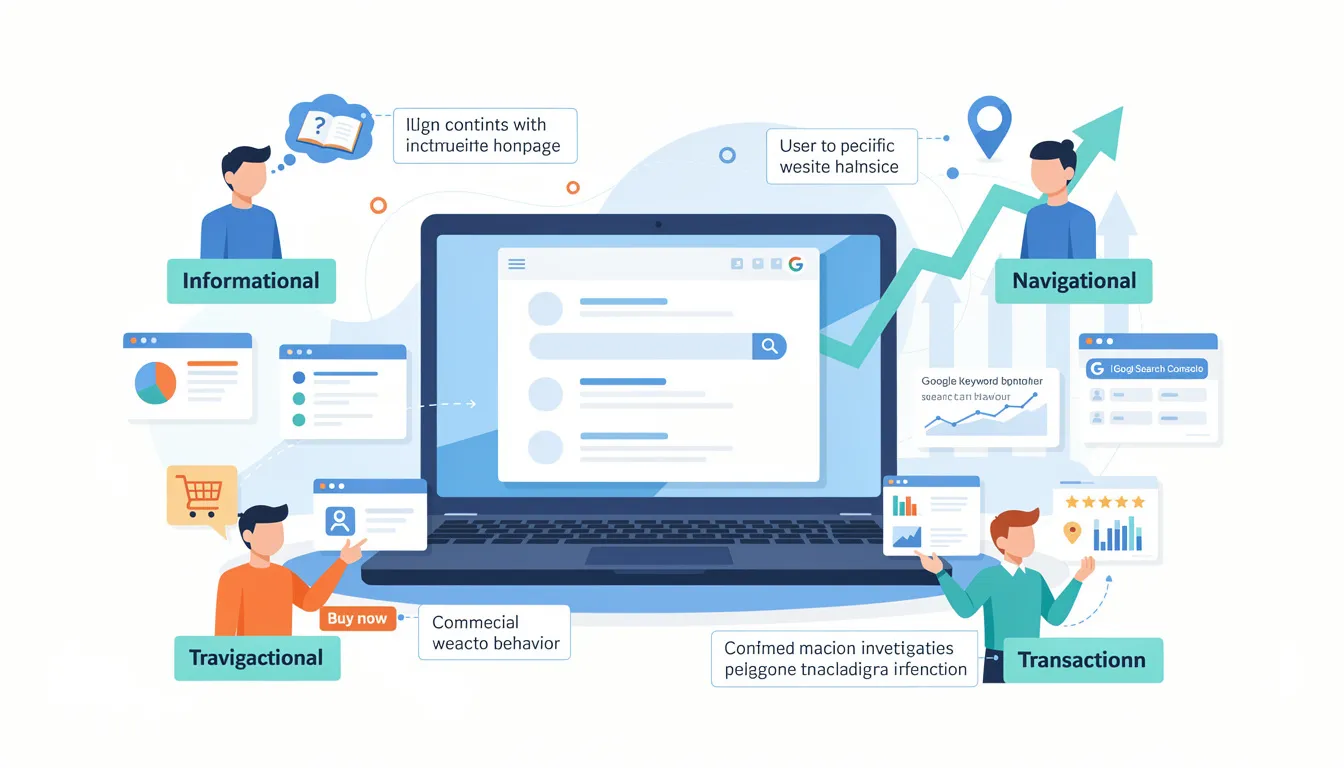
Search intent refers to the underlying reason behind a user’s search query. Understanding this intent is critical for creating content that meets the needs of your target audience and aligns with what they are looking for when they use search engines like Google.
There are several types of search intent, including informational (seeking knowledge), navigational (looking for a specific website), transactional (ready to make a purchase), and commercial investigation (researching products or services before buying). Each type requires a different approach to content creation and optimization to effectively satisfy the user's needs.
To understand search intent, you need to analyze your target audience, their needs, and their search behavior. Tools like Google Search Console and Google Keyword Planner can help you identify what your audience is searching for and how to match your content accordingly. Creating content that resonates with search intent improves its relevance and usefulness, which can lead to higher search engine rankings, better user engagement, and more conversions.
By aligning your content with user intent, you ensure that your website pages provide the answers and solutions users are actively seeking, which is a key factor in successful on-page optimization.
Optimizing Title Tags
Title tags are one of the most important on-page SEO elements. They serve as the clickable headline in search engine results and help search engines understand the page’s topic and relevance. A well-optimized title tag can significantly improve your click-through rates and search rankings.
A good title tag should be descriptive, concise, and include the primary keyword or target keyword for the page. It should also be compelling enough to encourage users to click through to your site. Avoid keyword stuffing and make sure each title tag is unique for every page on your website.
Title tags should ideally not exceed 60 characters to avoid truncation in search results. Including relevant keywords near the beginning of the title tag can help improve visibility in search results and better match user queries.
By optimizing your title tags and meta descriptions effectively, you can enhance your website’s visibility in search engine results pages, attract more organic traffic, and increase user engagement.
On-Page SEO Elements
Key On-Page SEO Elements
On-page SEO elements include title tags, meta descriptions, header tags, content, internal links, URLs, and images. Each of these elements plays a crucial role in helping search engines understand the page’s topic and relevance, as well as improving the user experience.
Meta Tags
Meta tags, such as meta descriptions and title tags, provide concise summaries of your page content to search engines and users.
Header Tags
Header tags (H1, H2, H3, etc.) help structure your content, making it easier to read and navigate. Including relevant keywords in these tags can further enhance your SEO efforts.
Internal Links
Internal links connect relevant pages within your website, helping search engine crawlers discover and index your pages more efficiently. They also improve user navigation by guiding visitors to related content, increasing the time they spend on your site.
URLs
Optimizing URLs to be concise, descriptive, and keyword-rich improves both SEO and user experience.
Images
Optimizing images with descriptive filenames and alt text makes your content more accessible to screen readers and helps search engines understand the visual content.
By optimizing all these on-page SEO elements for each page on your website, you can improve your overall search performance, increase user engagement, and drive more conversions.
Content Optimization
Content optimization involves creating high-quality, relevant, and useful content that meets the needs of your target audience while being optimized for search engines. This balance ensures that your content attracts organic traffic and provides real value to users.
Keyword Research
Your content should be well-researched and incorporate relevant keywords naturally without keyword stuffing, which can harm your rankings. Using keyword research tools can help you find relevant keywords and phrases that align with user search queries and intent.
Content Structure
Content should be structured with header tags to improve readability and help search engines understand the content hierarchy. Including descriptive alt text for images enhances accessibility and SEO.
Technical Factors
Content optimization also involves ensuring your pages are mobile-friendly, load quickly (page speed), and are secure. These technical on-page factors contribute to a positive user experience, which is increasingly important for search engine rankings.
By continuously optimizing your content, you can improve your website’s search engine rankings, increase user engagement, and establish your brand as an authority in your industry.
What is Off-Page Search Engine Optimization?
Off-page search engine optimization (SEO) refers to actions taken outside of your own website to impact your rankings within search engine results pages. This primarily involves building backlinks from other websites, which act as votes of confidence and authority for your site.
Off-page SEO also includes social media marketing, influencer outreach, guest blogging, and other strategies that increase your website’s visibility and reputation on the internet. While on-page SEO focuses on optimizing elements within your website, off-page SEO helps build your site’s credibility and trustworthiness in the eyes of search engines.
Combining on-page and off-page SEO creates a comprehensive strategy that improves your website’s authority, relevance, and overall search rankings.
What is the 80/20 Rule in SEO?
The 80/20 rule in SEO suggests that approximately 20% of your SEO efforts will generate 80% of your results. This means focusing on the most impactful SEO activities—such as optimizing your most important pages, targeting high-value keywords, and building quality backlinks—can yield the majority of your traffic and rankings.
Understanding this principle helps prioritize SEO tasks, ensuring you spend your time and resources on strategies that provide the greatest return on investment.
Is it On Page or In Page SEO?
The correct term is on-page SEO, which refers to optimization techniques applied directly on the web pages themselves. While some may say "in page SEO," the industry standard and widely accepted term is "on-page SEO."
What is an OnPage?
"OnPage" is a shorthand term sometimes used to refer to on-page SEO. It encompasses all the optimization efforts done on individual web pages to improve their search engine rankings and user experience.
Which one is correct, On Page or At Page?
The correct phrase is on page when referring to SEO. For example, "on-page SEO" is the accepted term. "At page" is not used in this context.
What is the Meaning of On Page and Off-Page?
-
On-page SEO refers to optimization activities performed directly on the website’s pages, such as content creation, HTML code optimization, and internal linking.
-
Off-page SEO refers to external activities like link building, social media marketing, and online reputation management that influence the website’s authority and ranking.
Both are essential components of a successful SEO strategy.
What are On-Page SEO Strategies?
-
Conducting keyword research to target relevant search terms.
-
Optimizing title tags and meta descriptions.
-
Structuring content with appropriate header tags.
-
Creating high-quality, user-focused content.
-
Optimizing images with alt text and descriptive filenames.
-
Improving URL structures.
-
Implementing internal linking.
-
Enhancing page speed and mobile responsiveness.
-
Using structured data (schema markup) to enable rich snippets.
These strategies help improve search engine rankings and user experience.
What are the 4 C's of SEO?
The 4 C's of SEO are:
-
Content: High-quality, relevant, and engaging content that satisfies user intent.
-
Code: Clean, optimized HTML and website code that aids search engine crawling.
-
Credibility: Building authority through backlinks and positive reputation.
-
Context: Ensuring content relevance and alignment with search queries and user intent.
Focusing on these four areas helps create a robust SEO foundation.
How to Do SEO on a Page?
-
Research and select target keywords.
-
Optimize the page’s title tag and meta description.
-
Use header tags to organize content and include keywords.
-
Write unique, high-quality content that addresses user needs.
-
Optimize images with descriptive alt text.
-
Use SEO-friendly URLs with separate words.
-
Add internal links to related pages.
-
Ensure the page loads quickly and is mobile-friendly.
-
Implement structured data to enhance search results.
By systematically applying these techniques, you can improve your page’s SEO performance.
Conclusion and Next Steps for Your On-Page SEO Success
Mastering on-page SEO is a powerful way to enhance your website’s visibility, attract more organic traffic, and ultimately grow your business. By optimizing individual web pages with the right keywords, compelling meta tags, structured content, and seamless user experience, you set the foundation for higher search engine rankings and better engagement with your audience.
However, implementing an effective on-page SEO strategy can be complex and time-consuming. That’s where Sterling Media & Communications (SMC) comes in. With their expert knowledge and proven track record, SMC can help you craft and execute a tailored on-page SEO plan that delivers measurable results and increase store footfall with geo-fenced ads.
Ready to take your website to the next level? Visit SMC’s website today to learn more about their comprehensive SEO services. Partner with Sterling Media & Communications and watch your online presence and business grow like never before.
Frequently Asked Questions (FAQs) About On-Page SEO
What is the difference between on-page SEO and off-page SEO?
On-page SEO involves optimizing elements directly on your website pages, such as content, title tags, meta descriptions, header tags, URLs, images, and internal links. Off-page SEO, on the other hand, focuses on external factors like building backlinks, social media marketing, and digital PR that influence your site’s authority and ranking. Both are important, but on-page SEO is entirely within your control and forms the foundation for effective search engine optimization.
Why is on-page SEO important for my website?
On-page SEO is important because it helps search engines understand your website’s content and relevance to user queries. By optimizing individual web pages, you improve your chances of ranking higher in search engine results pages (SERPs), driving more organic traffic, and providing a better user experience. It also ensures your content aligns with search intent, which is essential for satisfying users and encouraging engagement.
How do I choose the right keywords for on-page SEO?
Effective keyword research is the first step in on-page SEO. Use tools like Google Keyword Planner or Google Search Console to find relevant keywords that your target audience is searching for. Focus on keywords that match user intent and have a reasonable search volume and competition level. Incorporate your primary keyword naturally into key on-page elements such as the title tag, headers, URL, and body content.
How often should I update my on-page SEO?
On-page SEO is an ongoing process. Regularly review and update your pages to keep content fresh, relevant, and aligned with evolving search trends. Monitor your keyword rankings and user engagement metrics using tools like Google Analytics and Google Search Console. Updating meta tags, refreshing content, and improving page speed are examples of maintenance tasks that can boost your SEO performance over time.
What are some common on-page SEO mistakes to avoid?
Common mistakes include:
-
Keyword stuffing (overusing keywords unnaturally)
-
Duplicate content
-
Missing or poorly written meta descriptions
-
Broken internal links
-
Slow page load times
-
Non-mobile-friendly designs
Avoiding these issues helps maintain a positive user experience and prevents search engine penalties.
How do internal and external links affect on-page SEO?
-
Internal links connect your website’s pages and help search engines understand the structure and hierarchy of your site. Using keyword-rich anchor text for internal links can improve the SEO value of the linked page.
-
External links to authoritative sources can enhance your content’s credibility and provide additional value to users.
Both types of links contribute to better SEO and user experience when used thoughtfully.
Can on-page SEO help my content appear in featured snippets?
Yes, optimizing your content for featured snippets can improve your visibility in search results. To do this:
-
Structure your content clearly with concise answers
-
Use bullet points or numbered lists where appropriate
-
Include relevant keywords
Featured snippets often pull content from well-organized, authoritative pages that directly answer user queries.
What role does page speed play in on-page SEO?
Page speed is a critical on-page SEO factor because it directly impacts user experience. Faster-loading pages reduce bounce rates and keep visitors engaged longer. Google also uses page speed as a ranking factor. Optimize images, leverage browser caching, and use content delivery networks (CDNs) to improve your site’s loading times.
How can structured data improve my on-page SEO?
Structured data, or schema markup, helps search engines better understand your page content. Implementing structured data can lead to rich snippets in search results, such as star ratings, event dates, or product information, which can increase your click-through rates. Using schema markup correctly enhances your site’s visibility and attractiveness in SERPs.
What tools can I use to monitor and improve on-page SEO?
Popular tools include:
-
Google Search Console and Google Analytics for tracking performance metrics like keyword rankings, traffic, and user behavior
-
SEO platforms like Semrush, Ahrefs, and Moz for comprehensive features such as keyword research, site audits, and on-page optimization recommendations
Using these tools regularly helps you identify opportunities and address issues promptly.
How do I optimize images for on-page SEO?
-
Use descriptive filenames and add alt text that includes relevant keywords
-
Compress image files to reduce their size, which enhances page load speed and overall user experience
This helps search engines understand the image content and improves accessibility for users relying on screen readers.
Is on-page SEO enough to rank my website?
While on-page SEO is essential and forms the foundation for search engine visibility, it is not sufficient alone. Off-page SEO factors like backlinks, social signals, and brand reputation also play a significant role in rankings. Combining on-page and off-page SEO strategies delivers the best results for improving search rankings and driving organic traffic.
How does user experience (UX) influence on-page SEO?
User experience is a significant factor in on-page SEO. Search engines prioritize websites that provide:
-
Easy navigation
-
Fast load times
-
Mobile-friendliness
-
Engaging content
A positive UX reduces bounce rates and increases the time users spend on your site, which can improve your search rankings.
What are core web vitals and why are they important for on-page SEO?
Core Web Vitals are a set of metrics defined by Google that measure user experience aspects like:
-
Loading performance
-
Interactivity
-
Visual stability
Optimizing for core web vitals ensures your site meets Google’s standards for a smooth and enjoyable user experience, which can positively impact your search rankings.
How do I avoid duplicate content issues in on-page SEO?
-
Ensure that each page on your website has unique content, including titles, meta descriptions, and body text
-
Avoid copying supplier descriptions or duplicating similar content across multiple pages
-
Use canonical tags to indicate the preferred version of a page when necessary
Unique content helps search engines understand the distinct value of each page and prevents ranking penalties.
Can I automate on-page SEO tasks?
Some on-page SEO tasks, such as generating meta descriptions or auditing broken links, can be automated using CMS plugins or SEO tools. However, creating high-quality, unique content and strategic keyword placement require manual effort to ensure relevance and effectiveness.
By addressing these frequently asked questions, you can deepen your understanding of on-page SEO and implement strategies that improve your website’s search engine rankings, user experience, and overall online success.

0 comments