

Introduction to SEO Reporting for Saras Beads & Jewellery
An SEO report is your monthly snapshot of how well your website attracts visitors from search engines like Google and Bing, and whether that traffic translates into real sales. For a handmade jewellery brand like Saras Beads & Jewellery, this report becomes the compass guiding everything from which collections to feature prominently to how we optimise product descriptions for hypoallergenic earrings and Evil Eye bracelets.
What is an SEO report?
An effective SEO report provides a concise summary of a website's search engine performance, highlighting key metrics like traffic, rankings, and conversions to demonstrate ROI and inform strategy. An SEO report should include an executive summary, organic traffic data, keyword rankings, technical health, backlink profile, and actionable, goal-oriented recommendations. An effective SEO report requires transforming raw data into a narrative that connects search metrics to specific business outcomes.
What is a KPI?
A KPI, or Key Performance Indicator, is a measurable value that demonstrates how effectively a business is achieving key objectives. In the context of SEO, KPIs are the core metrics—such as organic traffic, keyword rankings, and conversion rates—that are tracked to evaluate the success of SEO strategies and campaigns.
So what should you include in an SEO report for a jewellery business? At minimum: keyword rankings for your core product terms, organic traffic trends, conversion rates on collection pages, and revenue directly attributable to organic search. For a brand selling sterling silver pieces, 18K gold-plated jewellery, birthstone collections, and Mediterranean-inspired designs, these metrics tell the story of whether your SEO strategy is actually moving jewellery off the shelves.
Our business context matters here. Saras Beads & Jewellery operates as a B2C e-commerce brand with a physical retail presence in Harrow, Greater London. We sell handmade beaded jewellery, sterling silver, 18K gold-plated pieces, birthstones, Evil Eye collections, and signature copper turquoise designs. The SEO report must therefore track both online orders and indicators of in-store visits, plus enquiries for bespoke jewellery commissions.
The purpose of this report on SEO is straightforward: demonstrate how search engine optimization drives online orders, brings customers through the Harrow shop door, and generates custom jewellery enquiries. Here are the key goals every jewellery SEO report should aim to achieve:
-
Increase organic traffic to high-value collection pages
-
Improve jewellery sales directly from organic search
-
Strengthen search visibility against competitors like Missoma, Monica Vinader, and Shyla
-
Track local SEO performance for the Harrow store
-
Identify content and technical improvements that boost conversions
What is an SEO Report and Why Does It Matter?
An effective SEO report provides a concise summary of a website's search engine performance, highlighting key metrics like traffic, rankings, and conversions to demonstrate ROI and inform strategy. An SEO report should include an executive summary, organic traffic data, keyword rankings, technical health, backlink profile, and actionable, goal-oriented recommendations. It must identify opportunities and provide a roadmap for improving website performance. By focusing on targeted KPIs—commonly organic traffic, keyword rankings, and conversion rates—an SEO report helps businesses understand what’s working, where to improve, and how to align SEO efforts with overall business goals.
Top SEO KPIs for a Jewellery SEO Report
This section covers the core key performance indicators every monthly SEO report for Saras Beads & Jewellery should track. These KPIs form the backbone of understanding whether your SEO efforts are generating returns or simply generating vanity metrics.
-
Organic sessions: Total visits from organic search, displayed as a trend line comparing current month to previous month and same month last year
-
Organic revenue: Pound value of sales attributed to organic search traffic, shown as a simple scorecard with percentage change
-
Organic conversion rate: Percentage of organic visitors who complete a purchase, presented alongside site-wide conversion rate for comparison
-
Keyword rankings: Position tracking for priority terms, displayed in a table showing movement (up/down arrows)
-
Backlink growth and referring domains: New referring domains gained minus lost referring domains, shown as a net change figure
-
Technical health score and site audit results: Overall site audit score from your SEO tools, displayed as a percentage with trend arrow
-
Local SEO indicators: Google Business Profile views, direction requests, and calls—critical for tracking Harrow store visibility
For jewellery-specific keyword tracking, prioritise terms like:
-
“Sterling silver rings UK” — average position and click through rate
-
“18K gold plated necklace London” — impressions and clicks
-
“Evil Eye bracelet UK” — ranking position trend
-
“Birthstone jewellery gift” — conversion rate from this landing page
-
“Hypoallergenic earrings UK” — month-over-month traffic growth
Segment all KPIs by product category to understand which lines drive organic performance:
-
Handmade beaded jewellery
-
Sterling silver collection
-
18K gold-plated pieces
-
Birthstone jewellery
-
Evil Eye collection
-
Copper turquoise designs
Also segment by device (mobile versus desktop) since mobile users often behave differently—particularly for local searches near the Harrow store.
Organic Sessions and Traffic Overview Using Google Analytics
Organic sessions from Google Analytics 4 and Bing form the foundation of any SEO report. Without traffic, there’s nothing to convert. This section provides the bird’s-eye view of how many potential customers are finding Saras Beads & Jewellery through organic search.
-
Pull monthly organic sessions from Google Analytics 4, presenting data in an area chart that clearly separates Organic Search from Paid, Social, and Email channels
-
Track UK traffic versus international visitors (EU, US, Middle East) to spot where demand for handmade jewellery is growing—this helps inform shipping policy decisions and targeted content
-
Display traffic trends from January 2024 through the current month to identify seasonality patterns around Valentine’s Day (February spike), Mother’s Day (March/April), Black Friday (November), and Christmas gifting (December peak)
-
Highlight organic traffic specifically to high-value collections: sterling silver, 18K gold-plated, Evil Eye, and birthstones—these deserve their own line in the chart
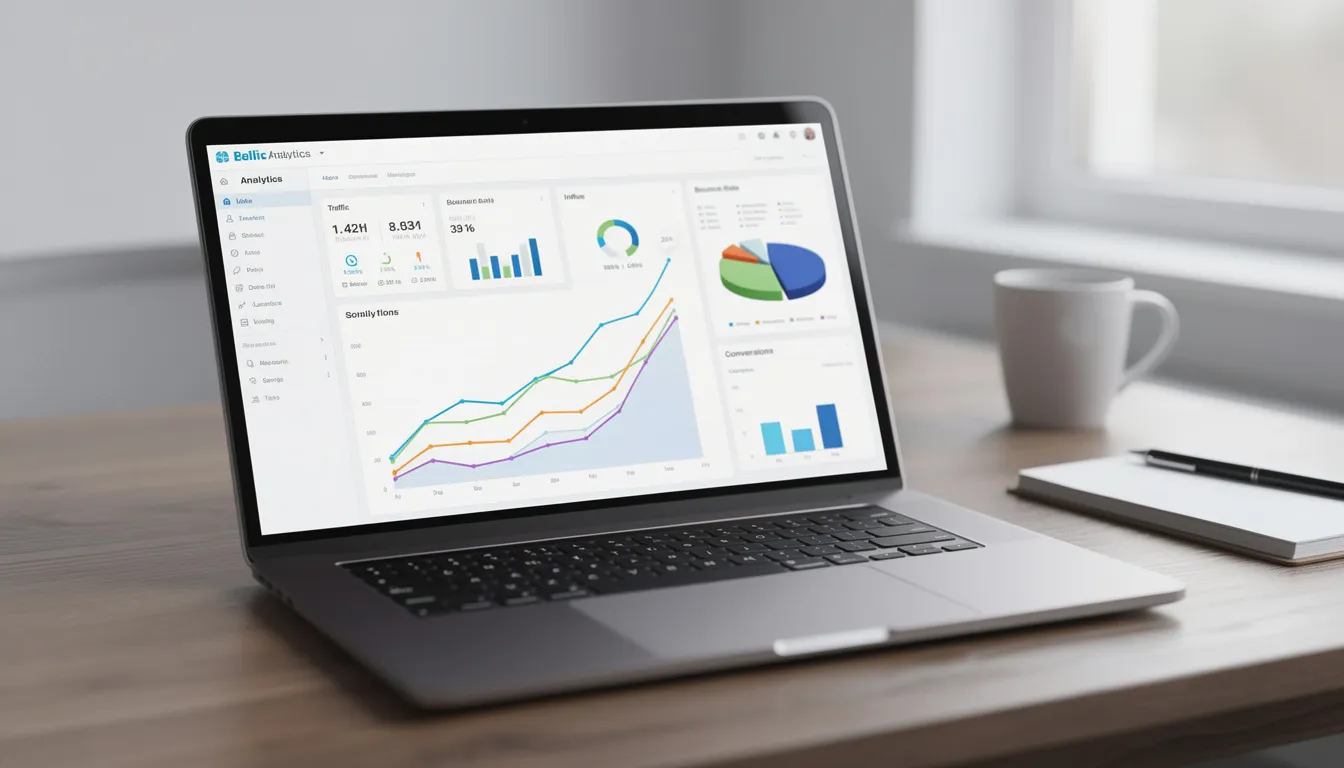
The goal here is spotting patterns. If organic search traffic to birthstone pages surges in September (birthday season) and again in November (Christmas shopping), you can plan content and inventory accordingly.
Top Organic Landing Pages and Landing Page Performance
This section focuses on which specific landing pages bring the most organic traffic and, crucially, which ones generate revenue. Not all traffic is equal—a page attracting 5,000 monthly visitors who never buy is less valuable than one bringing 500 visitors who convert at 4%.
Structure your landing page analysis like this:
|
Landing Page |
Sessions |
Bounce Rate |
Avg. Engagement |
Add-to-Cart Rate |
Organic Revenue |
|---|---|---|---|---|---|
|
/collections/evil-eye-jewellery |
2,340 |
38% |
2:45 |
8.2% |
£4,280 |
|
/collections/birthstone-jewellery |
1,890 |
42% |
2:12 |
6.7% |
£3,120 |
|
/collections/sterling-silver |
1,650 |
35% |
3:01 |
9.1% |
£5,890 |
|
/products/copper-turquoise-ring |
780 |
51% |
1:34 |
3.2% |
£620 |
-
Track sessions, bounce rate, average engagement time, add-to-cart rate, and revenue for each top landing page
-
Identify underperforming but strategically important pages—for example, the copper turquoise collection might receive strong impressions in search results but few clicks, indicating a meta description or title tag problem
-
Compare landing page performance month over month using bar charts to spot which collections are trending upward
Pages with high impressions but low clicks often have weak meta descriptions. Pages with good traffic but poor conversions may need better product photography or clearer calls to action.
Organic Conversion Rate and Revenue from SEO
SEO reporting for Saras Beads & Jewellery must connect organic traffic directly to business results. Visits mean nothing if they don’t translate into jewellery orders, bespoke enquiries, or footfall at the Harrow store.
Define your conversions clearly:
-
Online purchases: Completed transactions through the website
-
Bespoke enquiries: Contact form submissions requesting custom jewellery
-
Local actions: Clicks to Google Maps, phone calls to the Harrow store, direction requests
Track these key metrics in Google Analytics 4:
-
Organic conversion rate (current month versus previous month, and versus same month last year)
-
Total organic transactions
-
Organic revenue
-
Average order value from organic visitors
-
Present a line chart or column chart showing organic conversion rate from collection pages—particularly Evil Eye, birthstone, and sterling silver, which are strong gifting ranges with clear purchase intent
-
Call out notable wins in plain language: “June 2025: +25% organic revenue after optimising ‘hypoallergenic earrings UK’ pages and adding more internal links to related products”
The data from Google Analytics tells you whether your SEO progress is theoretical or actually hitting the bank account.
Keyword Ranking Report and SEO Client Insights
This section uses Google Search Console and a rank tracker like SEMrush or Ahrefs to highlight which keywords drive visibility and clicks for Saras Beads & Jewellery.
Group keywords into logical themes:
|
Keyword Theme |
Example Terms |
|---|---|
|
Brand |
“Saras Beads & Jewellery”, “Saras Beads Harrow” |
|
“Evil Eye bracelet”, “copper turquoise ring”, “beaded necklace” – boost your store visibility with SEO-Optimised Content Strategy & Blogs for SMEs: Data-Driven |
|
|
Material |
“hypoallergenic sterling silver”, “18K gold plated necklace” |
|
Intent |
“handmade jewellery London”, “birthstone necklace for girlfriend”, “buy Evil Eye bracelet UK” |
|
For each keyword group, display: |
|
-
Average position in search engine results
-
Total clicks
-
Impressions
-
Click through rate (CTR)
-
Highlight new page-one rankings with context: “Moved from position 12 to position 5 for ‘Evil Eye necklace UK’—this contributed an estimated 340 additional clicks in May”
-
Note keyword performance gaps versus competitors like Missoma or Monica Vinader, particularly for terms like “Mediterranean inspired jewellery”, sterling silver earrings, and “ethical gemstones” where we have authentic brand differentiation
The keyword ranking report is where you see whether your content and optimisation work is actually moving the needle in search results.
Backlink Profile, Referring Domains, and Link Building for a Jewellery Brand
Links and brand mentions from other websites build trust with search engines and directly impact rankings. This section tracks the health and growth of the backlink profile for Saras Beads & Jewellery.
Pull data from Ahrefs, Moz, or SEMrush:
-
Total referring domains (current versus 3 months ago versus 12 months ago)
-
New backlinks gained this month
-
Lost referring domains this month
-
Domain Rating or Domain Authority score trend
Quality backlink examples to highlight:
-
Feature in a fashion blog’s “Best Handmade Jewellery Brands UK 2025” roundup
-
Inclusion in an ethical shopping gift guide mentioning hypoallergenic materials
-
Link from a local Harrow business directory
-
Mention in an article about Lebanese-inspired jewellery designs
-
Identify any toxic or low-quality links and summarise disavow actions if taken
-
Show a simple trend line of authority growth over 12 months alongside a list of 3-5 notable referring sites gained
Link building efforts for a jewellery brand should focus on fashion publications, gift guides, ethical shopping directories, and local business features—not random link schemes that could harm your site.
Local SEO Performance and Google Business Profile for the Harrow Store
Local SEO is vital for driving footfall to the Saras Beads & Jewellery shop in Harrow, Greater London. A local SEO report tracks how visible the store is when nearby customers search for jewellery.
Use Google Search Console data and Google Business Profile insights to analyse visibility for queries like:
-
“Jewellery shop Harrow”
-
“Handmade jewellery near me”
-
“Hypoallergenic earrings Harrow”
-
“Sterling silver rings near me”
Track these local SEO metrics monthly:
-
Profile views on Search and Maps
-
Direction requests
-
Phone calls
-
Website clicks from the profile
-
Popular visit times (correlate with opening hours: Mon-Sat 9:00-18:00, Sun 11:00-17:00)
-
Compare local metrics before and after key updates: new photos of Evil Eye and birthstone collections, Google Posts about in-store events, or updated business description highlighting Mediterranean heritage
-
Create a bar chart showing location-based performance by month, with annotations for when profile updates occurred

A strong local SEO report template connects online visibility directly to real-world store visits.
Technical SEO Audit and Site Audit for an E-commerce Jewellery Store
Technical SEO affects how well search engines can crawl, understand, and rank your jewellery website. For a Shopify or WooCommerce store with hundreds of product variants, technical issues can quietly undermine your entire SEO campaign.
Pull a site audit summary from SEMrush, Ahrefs, or Screaming Frog:
-
Overall site health score (aim for 90%+)
-
Number of critical errors
-
Warnings
-
Notices
Specific technical issues to track for jewellery e-commerce:
-
Page speed on mobile for collection pages (Google’s Core Web Vitals)
-
Crawl errors preventing product indexing
-
404 errors on discontinued products or old seasonal lines
-
Duplicate content from product variant URLs (size/colour variations)
-
Structured data markup for products (price, availability, reviews)
-
Mobile responsiveness across all collection and product pages
-
Document progress clearly: “April 2025: Reduced 404s on old bracelet URLs by 78% by implementing redirects to updated Evil Eye collection pages”
-
Show a simple health-score trend chart tracking improvement over 6-12 months
-
List top-priority technical SEO errors to fix each month
Addressing technical issues ensures that the creative work you put into product descriptions and collection pages actually gets seen by various search engines.
How to Create SEO Reports for a Jewellery Business: Step by Step Guide
This section provides a practical workflow for producing a monthly SEO report tailored to Saras Beads & Jewellery. The goal is consistency—same structure each month so trends become visible and actionable. For insights into the spiritual meanings behind the products offered, visit our Spiritual blog.
-
Define report objectives first: Before gathering any raw data, confirm goals with the founder. Example: “Increase organic revenue from birthstone jewellery by 30% in Q4 2025.” This shapes which SEO metrics matter most.
-
Data collection steps:
-
Pull traffic and conversion data from Google Analytics 4
-
Export keyword and visibility data from Google Search Console
-
Gather backlink data from Ahrefs or SEMrush
-
Download local performance data from Google Business Profile
-
Cross-reference with Shopify analytics for revenue attribution
-
-
Organise the report consistently using these sections each month:
-
KPIs summary (scorecard format)
-
Organic sessions overview
-
Top landing pages
-
Conversions and revenue
-
Keyword performance
-
Backlink profile
-
Local SEO performance
-
Technical health and site audit
-
-
Use dashboards like Google Data Studio (Looker Studio), Power BI, or your SEO platform’s built-in reporting to automate graphs and tables. But always add a human-written summary section with jewellery-specific insights—automation can’t explain why birthstone pages spiked in October.
The SEO reporting process becomes faster each month once you’ve built templates and connected data sources.
Leveraging Automated SEO Reporting Tools and White Label SEO Reports for Efficiency
Automation saves time so you can focus on creating content, optimising product pages, and sourcing beautiful gemstones rather than manually pulling complex SEO data into spreadsheets.
Essential tools to integrate:
-
Google Analytics 4: Organic traffic data, conversions, revenue attribution
-
Google Search Console: Keyword impressions, clicks, average position, technical issues
-
Ahrefs or SEMrush: Backlink monitoring, competitor analysis, site audit, keyword tracking
-
Google Business Profile: Local SEO metrics for the Harrow store
-
Shopify analytics (or WooCommerce): E-commerce data to cross-reference organic revenue
-
Set up a Looker Studio dashboard that pulls from all these data sources into a single monthly SEO report—create custom SEO reports with jewellery-specific widgets showing collection-level performance
-
Many SEO tools offer white label SEO reports if you’re working with an SEO agency or consultant, allowing you to brand reports with your logo and colours for client presentations
-
Schedule automated email delivery of PDF or live-link reports at the start of each month so the whole team stays informed without chasing files
-
Consider connecting Google Sheets for custom calculations or annotations that automated tools don’t handle well
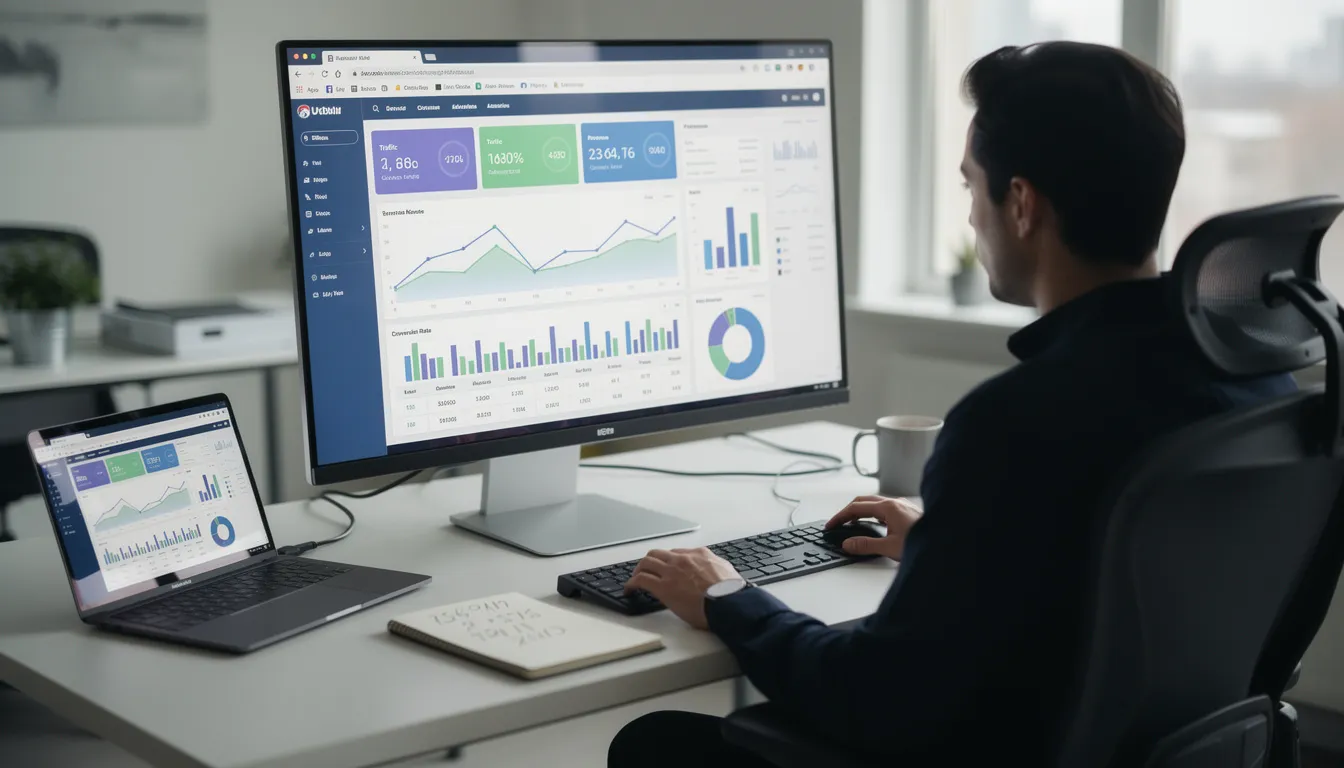
The best SEO report template combines automated data collection with manual interpretation—machines pull the numbers, humans explain what they mean for your jewellery business.
Custom KPIs and Branding for Saras Beads & Jewellery SEO Client Reports
Your SEO report should look and feel like an extension of your brand, not a generic document that could belong to any website.
Recommend custom KPIs specific to your jewellery business:
-
“Organic revenue from Evil Eye collection”
-
“Organic sessions to birthstone pages”
-
“Organic-assisted revenue from blog posts about hypoallergenic jewellery care”
-
“New referring domains mentioning sterling silver or ethical gemstones”
-
“Local search impressions for ‘jewellery Harrow’”
-
Brand the report with Saras Beads & Jewellery logo, brand colours, and photography of signature pieces like copper turquoise rings and Evil Eye necklaces
-
Align the report narrative with your brand story: Lebanese and Mediterranean inspiration, ethical gemstones, hypoallergenic materials, and handcrafted quality made in the UK
-
Use a clean layout with a branded cover page, consistent fonts, and key metrics highlighted in brand colours for fast scanning
An effective SEO client report isn’t just data—it’s a document that reinforces your brand identity while delivering actionable insights.
SEO Report Examples
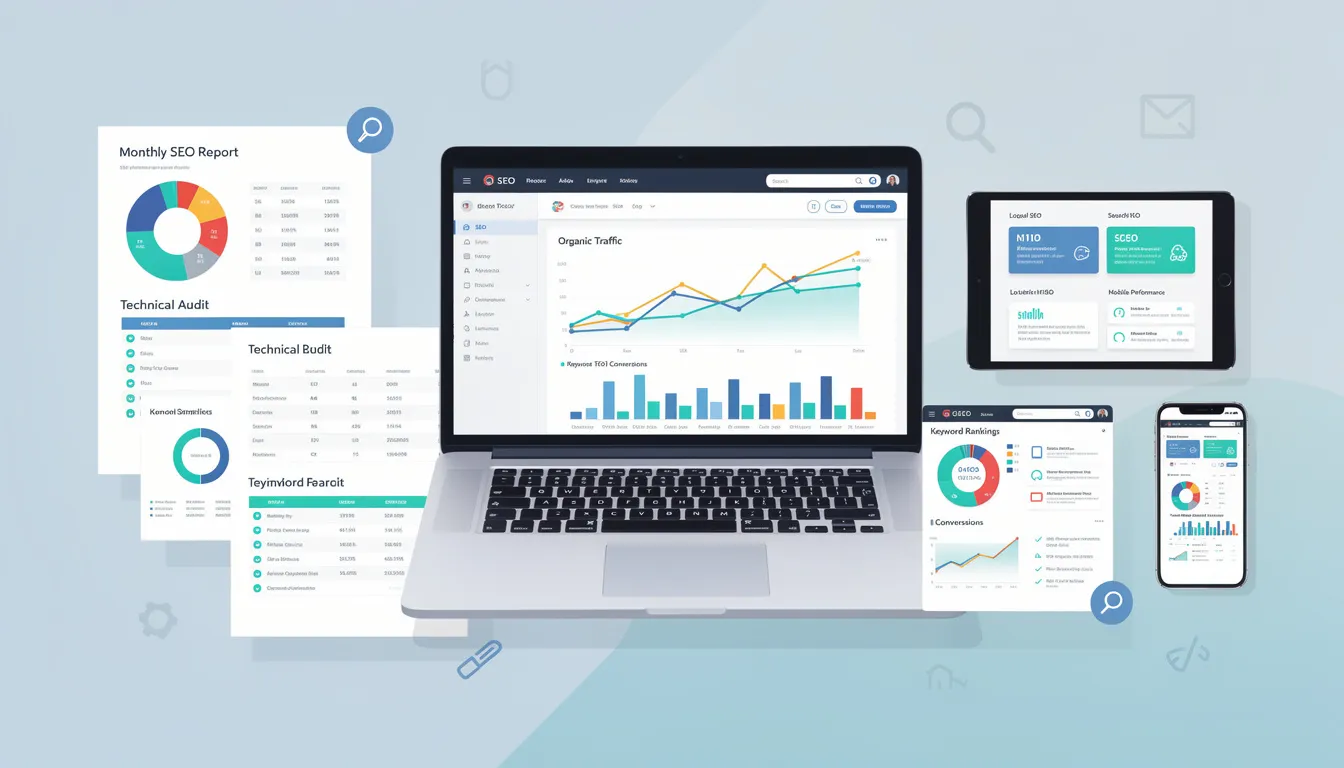
SEO reports come in various formats and styles, each tailored to the specific needs of the business or client. Here are some common examples of SEO reports that demonstrate how to effectively communicate SEO performance and insights:
1. Monthly SEO Report Template
This is a standardized report shared regularly—often monthly—to track ongoing SEO progress. It typically includes key performance indicators such as organic traffic, keyword rankings, backlink growth, and conversion rates. Monthly SEO report templates help businesses monitor trends over time, identify seasonal patterns, and evaluate the impact of recent SEO campaigns. For example, a monthly report might show how organic sessions have increased following the launch of a new product collection or a content marketing push.
2. SEO Client Report Template
Designed specifically for agencies or consultants working with clients, SEO client report templates focus on presenting SEO results in a clear, client-friendly way. These reports often highlight key wins such as new page-one keyword rankings, improvements in organic traffic, and backlink acquisitions. They may also include explanations of SEO strategies implemented and recommendations for next steps. Custom branding and white label SEO reports ensure the document reflects the agency’s identity, building trust and professionalism.
3. Local SEO Report
Local SEO reports focus on metrics that matter for businesses with physical locations or those targeting local searchers. These reports track Google Business Profile views, direction requests, phone calls, and website clicks originating from local searches. They may also analyze visibility for location-specific keywords and map pack rankings. Local SEO reports are essential for businesses like retail stores, restaurants, or service providers aiming to increase foot traffic and local awareness.
4. Technical SEO Audit Report
This report type dives into the technical health of a website, providing insights on site speed, crawl errors, broken links, duplicate content, and structured data. It often includes a site audit score and categorizes issues by severity. Technical SEO audit reports help SEO professionals prioritize fixes that improve search engine crawlability and user experience, ensuring the website’s foundation supports ranking growth.
5. Keyword Ranking Report
Keyword ranking reports track the positions of targeted keywords across various search engines and devices. They show which keywords are gaining or losing ground, highlight new keywords entering the top rankings, and identify opportunities for optimization. These reports often include click-through rates and impressions for each keyword to assess their traffic potential. Keyword ranking reports are critical for measuring the success of content optimization and link-building efforts.
6. Backlink Profile Report
Backlink reports analyze the quantity and quality of external links pointing to the website. They track new and lost backlinks, referring domains, anchor text distribution, and domain authority metrics. This report type helps SEO professionals monitor the health of the backlink profile, detect toxic links, and demonstrate link-building progress. A strong backlink profile is vital for improving domain authority and search rankings.
7. Organic Traffic and Conversion Report
This report combines data from Google Analytics and other analytics tools to show how organic search visitors behave on the site. It includes metrics such as sessions, bounce rate, average session duration, and conversion rates from organic traffic. Highlighting which landing pages drive the most conversions helps businesses understand the ROI of their SEO efforts and optimize user journeys for better results.
8. Competitor SEO Analysis Report
Competitor reports compare a website’s SEO performance against key competitors. They analyze keyword rankings, backlink profiles, and organic visibility trends to identify competitive advantages and gaps. These insights inform strategic decisions, helping businesses target keywords where competitors are weak or capitalize on backlink opportunities.
By using these various SEO report examples, businesses and SEO professionals can choose or customize the right format to effectively communicate SEO performance, provide actionable insights, and support ongoing optimization efforts.
Sharing and Explaining the SEO Report Internally and with Your SEO Agency
SEO reports are most useful when clearly communicated to the wider team—founder, store staff, marketing, and content creators. Data sitting unread in an inbox changes nothing.
-
Schedule a 10-15 minute monthly review where main SEO wins and issues are summarised in plain language, tying metrics to product decisions: “Organic traffic to birthstone pages is up 40%—consider stocking more September birthstone options”
-
Include a brief executive summary at the start of the report that non-technical readers can digest in under 5 minutes—bullet points covering wins, concerns, and next steps
-
Use the report to inform next-month actions:
-
New blog topics (“How to choose hypoallergenic earrings for sensitive skin”)
-
Collection description optimisation for underperforming pages
-
Internal linking improvements between related jewellery lines
-
-
Share relevant sections with specific team members—the marketing team gets the full report, store staff might only need local SEO highlights
-
Keep the language free of jargon: say “more people found us on Google” not “organic sessions increased by 23.7%”
Sending SEO reports regularly builds SEO understanding across your organisation and ensures insights translate into action.
Using SEO Insights to Grow Jewellery Sales and Improve SEO Strategy
Every section of this report on SEO ultimately serves one purpose: growing sales for Saras Beads & Jewellery, both online and in the Harrow store. SEO data isn’t an academic exercise—it’s a roadmap for business decisions.
-
Use landing page and keyword performance to decide which collections to feature on the homepage, in email campaigns, and in any paid advertising
-
Identify high-intent queries like “buy Evil Eye bracelet UK” or “birthstone necklace next day delivery” and create or refine pages specifically designed to convert that demand—these searchers are ready to purchase
-
Track the impact of SEO-driven content (guides on caring for sterling silver, choosing birthstone gifts, or the meaning behind Evil Eye symbolism) on long-term organic search traffic and assisted revenue
-
Connect overall SEO strategy insights to inventory planning: if “copper turquoise ring” rankings are climbing, ensure adequate stock before the traffic arrives
-
Review SEO report examples from previous months to spot patterns that predict future sales peaks
The perfect SEO report doesn’t just measure visibility—it reveals opportunities to put the right jewellery in front of the right customers at exactly the right moment.
Commit to a monthly SEO reporting routine so Saras Beads & Jewellery can consistently improve website visibility, build trust with site visitors, and grow sales throughout 2025 and beyond. Your jewellery deserves to be found by the people searching for exactly what you create.
Enhancing SEO Reports with Visualizations and Strategic Insights
Effective SEO reports leverage visual elements like graphs, charts, and tables to visualize key metrics, making complex SEO data easier to understand for clients and stakeholders. Highlighting key wins such as new page-one rankings or significant traffic gains demonstrates the tangible impact of SEO efforts.
A well-structured SEO report typically starts with an executive summary that provides a concise overview of SEO performance and ends with recommended actions based on the data presented. Including a Technical Health section is critical; it should cover metrics like Core Web Vitals and crawl errors to ensure the website has a sound foundation for ranking.
In 2026, an effective SEO report has evolved into a strategic document linking organic visibility to tangible business revenue. The most critical section for stakeholders is the Business Impact section, which tracks how organic traffic translates into leads, sales, and revenue. SEO reports help illustrate the benefits of SEO work to clients and justify budget allocations for high-value tasks.
User engagement metrics such as bounce rate, time on page, and the Engagement Rate—which measures meaningful interactions lasting more than 10 seconds or including a conversion—are vital KPIs for understanding visitor behavior. Additionally, Interaction to Next Paint (INP) is a primary 2026 metric for measuring site responsiveness and user experience, reflecting the technical quality of the website.
By combining automated reporting, clear visualizations, and strategic insights, SEO reports become powerful tools that not only track performance but also guide decision-making and demonstrate SEO's business value.
Frequently Asked Questions About SEO Reporting Tools and Templates
What makes DashThis a good choice for SEO reporting?
DashThis offers a user-friendly SEO report template that features customizable dashboards and automated report generation. This means you can tailor your reports to fit your specific needs and branding preferences, while saving time with automation.
Can DashThis integrate with other SEO tools?
Yes, DashThis's SEO report template seamlessly integrates with a wide range of popular SEO tools and platforms, allowing you to consolidate data from multiple sources into one cohesive report.
How do automated SEO reports work?
Automated SEO reports send API requests to data sources to automatically extract the latest SEO data. This automation enables reports to be updated frequently—even multiple times per day—ensuring stakeholders always have access to up-to-date information.
What benefits does AgencyAnalytics offer for SEO reporting?
AgencyAnalytics integrates with over 80 marketing platforms, bringing all your clients' data into a single SEO report template. This centralized approach simplifies data management and reporting across multiple clients or campaigns.
How can SEO report templates be shared?
SEO report templates can be easily shared with clients or stakeholders via email, URL, or PDF. This flexibility ensures your reports are accessible in the format that works best for your audience.
How does automation help in the SEO reporting process?
Automated reporting tools save significant time by reducing manual data collection and report creation. This allows marketers to focus more on strategy and execution, while keeping clients and stakeholders informed with frequent updates.
Can SEO reports be customized to reflect my brand?
Absolutely. Tools like DashThis allow extensive customization of SEO report templates to match your branding, including logos, colors, and layout preferences, creating professional and personalized reports.
Why is frequent SEO reporting important?
Regular updates—made possible by automation—help maintain transparency, track progress closely, and quickly identify opportunities or issues, enabling faster decision-making and strategy adjustments.
For expert assistance in creating custom, automated, and branded SEO reports that drive results, contact Sterling Media & Communications. Visit smcww.co.uk to learn how we can help you streamline your SEO reporting and maximize your marketing impact.

0 comments