

By March 2026, retrieval augmented generation has become the standard architecture for enterprise AI applications. If you’re building chatbots, internal knowledge assistants, or domain-specific copilots, understanding RAG isn’t optional anymore—it’s foundational.
This guide walks you through what RAG is, how it works, and how to implement it effectively using current best practices and technology stacks.
What is Retrieval-Augmented Generation (RAG)?
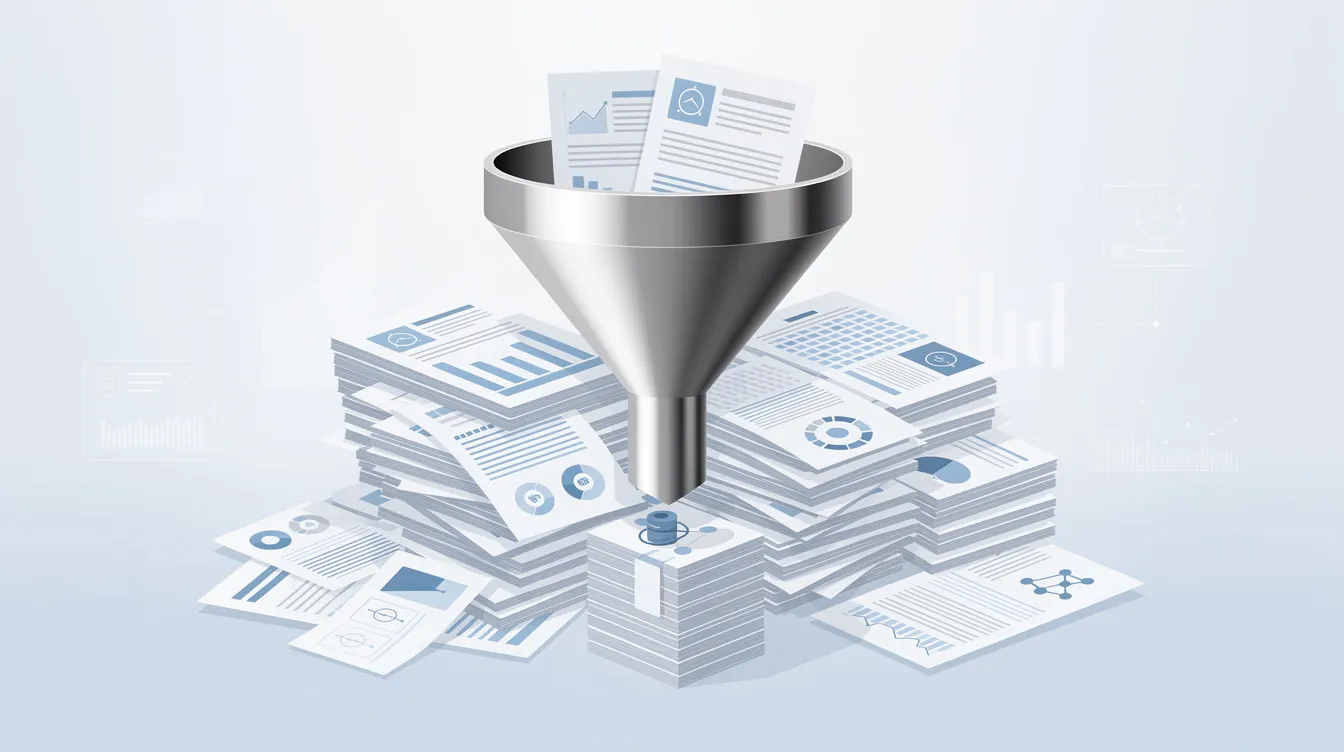
Retrieval augmented generation (RAG) is an AI architecture pattern that links large language models with search capabilities over external data to answer questions using up-to-date, domain-specific information. Instead of relying solely on what a model learned during training, RAG systems retrieve relevant documents at runtime and use them to generate grounded responses.
The approach was first popularized in a 2020 research paper from Facebook AI Research (now Meta AI), co-authored with researchers from University College London and New York University. Since then, it has evolved from an experimental technique into the de facto standard for enterprise AI deployments.
Here’s how the core pattern works:
-
A user query triggers the system to search through external data sources
-
The retriever finds relevant documents from knowledge bases, vector databases, or APIs
-
These documents augment the prompt sent to the LLM with contextual snippets
-
The generator LLM synthesizes an answer grounded in the retrieved content
-
The response often includes citations to the source data for verification
-
The foundation models remain generic—no retraining required when your data changes
This runtime knowledge injection approach means you can keep your AI model generic while plugging in a dynamic knowledge layer that updates as your data changes.

Why use RAG instead of relying only on an LLM?
Pure large language models, no matter how powerful, have fundamental limitations that RAG directly addresses. Standalone LLMs suffer from knowledge cutoffs—even frontier models like GPT-4.5-class, Claude 3.5-class, or Gemini-class systems remain tethered to static training data ending months or years before your query. They cannot access private company data or post-cutoff events without external augmentation.
Hallucinations represent another core risk. LLMs will confidently fabricate facts when they don’t have accurate information. RAG mitigates this by enforcing factual grounding in retrieved documents, with enterprise reports from 2025-2026 showing dramatic reductions in error rates when querying dynamic sources like HR policies or pricing sheets.
The business advantages of RAG over pure LLM approaches include:
-
Accuracy: Grounding responses in relevant data produces more accurate answers for domain-specific questions
-
Freshness: New data gets indexed without retraining—your 2026 policies are immediately searchable
-
Privacy: Sensitive internal documents stay in controlled stores rather than being baked into model weights
-
Cost: Avoid the computational and financial costs of fine tuning and continuous retraining when product catalogs change weekly
-
Control: Auditable retrieval logs show exactly which documents informed each generated response
For regulated industries where explainability matters, RAG provides the traceability that pure generative AI models cannot offer.
Core components of a RAG system
A RAG system functions as a pipeline that sits between users and an LLM, composed of modular services that each handle a specific responsibility. Understanding these components helps you design, debug, and optimize your implementation.
The standard building blocks include:
-
Data sources: Where your source data lives—SharePoint with 2023-2026 contracts, Jira tickets, Confluence spaces, S3 document archives, PostgreSQL tables, Snowflake warehouses, or REST APIs
-
Ingestion pipeline: Processes that scan, normalize, and prepare text data from web pages, PDFs, and internal documents
-
Chunking service: Splits long documents into smaller segments suitable for embedding and retrieval
-
Embedding model: Converts text chunks into numerical representations (vectors) that capture semantic meaning
-
Vector database: Stores embeddings and enables fast similarity search across millions of chunks
-
Retriever: Executes searches to find most relevant matches for a user query
-
Prompt builder: Formats retrieved information into an augmented prompt for the LLM
-
Generator (LLM): Produces the final answer using the augmented context
The key distinction to remember: the retriever handles search (finding relevant information), while the generator handles synthesis (producing the model’s response). These are separate concerns that require different optimization strategies.
How RAG works: step-by-step pipeline
Consider this scenario from March 2026: an employee asks a chatbot, “What is our latest parental leave policy for Germany?” The RAG system needs to answer using current HR documents—not outdated training data.
Here’s the end-to-end flow:
-
Data ingestion & indexing: A nightly job scans HR SharePoint for new or updated documents, chunks them, and embeds them using bge-large into Pinecone
-
Query embedding: The user input gets converted to a vector representation using the same embedding model
-
Retrieval: Hybrid search combines semantic search with keyword search, filtered by department=”HR” and geography=”DE”
-
Re-ranking: A cross-encoder model re-scores the top 50 candidates and returns the best 5-10 chunks
-
Prompt augmentation: LangChain or LlamaIndex orchestrates building the augmented prompt with retrieved context
-
Generation: Claude 3.5 generates a cited response based on the retrieved information
This entire process completes in seconds using approximate nearest neighbor optimizations in vector search.
Ingestion and indexing
Ingestion runs as a background pipeline that continuously scans for new or changed documents. A nightly job might pull new 2025 invoices or updated 2026 product sheets from multiple data sources.
During ingestion:
-
Raw files (PDF, DOCX, CSV, HTML) get normalized—HTML stripped, OCR applied to scanned PDFs, languages detected
-
Long documents split into 300-800 token chunks with 20-50% overlaps to preserve context
-
Each chunk receives metadata: source URL, author, last-updated date, department, geography, confidentiality level
-
The embedding model converts chunks to dense vectors stored in the vector database
-
Indexes are keyed by document IDs with metadata available for filtering at query time
Well-structured ingestion is the foundation of effective retrieval. Poor chunking strategies here cascade into retrieval failures downstream.
Retrieval and relevance
When a user’s question arrives, it gets embedded into a vector using the same retrieval model used during ingestion. This consistency is critical—mismatched models produce poor search results.
Modern RAG systems use hybrid search that combines:
-
Dense vector search: Semantic search that understands meaning and synonyms
-
Keyword/BM25 search: Exact matching for specific terms, order numbers like “#94821”, or domain terminology
-
Metadata filters: Narrowing results by country=”DE”, status=”active”, or effective_date>”2025-01-01”
After initial retrieval, re-rankers evaluate top candidates. A cross-encoder scores each document against the full user query, improving precision for nuanced questions. Searching for a 2024 SLA clause requires different ranking than finding a 2026 release note—recency metadata helps prioritize appropriately.
Prompt augmentation and generation
The retrieved information gets formatted into a final prompt with clear structure:
-
System message: Instructions like “Base answers only on provided context. If the answer is not in the context, say you don’t know.”
-
User query: The original user’s question
-
Context snippets: Retrieved chunks with source citations
The generator LLM (GPT-4.1, Claude 3.5, Llama 3-based models) uses both its broad knowledge and the provided documents to draft an answer. Critically, the response includes sources—titles, URLs, document IDs, and timestamps like “Policy v4.2, updated February 2026”—to build user trust and enable verification.
Key benefits of RAG in real applications
By 2026, RAG has become the default pattern for enterprise chatbots, internal AI search tools, and domain-specific copilots. The pattern powers applications from customer support to sales enablement.
Concrete benefits organizations report:
-
Improved accuracy: 30-50% reduction in hallucinations for internal Q&A compared to pure LLM approaches
-
Faster onboarding: New hires get instant answers about VPN setup, benefits enrollment, and company policies
-
Reduced costs: Indexing documents is dramatically cheaper than repeatedly retraining multi-billion-parameter models
-
Easy updates: When 2026 pricing sheets arrive, they’re searchable immediately without any model changes
-
Personalization: User profile filters show different HR answers for UK vs US employees based on location and role
Real-world scenarios include customer support chatbots pulling 2026 pricing policies, sales assistants summarizing the latest Q4 2025 case studies, and internal helpdesk systems answering specialized knowledge questions using authoritative data sources.
Cost efficiency and scalability
RAG lets teams rely on a single strong foundation model while indexing many different external data sources. This avoids the need for multiple fine-tuned models across different domains.
The economics are compelling:
-
Indexing millions of documents costs a fraction of repeatedly retraining billion-parameter models
-
Open-source embedding models in 2025-2026 run at less than 1% of proprietary fine-tuning costs
-
Vector database options have proliferated, driving prices down through competition
Scalability patterns include sharding vector indexes across nodes, caching frequent queries, and using tiered models—lightweight embeddings for retrieval, more powerful models for generation. This architecture handles billions of chunks while maintaining reasonable latency.
Improved trust and compliance
Citation of sources transforms AI from a black box into a verifiable tool. When a RAG system links its answer to a 2025 security policy PDF or a 2024 SOC 2 report, auditors and users can verify statements directly.
For compliance-sensitive environments:
-
Organizations control which documents are indexed, respecting access control lists and legal retention rules
-
RAG supports GDPR compliance by enabling targeted removal or redaction of specific documents without retraining
-
Query logs and document IDs create audit trails showing which public data and internal data informed each answer
-
Integration with IAM systems (Okta, Azure AD) enforces role-based access at retrieval time
Governance workflows can review high-risk responses in domains like finance, healthcare, and legal before they reach users.
Common challenges when implementing RAG
Although RAG is powerful, many 2024-2026 pilots failed due to poor data preparation, weak retrieval, and minimal evaluation. Understanding common pitfalls helps you avoid them.
Frequent challenges include:
-
Messy documents: Duplicates, outdated versions, and inconsistent formats confuse retrievers
-
Poor chunking: Chunks that split mid-sentence or lose context produce inaccurate responses
-
Missing metadata: Without filters, retrieval returns relevant matches from the wrong department or region
-
Ignored access control: Mixing public and restricted documents risks data leakage
-
Latency accumulation: Embedding, vector search, re-ranking, and generation each add time
The information retrieval component requires as much attention as the generation component. Retrieve data poorly, and even the best LLM produces irrelevant responses.
Data quality and structure
Unstructured archives from 2015-2022 often contain inconsistent formats, outdated versions, and near-duplicates that confuse retrieval. An AI model cannot retrieve relevant information from garbage input.
Practical data governance steps:
-
Clean and deduplicate documents before indexing
-
Mark obsolete policies (superseded in 2024) with metadata so they’re filtered or clearly labeled
-
Add rich metadata: owner, department, country, effective date, version number
-
Establish refresh schedules to keep indexed content current with specialized data sources
Data hygiene isn’t glamorous, but it determines whether your RAG system produces accurate responses or confidently wrong ones.
Latency and user experience
Each pipeline stage contributes to total response time:
|
Stage |
Typical Latency |
|---|---|
|
Query embedding |
100-500ms |
|
Vector search |
50-200ms |
|
Re-ranking |
200-1000ms |
|
Generation |
1-5 seconds |
Optimizations include approximate nearest neighbor (ANN) search, caching popular queries, using smaller re-rankers, and streaming responses. On the UX side, show “Searching your documents…” indicators, surface top sources while generation continues, and allow users to refine queries when results miss the mark.
Security and access control
Without proper filtering, a vector index mixing public and restricted documents risks leaking confidential information to unauthorized users.
Security best practices:
-
Tag each document chunk with access policies tied to user identity and roles
-
Filter retrieval results based on the requesting user’s permissions
-
Encrypt vector stores at rest and in transit
-
Log which documents were accessed for each answer to support audit trails
-
Align RAG design with existing IAM systems and data classification schemes
Treat retrieval access control with the same rigor you’d apply to database permissions.
Design patterns and reference architectures for RAG
By 2026, several common RAG patterns have emerged based on organizational needs. Architecture choices depend on data volume, latency requirements, and data sensitivity.
A baseline reference architecture includes:
-
API gateway for request handling
-
Orchestrator (LangChain, LlamaIndex) for pipeline coordination
-
Vector database for embedding storage and search
-
Document store for raw content
-
LLM API for generation
-
Observability stack for monitoring and debugging
Deployment contexts range from internal knowledge assistants for 5,000-person companies to public documentation search for open-source projects to customer-facing support bots.
Basic Q&A RAG
The simplest architecture uses a single retrieval call feeding a single LLM call. User input triggers search, search results get formatted into an augmented prompt, and the LLM generates the answer.
This pattern suits:
-
FAQ chatbots with focused scope
-
Documentation search applications
-
Knowledge bases with up to a few million chunks
-
First implementations before adding complexity
Trade-offs: simplicity and low latency, but limited reasoning across many documents or tools. Start here in 2024-2026 before moving to agentic systems.
Agentic and multi-step RAG
Agentic systems let the LLM plan multiple retrievals, call tools (SQL queries, web APIs), and iteratively refine answers. AI agents can break complex questions into sub-queries and synthesize results.
Example: A financial research assistant in 2025 that retrieves SEC filings, runs portfolio simulations via an internal API, and writes a summary combining both sources. This goes beyond simple information retrieval into multi-step reasoning.
This pattern demands more orchestration, guardrails against loops and token overspending, and careful evaluation. Use it when single-shot RAG is insufficient—multi-document analysis, report generation, or tasks requiring structured data from multiple data sources.
Structured data and hybrid RAG
Some questions need precise numbers, not prose. Hybrid RAG combines vector search with direct database access: RAG interprets the question and identifies which tables matter, then SQL tools fetch exact metrics.
Use case: A 2026 sales dashboard chatbot that uses RAG to understand “What were our Q4 revenue numbers by region?” then runs SQL on Snowflake or BigQuery to generate answers with precise figures.
Benefits include accurate numerical answers, reduced risk of the LLM inventing numbers, and alignment with existing BI infrastructure. Distinguish clearly between unstructured-text RAG for domain knowledge and structured-data queries for metrics.
Best practices and evaluation of RAG systems
High-quality RAG requires continuous evaluation, not just one-time deployment. Treating your RAG implementation as a product with ongoing maintenance produces better outcomes than “set and forget” approaches.
Dimensions to evaluate:
-
Relevance: Are retrieved documents actually useful? (Measure with nDCG, precision@K)
-
Groundedness: Does the answer come from the provided context?
-
Accuracy: Is the answer factually correct?
-
Safety: Does the system avoid harmful outputs?
-
Latency: Is response time acceptable for the use case?
Use synthetic test sets plus real user queries logged from production (queries collected over Q4 2025) to measure improvements. Combine automated metrics with human review, especially for regulated domains where natural language processing nuances matter.
Prompt and context optimization
Prompt templates, context window size, and chunk ordering significantly affect answer quality. Small changes in how you structure the augmented prompt can dramatically reduce hallucinations.
Experiment with:
-
Different context sizes (4K vs 32K vs 128K tokens)
-
Chunk ordering strategies: most recent first, highest relevance first, grouped by source
-
System instructions requiring explicit citation, cautious language, and deference to provided context over the model’s prior knowledge
-
Clear handling of “I don’t know” cases when retrieved information doesn’t answer the user’s question
An effective system instruction might read: “Answer based only on the provided documents. If the information needed to answer the user’s question is not present, respond that you cannot find relevant information. Always cite the source document title and date.”
Continuous monitoring and feedback loops
Set up monitoring dashboards tracking:
-
Retrieval hit rates (how often are relevant documents found?)
-
Answer acceptance rates (thumbs up/down feedback)
-
Common queries answered with low confidence
-
Queries that trigger “I don’t know” responses
Collect explicit feedback through rating mechanisms and implicit signals like follow-up queries or escalation to human agents. Run a regular review cycle—monthly in 2025-2026 works for most organizations—to adjust ingestion rules, add new external knowledge bases, or refine prompts based on observed failures.
Future of RAG beyond 2026
RAG is evolving from an “add-on” pattern into a foundational layer for AI systems. Several trends are shaping what comes next.
Emerging developments include:
-
Retriever-generator co-training: Models optimized end-to-end for retrieval and generation jointly, improving both components
-
Multimodal RAG: Retrieving not only text but images, diagrams, and code snippets, then generating multimodal responses
-
Long-term memory integration: Assistants that recall past interactions from 2024-2026 using user-specific external knowledge bases
-
Knowledge graph augmentation: Combining vector search with structured relationships for better reasoning
-
Tighter integration with AI agents: RAG as the memory layer for autonomous systems that plan and execute complex tasks
Organizations that invest early in high-quality RAG infrastructure—clean data, robust retrieval, solid evaluation—will be better positioned to adopt new models and agents as they appear. The pattern is here to stay; the implementations will keep improving.
Start with a basic Q&A RAG system, instrument it thoroughly, and iterate based on what you learn from real usage. That foundation will serve you well as the technology continues to evolve.
Frequently Asked Questions (FAQs) about Retrieval-Augmented Generation (RAG)
What is Retrieval-Augmented Generation (RAG)?
RAG is an AI architecture that enhances large language models by connecting them to external knowledge bases. It retrieves relevant documents based on a user query, combines this retrieved information with the original input prompt, and sends it to a generative AI model. This process enables the model to provide more accurate, up-to-date, and domain-specific responses without needing to retrain the model.
How does RAG differ from fine-tuning?
Fine-tuning involves adjusting a model’s internal parameters to improve its performance on new data, but this process is computationally expensive and resource-intensive. In contrast, RAG avoids these costs by augmenting the model’s input with relevant external data at runtime. This makes RAG ideal for use cases that require accurate and timely information without the complexity and expense of fine-tuning.
Can organizations scale AI implementations using RAG?
Yes, RAG allows organizations to scale their AI deployments efficiently. By indexing multiple external data sources and relying on a single foundation model, organizations avoid the high computational and financial costs associated with retraining multiple specialized models. This scalability supports diverse applications while maintaining cost-effectiveness.
What types of data sources can RAG integrate?
RAG systems can pull data from a variety of external sources, including internal documents, APIs, databases, real-time social media feeds, and market data. This integration enables applications such as market analysis, where real-time information from multiple sources informs business decisions with greater accuracy and relevance.
Does RAG have applications beyond AI and machine learning?
Interestingly, the term “rag” has diverse meanings outside AI. For example, common types of cleaning rags include cotton and linen, used industrially and domestically to absorb oil, grease, or liquids. Old rags can be repurposed into functional cleaning tools like dusting mitts, mop pads, or braided rag rugs made by cutting fabric into strips and weaving or braiding them. In project management, RAG is a popular status reporting tool using Red, Amber, and Green color codes to indicate task health. Additionally, “rag” can colloquially refer to a newspaper or magazine known for poor quality or sensationalism.
How does RAG improve trust and reliability in AI outputs?
By grounding responses in retrieved, authoritative data, RAG reduces hallucinations common in generative AI models. It often includes citations to source documents, allowing users to verify information and increasing overall trust in the AI’s outputs.
What are the main challenges when implementing RAG?
Implementing RAG effectively requires high-quality, well-structured data, efficient retrieval mechanisms, and continuous evaluation. Challenges include managing access control to sensitive data, ensuring low latency for good user experience, and maintaining up-to-date knowledge bases to preserve response accuracy.
Can RAG and fine-tuning be used together?
Yes, these approaches complement each other. Fine-tuning can enhance a model’s understanding of domain-specific language and output style, while RAG provides real-time access to relevant external information, ensuring responses remain accurate and current.

0 comments