

Introduction to Digital Marketing and Search Engine Optimization
Digital marketing encompasses a diverse range of strategies aimed at increasing a brand's online presence and connecting with the target audience effectively. Among these strategies, search engine optimization (SEO) stands out as a fundamental approach to enhancing visibility on major web and search engines like Google, Bing, and others. Understanding the basics of digital marketing is essential because it lays the foundation for crafting an effective SEO strategy that aligns with broader marketing goals.
SEO plays a pivotal role within digital marketing by focusing on improving a website’s rankings in organic search results. Unlike paid advertising, SEO targets unpaid search engine traffic, which tends to be more sustainable and cost-effective over time. By leveraging SEO marketing, businesses can significantly increase their online presence, attract more qualified visitors, and ultimately boost conversions, whether those are sales, sign-ups, or other key actions.
SEO stands for Search Engine Optimization and helps search engines understand your website's content and connect it with users by delivering relevant, valuable results based on their search queries. The goal of SEO is to rank on the first page of search engine results pages (SERPs) for the most relevant and valuable keywords to your target demographic, driving qualified traffic to your site.
Understanding Search Engines and Google Search
How Google Search and Other Search Engines Work
Google search operates through sophisticated algorithms designed to deliver the most relevant, high-quality, and user-friendly results for any given search query. These algorithms evaluate numerous factors, including keyword relevance, content quality, website authority, and user experience signals, to rank web pages effectively. Search engines use complex processes and criteria to rank results, aiming to provide users with the best search experience.
Leading search engines like Google utilize automated bots known as search bots, crawlers, or spiders to discover and index web pages across the internet. These search engine crawlers follow links from page to page, enabling search engines to build a comprehensive index of available content. Pages that are linked from other search engine-indexed pages do not need to be submitted because they are found automatically.
Once crawled, pages are analyzed and stored in the search engine's index. After indexing, search engines rank pages based on relevance, quality, and user experience. Search engines prioritize websites that are fast, mobile-friendly, and easy to navigate. Mobile-first indexing requires websites to be fully responsive for effective ranking.
Search engines have added machine learning elements to their algorithms to better interpret user intent and surface the most valuable content. Modern SEO requires content to be structured not only for traditional search engines but also for AI assistants to effectively cite and recommend brands.
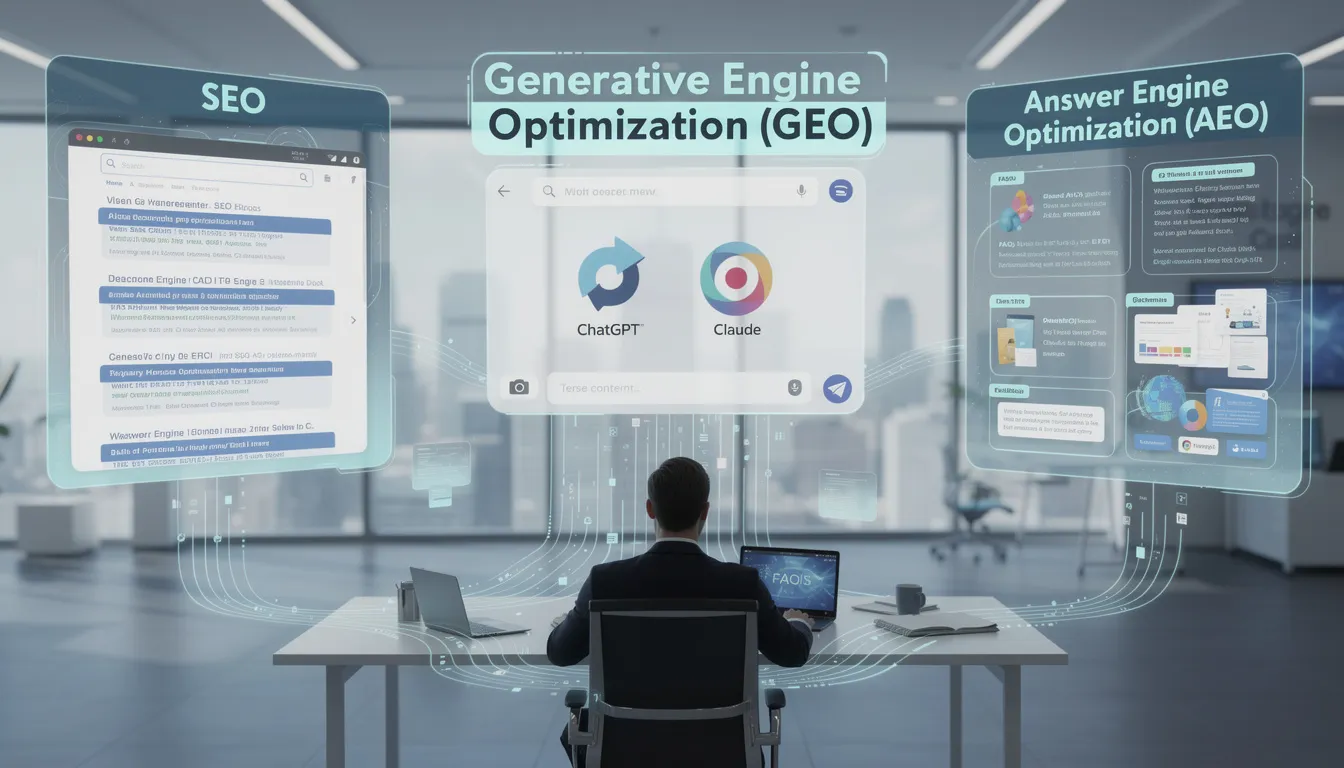
Generative AI tools like ChatGPT and Claude are reshaping the SEO landscape by changing how content is optimized for search engines. This has given rise to generative engine optimization (GEO), which focuses on optimizing content for inclusion in AI-generated answers provided by large language models. SEO strategies must now consider optimizing for answer engine optimization (AEO) to ensure content is structured for AI models.
AI Overviews are AI-generated summaries that appear at the top of search results, impacting click-through rates to traditional organic listings. The rise of AI search necessitates a focus on creating authoritative, comprehensive, and contextually rich content that answers user intent. Search engines are increasingly providing direct answers and summarized content generated by AI, reducing the need for users to click through to individual websites.
Optimizing for 'zero-click searches' means focusing on E-E-A-T (Experience, Expertise, Authoritativeness, Trustworthiness) to ensure content is trustworthy enough for AI synthesis. Engagement signals such as high dwell time and low bounce rates indicate valuable content to search engines. Users also perceive organic results as more credible than paid search results, building brand trust.
Search Engine Optimization vs. SEM and Paid Search
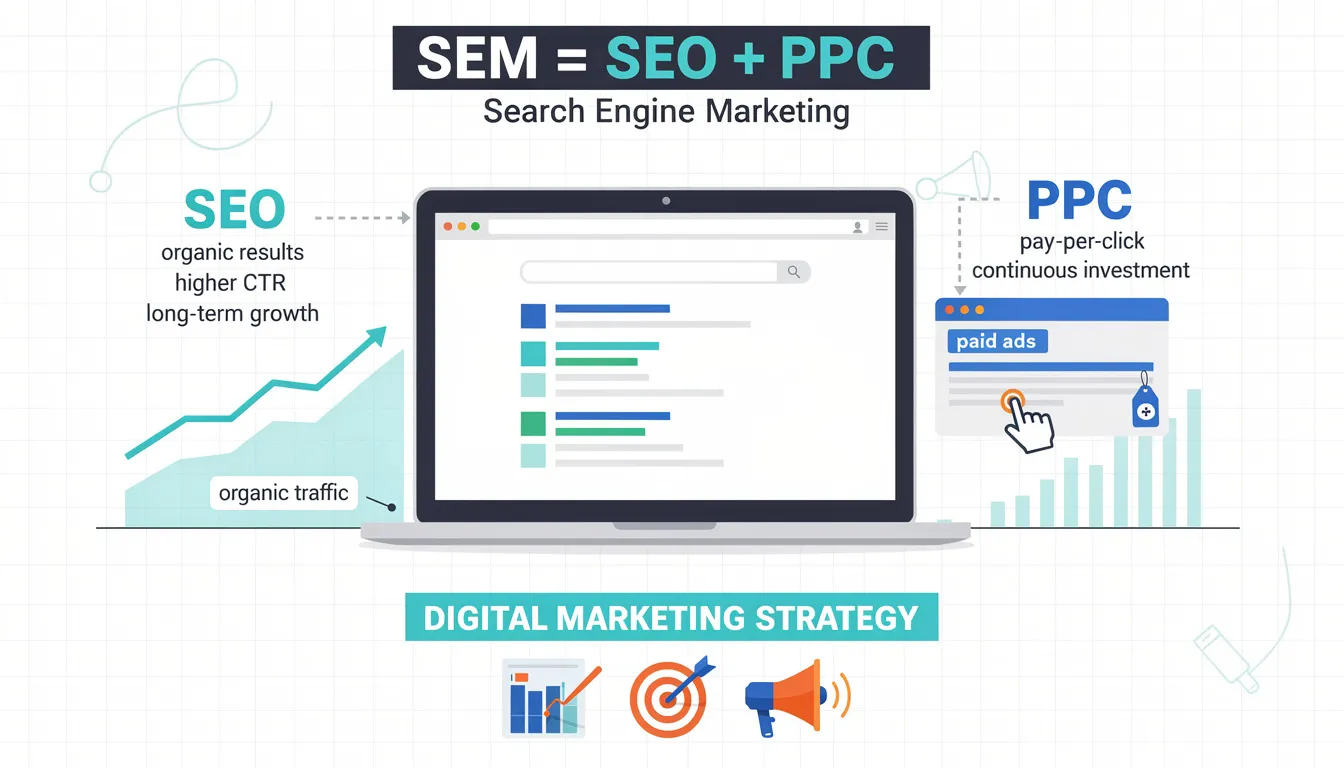
SEO is one-half of SEM, which stands for search engine marketing. SEM encompasses both SEO and PPC (pay-per-click), aiming to drive traffic through organic and paid search efforts. PPC is a type of digital marketing where advertisers pay for clicks on their ads in search results. Organic search results typically have higher click-through rates than paid ads, as users often trust them more.
SEO and PPC are complementary digital marketing channels that ideally should be used together. Both SEO and PPC strategies can be part of a comprehensive digital marketing approach to improve visibility and traffic. SEO can generate sustained traffic at little to no ongoing cost, while PPC requires continuous investment to maintain visibility.
Keyword Research and Planning for Effective Search Engine Optimization
Conduct keyword research is a foundational step in any SEO strategy. It involves identifying the relevant search terms and keyword phrases that your target audience searches when looking for products, services, or information related to your business. Effective keyword research ensures that your content aligns with user intent and captures valuable search engine traffic.
Using SEO tools such as Google Keyword Planner, Semrush, or Ahrefs, marketers can analyze keyword search volume, competition levels, and trends. This data helps in selecting keywords that offer the best potential for ranking and attracting qualified visitors.
Strategic keyword planning involves organizing these keywords into thematic clusters and mapping them to specific pages on your website. This ensures that content creation is purposeful, relevant, and optimized for search engines. Additionally, keyword research informs content marketing efforts, helping to create engaging, useful, and authoritative content that resonates with your audience.
On Page SEO: On-Page Optimization and Content Optimization Techniques
On-page optimization focuses on refining individual web pages to improve their search engine rankings and enhance user experience. This process includes optimizing key HTML elements such as title tags, meta description tags, header tags (H1, H2, etc.), and body content to ensure they are aligned with targeted relevant search terms.
Title tags and meta descriptions are crucial as they attract clicks from search results and influence search visibility. In addition to textual elements, on-page SEO involves improving technical aspects like page speed and mobile responsiveness, which are critical ranking factors in modern search engine algorithms. Internal linking strategies also play a vital role by helping search engines discover related content and establishing a logical site architecture.
By meticulously optimizing these on-page elements, businesses can increase their website’s search visibility, attract more organic traffic, and improve conversion rates through a better user experience.
Content Marketing and Content Optimization for SEO Success
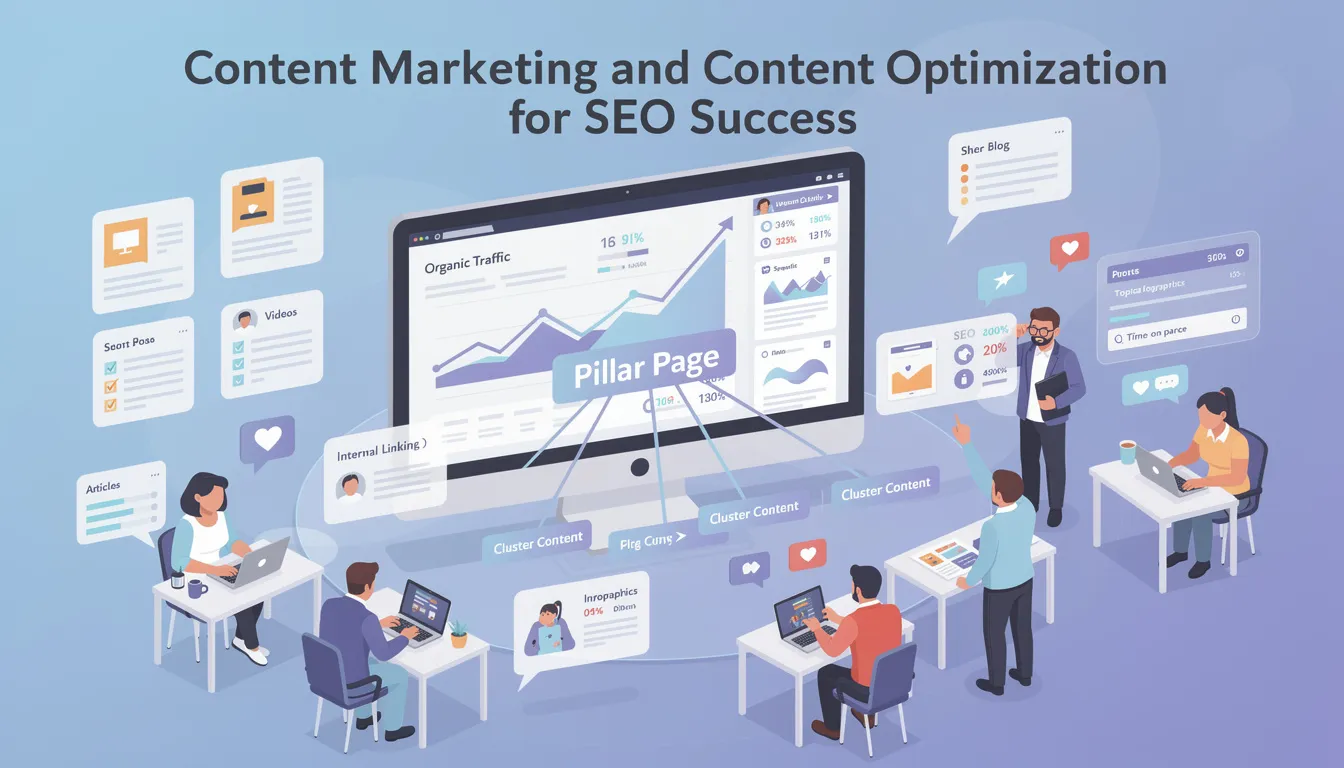
High-quality content creation and marketing are essential pillars of a successful SEO strategy. Content that is relevant, informative, and engaging not only attracts visitors but also encourages them to stay longer, interact, and share, which positively impacts search rankings.
Content marketing involves the development and promotion of valuable, consistent content tailored to a clearly defined audience. This can include blog posts, articles, videos, infographics, and more. Using pillar pages linked to cluster content demonstrates comprehensive depth in a niche and helps establish topical authority.
By establishing a strong content presence, businesses can position themselves as industry authorities, build trust with their audience, and foster brand loyalty. Promotion of content through channels such as social media marketing, email campaigns, and influencer partnerships amplifies reach and drives additional traffic. Integrating SEO best practices into content creation ensures that content is discoverable by search engines and meets the evolving expectations of users and AI-driven search features.
Creating quality content is essential for SEO as it needs to be accurate and original to satisfy search intent.
Link Building and Local SEO Strategies to Increase Search Engine Rankings
Link building remains a critical off-page SEO tactic that involves acquiring high-quality backlinks from reputable websites. These incoming links act as endorsements, signaling to search engines that your website is trustworthy and authoritative, which can significantly boost your search rankings.
Off-page SEO refers to actions taken outside your website to improve search engine rankings, primarily through link building. Other tactics like social media management, online reputation management, and email marketing can indirectly benefit your SEO by driving brand awareness and engagement.
Local SEO focuses on optimizing your online presence to attract customers from specific geographic areas. This includes optimizing your Google Business Profile, ensuring consistent NAP (Name, Address, Phone Number) information across directories, and targeting local keywords that reflect user search intent for nearby services or products.
Combining effective link building with local SEO strategies helps businesses increase their local search visibility, drive targeted traffic, and attract links. This is especially beneficial for brick-and-mortar stores or service providers reliant on local clientele.
Paid Search Advertising and Its Role in Search Engine Marketing
Paid search, often referred to as pay-per-click (PPC) advertising, involves bidding on relevant keywords to display ads prominently in search engine results pages (SERPs). This approach provides immediate visibility and can be highly effective for driving traffic and conversions, particularly for high-intent commercial keywords.
Integrating paid search with organic SEO efforts creates a comprehensive search marketing strategy that maximizes overall visibility. Paid campaigns can complement SEO by targeting keywords that are difficult to rank for organically or by supporting product launches and seasonal promotions.
By carefully managing paid search campaigns and analyzing their performance, businesses can optimize ad spend, improve return on investment (ROI), and enhance their overall digital marketing effectiveness.
Page SEO and Engine Optimization: Technical SEO Essentials
Content optimization ensures that website content is structured and formatted to be easily understood by search engines and valuable to users. This includes using relevant keyword phrases naturally, incorporating structured data markup to enhance search listings with rich snippets, and ensuring content addresses user intent comprehensively.
Engine optimization, often referred to as technical SEO, involves enhancing the website’s infrastructure to improve crawlability, indexing, and user experience. Key technical factors include improving page speed, ensuring mobile-friendliness, implementing secure HTTPS protocols, and creating an XML sitemap. Technical SEO ensures search engines can efficiently crawl, index, and rank your site, focusing on site architecture, speed, and user experience.
Together, content and engine optimization form the backbone of a well-rounded SEO strategy. These ongoing processes require continuous monitoring and refinement to adapt to changing search engine algorithms and evolving user behaviors, ensuring sustained SEO success.
Measuring and Tracking Organic Traffic and SEO Performance
Measuring and tracking SEO performance is vital for understanding the effectiveness of your strategies and making informed, data-driven decisions. Tools like Google Analytics and Google Search Console provide valuable insights into website traffic, user engagement, keyword rankings, and backlink profiles.
Monitoring key performance indicators (KPIs) such as organic search traffic, bounce rates, conversion rates, and keyword search volume helps identify areas of strength and opportunities for improvement. Regularly analyzing this data enables businesses to adjust their SEO tactics, optimize content, and maintain or improve search visibility.
Monitoring and maintaining your SEO efforts is critical to know when something goes wrong or breaks on your website. SEO is an ongoing process that requires continuous adaptation to changes in search engines, user behavior, and competition.
By establishing a robust measurement framework and consistently tracking performance, businesses can refine their SEO strategies, enhance their online presence, and drive sustainable growth through organic search channels.
The Future of Search Engine Optimization in Digital Marketing
In 2026, SEO has evolved into a visibility strategy that encompasses various platforms beyond traditional search engines. Optimizing for AI-first search is essential for visibility in AI-generated answers and voice search results. SEO strategies must adapt to changes in technology and user behavior to remain effective.
SEO builds long-term digital assets that generate sustainable visibility over time. Over 90% of online experiences begin with a search engine, highlighting the importance of organic search for high-intent traffic. Improving your visibility and ranking higher in search results than your competition can positively impact your bottom line.
By understanding how search engines work and continuously refining your SEO strategy, you can ensure your website reaches the right audience and achieves lasting success in the digital landscape.
Frequently Asked Questions (FAQs) About Search Engine Optimization
What is search engine optimization (SEO)?
Search engine optimization (SEO) is the process of improving your website’s visibility on search engines like Google, Bing, and others. It involves optimizing your website content, structure, and technical elements to rank higher in organic (unpaid) search engine results pages (SERPs), driving more qualified traffic to your site.
Why is SEO important for my business?
SEO is important because it helps your website attract organic search traffic, which is often more sustainable and cost-effective than paid advertising. Higher search rankings increase your website’s visibility, build brand credibility, and can lead to more conversions and sales by connecting you with users actively searching for your products or services.
How do search engines work?
Search engines use automated bots called crawlers or spiders to discover and index web pages. Once indexed, search engines rank pages based on relevance, quality, user experience, and many other factors using complex algorithms. Optimizing your site according to these factors helps improve your rankings and visibility.
What is the difference between SEO and SEM?
SEO focuses on improving organic search rankings through unpaid efforts, while SEM (search engine marketing) includes both SEO and paid search advertising (PPC). SEM aims to increase visibility through both organic and paid channels, whereas SEO targets only organic search results.
How long does it take to see results from SEO?
SEO is a long-term strategy. While some improvements can be seen within weeks, it typically takes several months (3-6 months or more) to see significant and sustained results. The timeline depends on factors like competition, website authority, and the quality of your SEO efforts.
What are the main types of SEO?
The three main types of SEO are:
-
On-page SEO: Optimizing individual web pages, including content, HTML tags, and internal links.
-
Off-page SEO: Activities outside your website, primarily link building to increase site authority.
-
Technical SEO: Enhancing website infrastructure to improve crawling, indexing, and user experience.
How does keyword research impact SEO?
Keyword research helps identify the search terms your target audience uses. By understanding these keywords, you can create content that matches user intent, improving your chances of ranking higher in search results and attracting relevant traffic.
What role does content play in SEO?
High-quality, relevant content is essential for SEO. It satisfies user intent, encourages engagement, and earns backlinks, all of which contribute to better search rankings. Content should be original, well-structured, and optimized with relevant keywords.
Can SEO work without backlinks?
While backlinks are a significant ranking factor, SEO can still work by focusing on excellent on-page optimization, technical SEO, and creating valuable content. However, acquiring high-quality backlinks from reputable sites helps build domain authority and improves rankings.
How does AI impact SEO?
AI is transforming SEO by changing how search engines understand and rank content. Optimizing for AI-driven search features like AI Overviews and answer engine optimization (AEO) requires creating authoritative, comprehensive content that AI models can easily interpret and use to provide direct answers.
Is SEO a one-time task?
No, SEO is an ongoing process. Search engines continuously update their algorithms, user behavior evolves, and competitors change their strategies. Regular monitoring, updating content, and technical maintenance are necessary to sustain and improve your search rankings over time.
How do I measure SEO success?
SEO success is measured through metrics such as organic traffic, keyword rankings, bounce rates, conversion rates, and domain authority. Tools like Google Analytics and Google Search Console provide valuable data to track these metrics and guide your SEO strategy adjustments.
If you have more questions or need personalized advice on SEO, feel free to reach out or explore our detailed guides on specific SEO topics.

Mastering Search Engine Optimization: A Guide to Boost Your Visibility
Introduction to Digital Marketing and Search Engine Optimization
Digital marketing encompasses a diverse range of strategies aimed at increasing a brand's online presence and connecting with the target audience effectively. Among these strategies, search engine optimization (SEO) stands out as a fundamental approach to enhancing visibility on major search engines like Google, Bing, and others. Understanding the basics of digital marketing is essential because it lays the foundation for crafting an effective SEO strategy that aligns with broader marketing goals.
SEO plays a pivotal role within digital marketing by focusing on improving a website’s rankings in organic search results. Unlike paid advertising, SEO targets unpaid search engine traffic, which tends to be more sustainable and cost-effective over time. By leveraging SEO, businesses can significantly increase their online presence, attract more qualified visitors, and ultimately boost conversions, whether those are sales, sign-ups, or other key actions.
SEO stands for Search Engine Optimization and helps search engines understand your website's content and connect it with users by delivering relevant, valuable results based on their search queries. The goal of SEO is to rank on the first page of search engine results pages (SERPs) for the most relevant and valuable keywords to your target demographic, driving qualified traffic to your site.
Understanding Search Engines and Google Search
How Google Search and Other Search Engines Work
Google search operates through sophisticated algorithms designed to deliver the most relevant, high-quality, and user-friendly results for any given search query. These algorithms evaluate numerous factors, including keyword relevance, content quality, website authority, and user experience signals, to rank web pages effectively. Search engines use complex processes and criteria to rank results, aiming to provide users with the best search experience.
Leading search engines like Google utilize automated bots known as crawlers or spiders to discover and index web pages across the internet. These search engine crawlers follow links from page to page, enabling search engines to build a comprehensive index of available content. Pages that are linked from other search engine-indexed pages do not need to be submitted because they are found automatically.
Once crawled, pages are analyzed and stored in the search engine's index. After indexing, search engines rank pages based on relevance, quality, and user experience. Search engines prioritize websites that are fast, mobile-friendly, and easy to navigate. Mobile-first indexing requires websites to be fully responsive for effective ranking.
Search engines have added machine learning elements to their algorithms to better interpret user intent and surface the most valuable content. Modern SEO requires content to be structured not only for traditional search engines but also for AI assistants to effectively cite and recommend brands.
Generative AI tools like ChatGPT and Claude are reshaping the SEO landscape by changing how content is optimized for search engines. This has given rise to generative engine optimization (GEO), which focuses on optimizing content for inclusion in AI-generated answers provided by large language models. SEO strategies must now consider optimizing for answer engine optimization (AEO) to ensure content is structured for AI models.
AI Overviews are AI-generated summaries that appear at the top of search results, impacting click-through rates to traditional organic listings. The rise of AI search necessitates a focus on creating authoritative, comprehensive, and contextually rich content that answers user intent. Search engines are increasingly providing direct answers and summarized content generated by AI, reducing the need for users to click through to individual websites.
Optimizing for 'zero-click searches' means focusing on E-E-A-T (Experience, Expertise, Authoritativeness, Trustworthiness) to ensure content is trustworthy enough for AI synthesis. Engagement signals such as high dwell time and low bounce rates indicate valuable content to search engines. Users also perceive organic results as more credible than ads, building brand trust.
Search Engine Optimization vs. SEM and Paid Search
SEO is one-half of SEM, which stands for search engine marketing. SEM encompasses both SEO and PPC (pay-per-click), aiming to drive traffic through organic and paid search efforts. PPC is a type of digital marketing where advertisers pay for clicks on their ads in search results. Organic search results typically have higher click-through rates than paid ads, as users often trust them more.
SEO and PPC are complementary digital marketing channels that ideally should be used together. Both SEO and PPC strategies can be part of a comprehensive digital marketing approach to improve visibility and traffic. SEO can generate sustained traffic at little to no ongoing cost, while PPC requires continuous investment to maintain visibility.
Keyword Research and Planning for Effective Search Engine Optimization
Keyword research is a foundational step in any SEO strategy. It involves identifying the relevant search terms and keyword phrases that your target audience uses when looking for products, services, or information related to your business. Effective keyword research ensures that your content aligns with user intent and captures valuable search engine traffic.
Using SEO tools such as Google Keyword Planner, Semrush, or Ahrefs, marketers can analyze keyword search volume, competition levels, and trends. This data helps in selecting keywords that offer the best potential for ranking and attracting qualified visitors.
Strategic keyword planning involves organizing these keywords into thematic clusters and mapping them to specific pages on your website. This ensures that content creation is purposeful, relevant, and optimized for search engines. Additionally, keyword research informs content marketing efforts, helping to create engaging, useful, and authoritative content that resonates with your audience.
On Page SEO: On-Page Optimization and Content Optimization Techniques
On-page optimization focuses on refining individual web pages to improve their search engine rankings and enhance user experience. This process includes optimizing key HTML elements such as title tags, meta description tags, header tags (H1, H2, etc.), and body content to ensure they are aligned with targeted relevant search terms.
Title tags and meta descriptions are crucial as they attract clicks from search results and influence search visibility. In addition to textual elements, on-page SEO involves improving technical aspects like page speed and mobile responsiveness, which are critical ranking factors in modern search engine algorithms. Internal linking strategies also play a vital role by helping search engines discover related content and establishing a logical site architecture.
By meticulously optimizing these on-page elements, businesses can increase their website’s search visibility, attract more organic traffic, and improve conversion rates through a better user experience.
Content Marketing and Content Optimization for SEO Success
High-quality content creation and marketing are essential pillars of a successful SEO strategy. Content that is relevant, informative, and engaging not only attracts visitors but also encourages them to stay longer, interact, and share, which positively impacts search rankings.
Content marketing involves the development and promotion of valuable, consistent content tailored to a clearly defined audience. This can include blog posts, articles, videos, infographics, and more. Using pillar pages linked to cluster content demonstrates comprehensive depth in a niche and helps establish topical authority.
By establishing a strong content presence, businesses can position themselves as industry authorities, build trust with their audience, and foster brand loyalty. Promotion of content through channels such as social media marketing, email campaigns, and influencer partnerships amplifies reach and drives additional traffic. Integrating SEO best practices into content creation ensures that content is discoverable by search engines and meets the evolving expectations of users and AI-driven search features.
Creating quality content is essential for SEO as it needs to be accurate and original to satisfy search intent.
Link Building and Local SEO Strategies to Increase Search Engine Rankings
Link building remains a critical off-page SEO tactic that involves acquiring high-quality backlinks from reputable websites. These incoming links act as endorsements, signaling to search engines that your website is trustworthy and authoritative, which can significantly boost your search rankings.
Off-page SEO refers to actions taken outside your website to improve search engine rankings, primarily through link building. Other tactics like social media management, online reputation management, and email marketing can indirectly benefit your SEO by driving brand awareness and engagement.
Local SEO focuses on optimizing your online presence to attract customers from specific geographic areas. This includes optimizing your Google Business Profile, ensuring consistent NAP (Name, Address, Phone Number) information across directories, and targeting local keywords that reflect user search intent for nearby services or products.
Combining effective link building with local SEO strategies helps businesses increase their local search visibility, drive targeted traffic, and attract more customers from their service areas. This is especially beneficial for brick-and-mortar stores or service providers reliant on local clientele.
Paid Search Advertising and Its Role in Search Engine Marketing
Paid search, often referred to as pay-per-click (PPC) advertising, involves bidding on relevant keywords to display ads prominently in search engine results pages (SERPs). This approach provides immediate visibility and can be highly effective for driving traffic and conversions, particularly for high-intent commercial keywords.
Integrating paid search with organic SEO efforts creates a comprehensive search marketing strategy that maximizes overall visibility. Paid campaigns can complement SEO by targeting keywords that are difficult to rank for organically or by supporting product launches and seasonal promotions.
By carefully managing paid search campaigns and analyzing their performance, businesses can optimize ad spend, improve return on investment (ROI), and enhance their overall digital marketing effectiveness.
Page SEO and Engine Optimization: Technical SEO Essentials
Content optimization ensures that website content is structured and formatted to be easily understood by search engines and valuable to users. This includes using relevant keyword phrases naturally, incorporating structured data markup to enhance search listings with rich snippets, and ensuring content addresses user intent comprehensively.
Engine optimization, often referred to as technical SEO, involves enhancing the website’s infrastructure to improve crawlability, indexing, and user experience. Key technical factors include improving page speed, ensuring mobile-friendliness, implementing secure HTTPS protocols, and creating an XML sitemap. Technical SEO ensures search engines can efficiently crawl, index, and rank your site, focusing on site architecture, speed, and user experience.
Together, content and engine optimization form the backbone of a well-rounded SEO strategy. These ongoing processes require continuous monitoring and refinement to adapt to changing search engine algorithms and evolving user behaviors, ensuring sustained SEO success.
Measuring and Tracking Organic Traffic and SEO Performance
Measuring and tracking SEO performance is vital for understanding the effectiveness of your strategies and making informed, data-driven decisions. Tools like Google Analytics and Google Search Console provide valuable insights into website traffic, user engagement, keyword rankings, and backlink profiles.
Monitoring key performance indicators (KPIs) such as organic search traffic, bounce rates, conversion rates, and keyword search volume helps identify areas of strength and opportunities for improvement. Regularly analyzing this data enables businesses to adjust their SEO tactics, optimize content, and maintain or improve search visibility.
Monitoring and maintaining your SEO efforts is critical to know when something goes wrong or breaks on your website. SEO is an ongoing process that requires continuous adaptation to changes in search engines, user behavior, and competition.
By establishing a robust measurement framework and consistently tracking performance, businesses can refine their SEO strategies, enhance their online presence, and drive sustainable growth through organic search channels.
The Future of Search Engine Optimization in Digital Marketing
In 2026, SEO has evolved into a visibility strategy that encompasses various platforms beyond traditional search engines. Optimizing for AI-first search is essential for visibility in AI-generated answers and voice search results. SEO strategies must adapt to changes in technology and user behavior to remain effective.
SEO builds long-term digital assets that generate sustainable visibility over time. Over 90% of online experiences begin with a search engine, highlighting the importance of organic search for high-intent traffic. Improving your visibility and ranking higher in search results than your competition can positively impact your bottom line.
By understanding how search engines work and continuously refining your SEO strategy, you can ensure your website reaches the right audience and achieves lasting success in the digital landscape.
Frequently Asked Questions (FAQs) About Search Engine Optimization
What is search engine optimization (SEO)?
Search engine optimization (SEO) is the process of improving your website’s visibility on search engines like Google, Bing, and others. It involves optimizing your website content, structure, and technical elements to rank higher in organic (unpaid) search engine results pages (SERPs), driving more qualified traffic to your site.
Why is SEO important for my business?
SEO is important because it helps your website attract organic search traffic, which is often more sustainable and cost-effective than paid advertising. Higher search rankings increase your website’s visibility, build brand credibility, and can lead to more conversions and sales by connecting you with users actively searching for your products or services.
How do search engines work?
Search engines use automated bots called crawlers or spiders to discover and index web pages. Once indexed, search engines rank pages based on relevance, quality, user experience, and many other factors using complex algorithms. Optimizing your site according to these factors helps improve your rankings and visibility.
What is the difference between SEO and SEM?
SEO focuses on improving organic search rankings through unpaid efforts, while SEM (search engine marketing) includes both SEO and paid search advertising (PPC). SEM aims to increase visibility through both organic and paid channels, whereas SEO targets only organic search results.
How long does it take to see results from SEO?
SEO is a long-term strategy. While some improvements can be seen within weeks, it typically takes several months (3-6 months or more) to see significant and sustained results. The timeline depends on factors like competition, website authority, and the quality of your SEO efforts.
What are the main types of SEO?
The three main types of SEO are:
-
On-page SEO: Optimizing individual web pages, including content, HTML tags, and internal links.
-
Off-page SEO: Activities outside your website, primarily link building to increase site authority.
-
Technical SEO: Enhancing website infrastructure to improve crawling, indexing, and user experience.
How does keyword research impact SEO?
Keyword research helps identify the search terms your target audience uses. By understanding these keywords, you can create content that matches user intent, improving your chances of ranking higher in search results and attracting relevant traffic.
What role does content play in SEO?
High-quality, relevant content is essential for SEO. It satisfies user intent, encourages engagement, and earns backlinks, all of which contribute to better search rankings. Content should be original, well-structured, and optimized with relevant keywords.
Can SEO work without backlinks?
While backlinks are a significant ranking factor, SEO can still work by focusing on excellent on-page optimization, technical SEO, and creating valuable content. However, acquiring high-quality backlinks from reputable sites helps build domain authority and improves rankings.
How does AI impact SEO?
AI is transforming SEO by changing how search engines understand and rank content. Optimizing for AI-driven search features like AI Overviews and answer engine optimization (AEO) requires creating authoritative, comprehensive content that AI models can easily interpret and use to provide direct answers.
Is SEO a one-time task?
No, SEO is an ongoing process. Search engines continuously update their algorithms, user behavior evolves, and competitors change their strategies. Regular monitoring, updating content, and technical maintenance are necessary to sustain and improve your search rankings over time.
How do I measure SEO success?
SEO success is measured through metrics such as organic traffic, keyword rankings, bounce rates, conversion rates, and domain authority. Tools like Google Analytics and Google Search Console provide valuable data to track these metrics and guide your SEO strategy adjustments.
If you have more questions or need personalized advice on SEO, feel free to reach out or explore our detailed guides on specific SEO topics.

0 comments