

If you want to master SEO for your ecommerce site in 2026, you need a strategy that goes beyond paid ads and quick fixes. Running an online store means competing for attention across dozens of channels. Paid ads get expensive fast, and the moment you stop spending, the traffic stops flowing. SEO ecommerce site strategies are essential for sustainable growth because they deliver ongoing traffic and sales without constant ad spend. This guide is for ecommerce business owners, marketers, and webmasters looking to grow organic traffic and sales.
This guide covers everything you need to know about optimizing your ecommerce site for organic search—from site structure and keyword research to technical fixes and measuring ROI. Whether you’re running a 50-product Shopify store or managing a catalog with 10,000 SKUs, these strategies will help you build sustainable organic traffic that converts into revenue.
What is SEO for an Ecommerce Site?
Ecommerce SEO is the process of improving ecommerce sites so they appear higher in search engine results pages (SERPs) and attract the right searchers.
SEO for an ecommerce site means optimizing your category pages, product pages, internal search results, and supporting content so they rank prominently on Google, Bing, and other search engines. In 2026, this extends beyond traditional blue links to include Google Shopping results, image search, and AI-powered search features.
Ecommerce SEO is the process of improving ecommerce sites so they appear higher in search engine results pages (SERPs) and attract the right searchers. Search engine optimisation and search engine optimization are foundational strategies for increasing website visibility, attracting qualified organic traffic, and building long-term authority for your ecommerce business.
Ecommerce SEO is specifically about improving the visibility of your product and category pages in search engine results pages to drive qualified, purchase-ready traffic without relying solely on paid ads. Unlike optimizing an informational website, ecommerce stores face unique challenges: faceted navigation creating thousands of URL variations, product variants in multiple sizes and colors, internal search pages that can bloat your index, and the constant churn of products being added or discontinued. The choice of ecommerce platform, such as BigCommerce, can significantly impact SEO by providing built-in features and technical capabilities that enhance search rankings and organic traffic.
Consider a Shopify store selling hiking boots. Their ecommerce SEO efforts would involve optimizing a category page targeting “waterproof men’s hiking boots” while also ensuring that individual product pages rank for specific long tail keywords like “Salomon X Ultra 4 GTX size 11 review.”
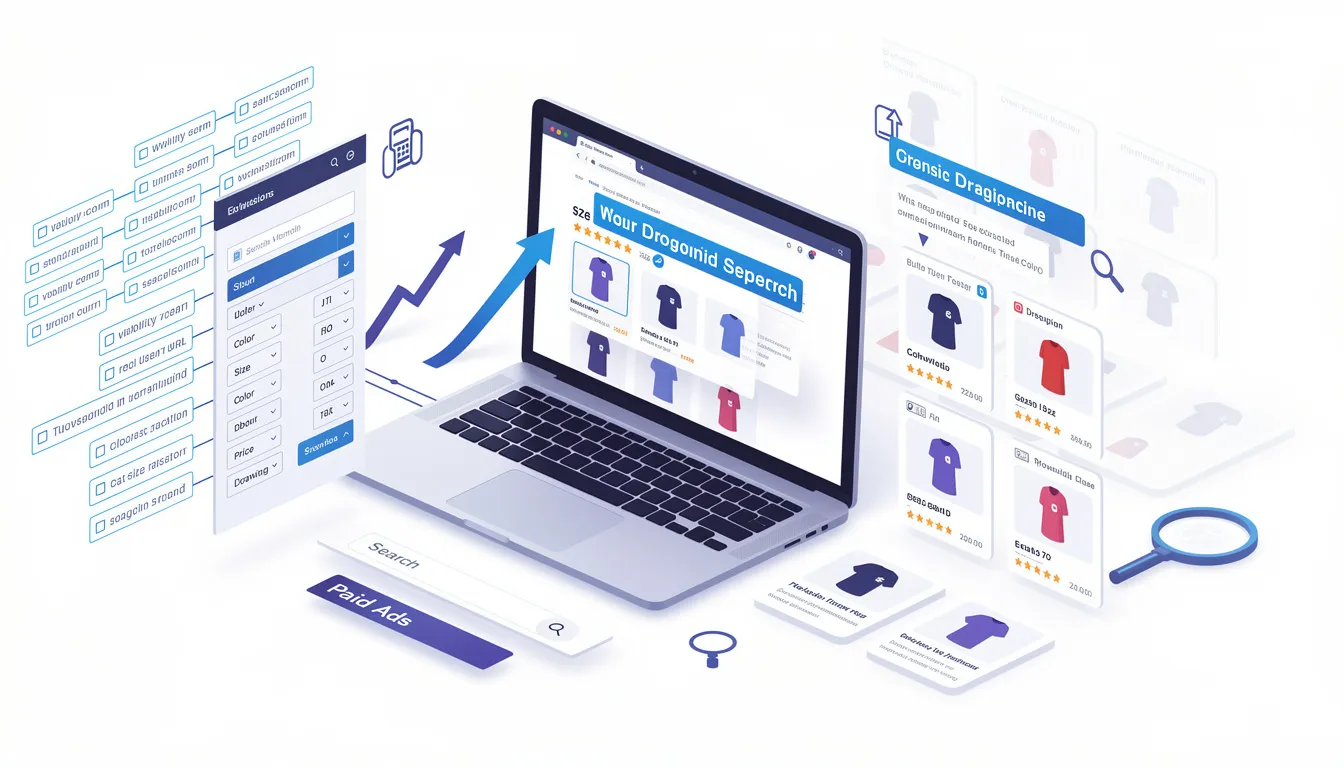
What ecommerce SEO covers in practice:
-
Title tags and meta descriptions for every indexable page
-
Unique product copy that goes beyond manufacturer descriptions
-
Category page content that helps users and search engines understand what the collection contains
-
Internal links connecting related products, categories, and content
-
Structured data markup for products, reviews, breadcrumbs, and FAQ sections
-
Google Merchant Center integration and product feed optimization
-
Core Web Vitals performance ensuring fast, stable page loads
-
XML sitemap configuration and robots.txt management for large catalogs
Why SEO is Critical for Ecommerce Sites in 2026
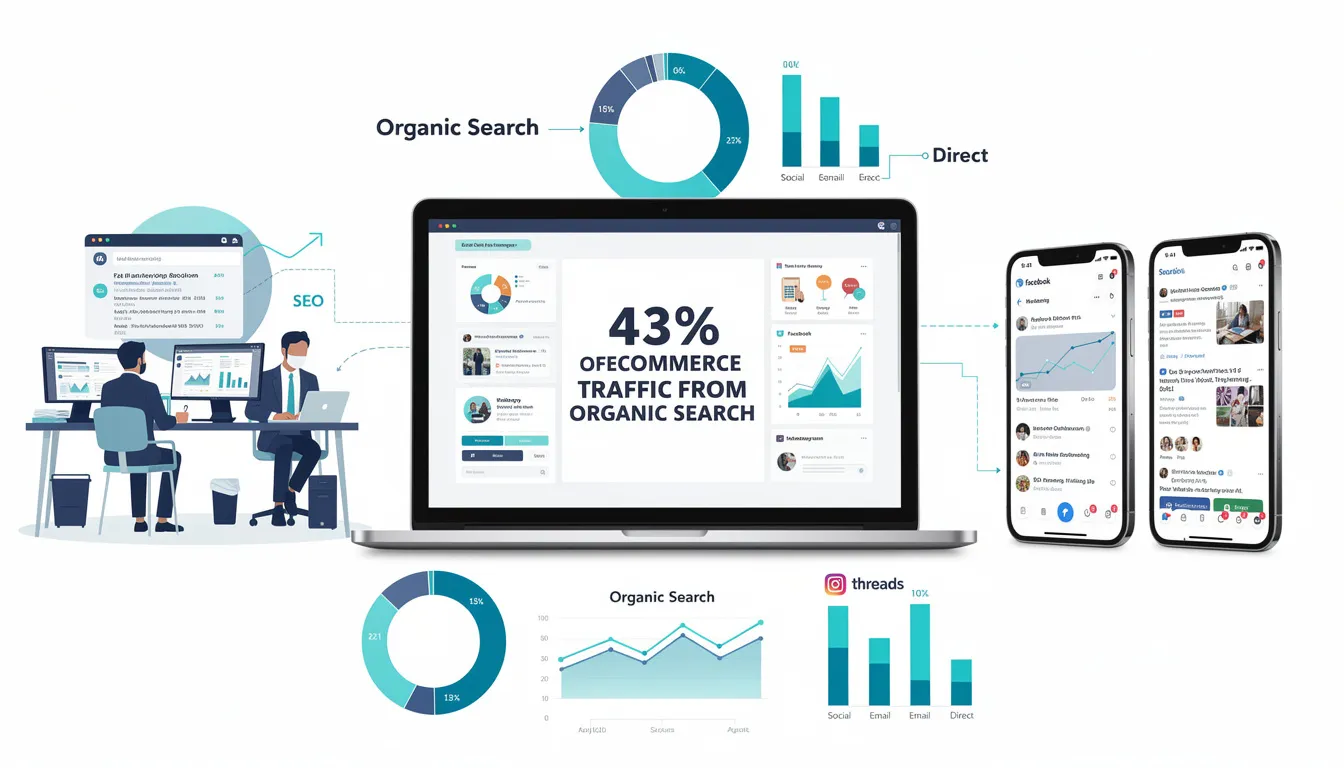
Industry data consistently shows that around 43% of ecommerce website traffic comes from organic search. For many stores, this percentage is even higher when you factor in branded queries. That makes organic search the single largest traffic source for most ecommerce businesses—bigger than social, email, or direct visits. A significant portion of ecommerce visits and conversions originate from google's organic search results, so optimizing for these results is crucial for visibility and growth. Many businesses partner with digital marketing agencies to maximize their search visibility and traffic, while others drive results using Meta platforms like Facebook, Instagram, and Threads.
The click-through reality makes this even more important. The first organic result on Google captures roughly 27-30% of all clicks for a given query. Results on page two? They receive less than 1% of total clicks. For ecommerce stores, ranking on page one isn’t just nice to have—it’s essential for capturing revenue. Appearing at the top of google search results dramatically increases your chances of attracting potential customers and driving sales.
SEO pages can continue driving sales for months or years after they’re created and properly maintained. Paid ads stop the moment your budget runs out.
Why ecommerce sites specifically benefit from SEO investment:
-
Lower blended customer acquisition cost — Organic traffic requires upfront investment but compounds over time, reducing your overall CAC compared to pure paid strategies
-
Higher buyer intent — Users searching for product-specific terms are often further down the purchase funnel than those seeing display ads
-
Compounding returns — A well-optimized category page continues earning traffic and sales without additional spend
-
Brand trust signals — Ranking organically for relevant keywords builds credibility that paid ads cannot replicate
-
Omni-channel visibility — Good ecommerce SEO improves your presence across Google Search, Google Shopping free listings, image search, and emerging AI overview features
Search engines are increasingly using engagement signals—such as click-through rates and time on site—as ranking factors. This makes it even more important to provide a compelling user experience to improve your position in google's organic search results.
Paid Ads vs. SEO for Ecommerce Sites
|
Factor |
Paid Ads |
SEO Ecommerce Site |
|---|---|---|
|
Cost: See how geo-fenced ads and store visits solutions can turn impressions into in-store visits while allowing you to measure cost per visit, local lift, and real ROAS. |
Ongoing, can be expensive |
Upfront, compounds over time |
|
Traffic Duration |
Google Search Marketing campaigns stop when budget ends |
Ongoing, long-term |
|
Buyer Intent |
Varies, often less targeted |
High, especially for product keywords |
|
Trust & Credibility |
Lower, marked as ads |
Higher, seen as organic recommendations |
|
Channel Reach |
Limited to ad platforms |
Broad: search, shopping, image, AI search |
Core Foundations: Site Structure and Technical SEO for Ecommerce Sites
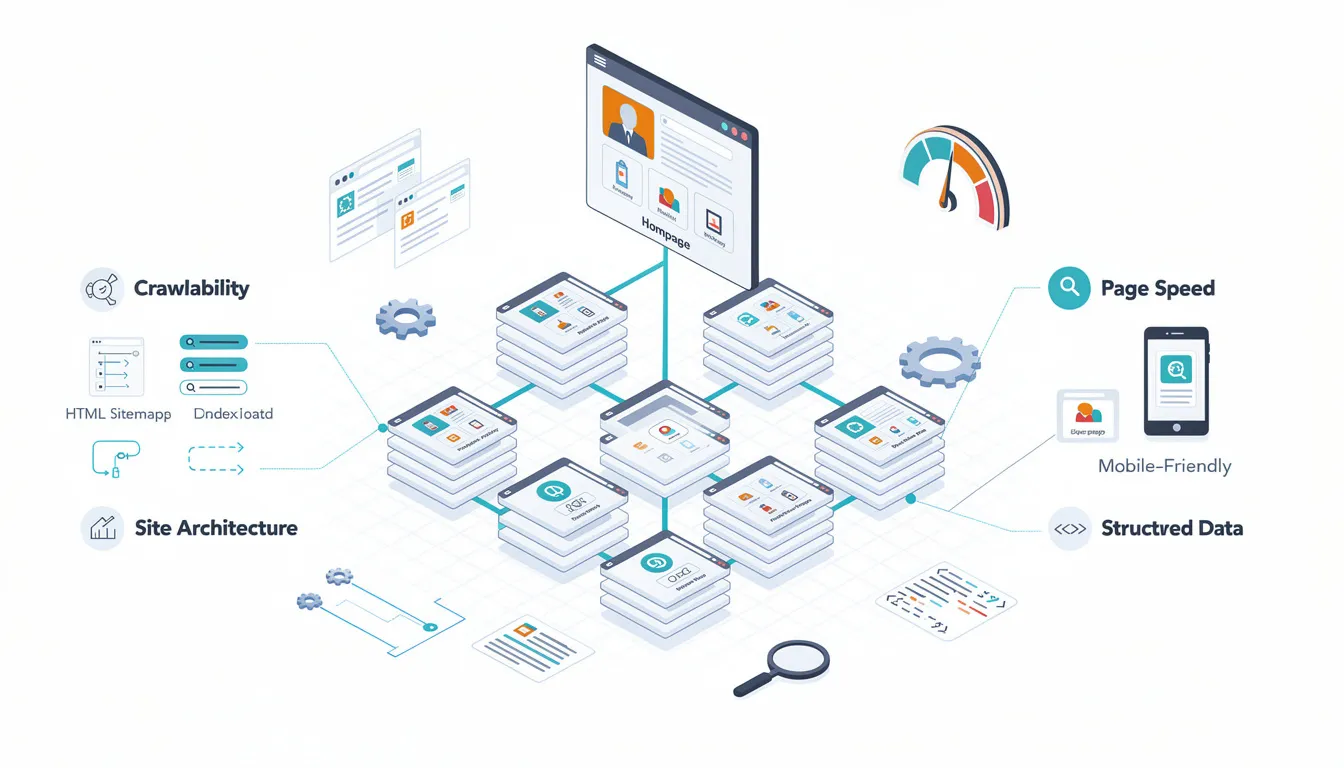
Technical SEO and site architecture form the backbone of every successful ecommerce SEO strategy. Without a solid technical foundation, even the best content and keyword targeting won’t deliver results—especially for catalogs with hundreds or thousands of products. Using a site audit tool can help identify and fix technical SEO issues such as site speed, crawlability, and site structure, ensuring your ecommerce site remains healthy and optimized for search engines.
Site Architecture
The ideal ecommerce site architecture follows a clear hierarchy: homepage connects to main categories, main categories lead to subcategories, and subcategories contain individual product pages. Every product should be reachable within three clicks from the homepage. This flat structure helps search engines crawl your entire catalog efficiently and distributes page authority throughout your site.
URL Structure
URL structure matters significantly. Use clean, keyword-rich folder paths like /mens-running-shoes/neutral/ rather than parameter-heavy URLs like /product.php?cat=12&sub=45&id=789. Breadcrumb navigation should mirror this structure, appearing as “Home > Men’s Shoes > Running > Neutral” with proper schema markup so Google can display breadcrumbs in search results.

Technical SEO Priorities
Technical SEO priorities for ecommerce sites:
-
Page speed optimization — Compress images, minify CSS and JavaScript, use lazy loading for below-the-fold content
-
Mobile-first design — Ensure responsive layouts and touch-friendly navigation across all devices
-
HTTPS everywhere — All pages must load securely with valid SSL certificates
-
XML sitemap management — Include all indexable product and category URLs, exclude filtered and paginated duplicates
-
Robots.txt configuration — Block internal search results, session IDs, and low-value filter combinations from crawling
-
Broken link monitoring — Regularly audit for 404 errors and fix redirect chains that slow down crawling
-
Core Web Vitals compliance — Target LCP under 2.5 seconds, INP under 200ms, and CLS under 0.1 for all key pages
For increasing store traffic beyond technical SEO, consider leveraging local marketing strategies such as geo-fenced ads and digital billboards.
Google’s Core Web Vitals continue to influence both rankings and conversions. Pages that load quickly and remain visually stable convert better and rank higher, particularly on mobile devices where the majority of ecommerce traffic now originates.
Mobile commerce necessitates that technical health underpins search rankings for ecommerce sites. Since mobile devices account for the majority of online shopping traffic, Google prioritizes sites with a "Good" rating in Core Web Vitals metrics such as Largest Contentful Paint (LCP) under 2.5 seconds. In fact, as of late 2024, Google stopped indexing non-mobile-friendly websites, making mobile-first responsiveness essential heading into 2026. This means your ecommerce site must be optimized to provide fast, smooth, and accessible experiences on smartphones and tablets, or risk losing valuable search visibility.
Technical SEO forms the backbone of your website's search visibility, creating a healthy foundation that allows your business to grow without technical limitations. Fast loading websites are favored by both users and search engines, with page loading speed directly impacting your bottom line through improved user engagement and conversion rates. A clean site structure combined with good technical SEO not only improves your visibility in search engine results but also creates a better experience for users, encouraging longer visits and increased sales.
Internal Linking

Internal linking is an often overlooked yet powerful strategy in your marketing toolkit. By strategically linking related products, categories, and content pages, you guide search engines and visitors to your most valuable pages. This improves crawl efficiency, distributes page authority, and enhances user navigation, ultimately supporting higher rankings and better conversion rates.
Using structured data is another critical technical SEO element. Structured data markup helps search engines understand your content more precisely and enables rich results such as product prices, availability, star ratings, and reviews to appear directly in search listings. This enhanced visibility can increase click-through rates and attract more qualified traffic to your ecommerce store.
Sitemaps are essential navigation tools that direct search engines through your website's architecture, enabling efficient discovery and indexation of valuable content. Properly maintained XML sitemaps include all important product and category pages while excluding duplicates and low-value URLs, ensuring search engines focus their crawl budget on your most critical pages.
A well-structured site is easy to explore, crawl, and understand, making every other part of your SEO strategy more effective. Simplifying navigation, maintaining logical URL hierarchies, and ensuring consistent internal linking all contribute to a site architecture that supports both users and search engines. For businesses also seeking to maximize their digital marketing results through performance media campaigns on Google and Meta, integrating a paid strategy alongside strong SEO can deliver even greater impact.
Ecommerce Keyword Research: Finding the Right Search Terms
Every ecommerce SEO strategy begins with ecommerce keyword research that reflects how real customers search for products. Understanding buyer language and intent determines which pages you optimize and what content you create. Generating keyword ideas using tools like Google autocomplete, Amazon autocomplete, and keyword research tools such as Semrush helps identify which keywords to target for ranking and conversions.
Keyword Types
Ecommerce keyword research focuses on three main keyword types:
|
Keyword Type – Learn more about building a solid digital foundation with Web, SEO & Data | Foundation for Growth – SMC. |
Example |
Intent |
Target Page |
|---|---|---|---|
|
Category-level |
“organic dog food” |
Commercial investigation |
Category page |
|
Product-level |
“Orijen Puppy food 6kg” |
Transactional |
Product page |
|
Informational |
“how much should a 6 month old puppy eat” |
Research |
Blog/guide content |
Keyword Research Tools
For a data-driven content strategy, use Google Keyword Planner for search volume estimates, Google Search Console for queries you’re already appearing for, and tools like Ahrefs or Semrush to analyze keyword difficulty and find related keywords your competitors rank for. These tools also allow you to monitor keyword rankings over time, track performance, and refine your SEO strategy based on ranking fluctuations. Google Trends helps identify seasonality—critical for planning promotional content around peak search periods.
Competing with larger retailers through niche long-tail keyword searches is a key advantage of effective SEO. Long-tail keywords tend to be more specific, have less competition, and usually a higher likelihood for conversion because of their relevance. Prioritizing transactional and commercial keywords is especially important for ecommerce businesses, as searchers using these terms are more likely to buy your products.
Keyword Mapping
Mapping keywords to pages:
The goal is assigning one primary target keyword per page along with 2-4 related secondary keywords. This prevents internal keyword cannibalization where multiple pages compete against each other.
For example, a winter coat retailer might structure their mapping like this:
-
/winter-coats/ → Primary: “women’s winter coats” | Secondary: “warm coats for women,” “ladies winter jackets”
-
/winter-coats/down/ → Primary: “women’s down jackets” | Secondary: “down winter coat,” “packable down jacket women”
-
/winter-coats/down/north-face-arctic-parka/ → Primary: “North Face Arctic Parka women’s” | Secondary: “North Face winter coat review”
Prioritize transactional and commercial-intent keywords for category and product pages. Build supporting blog content targeting informational keywords that link back to your commercial pages, creating topical authority in your niche.
On-Page SEO Strategy: Optimising Product and Category Pages
Product and category pages generate the majority of ecommerce revenue, so on-page SEO should focus heavily on optimizing these key pages. Optimising product pages by incorporating relevant keywords with transactional intent is crucial to increase conversions and to align your content strategy with different search intents, such as purchase-focused or informational keywords. Getting the fundamentals right here directly impacts your search rankings and conversion rates.
Category Page Optimization
Category pages need unique introductory content—typically 150-300 words—placed above or below the product grid. This content should include your primary keyword naturally, explain what the category contains, and link to important subcategories. The H1 should be descriptive and include the main keyword (e.g., “Women’s Waterproof Hiking Boots”).
Avoid thin category pages with nothing but a product grid. Search engines need text content to understand what the page is about and match it with relevant search queries.
Product Page Essentials
Product page checklist:
-
H1 heading — Clear product name including key attributes (brand, model, key feature)
-
Title tag — 55-60 characters, include primary keyword and brand, e.g., “Nike Air Zoom Pegasus 40 | Men’s Running Shoes | YourStore”
-
Meta descriptions — 150-160 characters highlighting main benefit and including keyword, ending with a subtle CTA
-
Product description — 200-400 words of unique copy covering features, benefits, use cases, and specifications
-
Image alt text — Descriptive, keyword-relevant alt attributes on all product photos
-
Compressed images — WebP format where possible, sized appropriately for display dimensions
-
Product schema markup — Include price, availability, condition, ratings, and review count
Optimizing images with alt text and proper file names helps improve search visibility and accessibility. Using structured data on product pages enables rich snippets that display price, availability, and star ratings directly in search results, enhancing click-through rates.
Ecommerce websites often face challenges with duplicate content due to multiple categories and product pages with shared attributes. Using canonical tags and self-referencing URLs helps prevent duplicate content issues and consolidates ranking signals.
User-generated content like reviews, Q&A sections, and customer photos serve dual purposes: they improve conversion rates and add fresh, long-tail keyword-rich content that helps search engines understand your products better.
Add FAQ sections to important category and product pages. These capture long-tail and voice-style search queries while providing quick answers that can appear in featured snippets.
Content Marketing for Ecommerce SEO
Ecommerce sites must invest in helpful content beyond product listings to rank for earlier-funnel queries. When potential customers are researching before buying, your content should be there to guide them—and eventually direct them to your products.
Content types that drive ecommerce SEO results:
-
Buying guides — “Best Running Shoes for Flat Feet in 2025” targeting research-phase buyers
-
Comparison posts — “AirPods Pro 2 vs Sony WF-1000XM5: Which Are Better for Commuting?”
-
Gift guides — Seasonal content like “15 Gifts for Outdoor Enthusiasts Under $100”
-
How-to articles — Practical content like “How to Break In Leather Hiking Boots Without Pain”
-
Size guides — “Complete Bra Size Guide: How to Measure at Home”
-
Care instructions — “How to Clean and Maintain Suede Sneakers”

The most effective ecommerce content marketing uses topical clusters. Each main category gets a comprehensive pillar guide, supported by multiple related articles that internally link back to the category page. This structure helps search engines understand your topical authority and distributes ranking power to your commercial pages.
Build your content calendar from real customer questions. Review Google Search Console for search terms bringing impressions, analyze site search logs to see what visitors look for, and mine customer support emails for common questions. This ensures you’re creating content that matches actual search intent.
Ecommerce businesses can leverage content marketing to build trust and authority in their niche, which can lead to higher search rankings and increased organic traffic.
Link Building and Authority for E-commerce Sites
Backlinks remain a core ranking factor, particularly important in competitive ecommerce verticals where dozens of stores sell similar products. The stores that earn quality links consistently outrank those relying purely on on-page optimization.
Practical link sources for ecommerce sites:
-
Supplier and manufacturer pages — Get listed on “where to buy” or authorized retailer directories
-
Brand partner pages — Many brands link to their retail partners
-
Niche bloggers and reviewers — Provide products for honest reviews in exchange for links
-
Industry publications — Contribute expert commentary or data for articles in your vertical
-
Resource pages — Identify pages linking to similar products or guides and request inclusion
Linkable Content Strategies
The most effective ecommerce link building creates content that naturally attracts links over time; for example, by evaluating the effectiveness of your digital strategy for future growth.
-
Data-driven studies — “We analyzed 1,000 running shoe reviews: here’s what buyers actually care about”
-
Interactive tools — Size calculators, fit finders, compatibility checkers
-
Comprehensive guides — Definitive resources that become go-to references in your niche
-
Original research — Surveys, trend reports, industry benchmarks
Influencer and creator collaborations offer another path. When partners link to specific product or collection pages from their blogs or YouTube descriptions, those links carry authority directly to your commercial pages.
Use Ahrefs or Semrush to analyze competitor backlink profiles. Look for patterns: which types of content earn links in your niche? Which sites frequently link to products or guides? This competitive analysis reveals realistic opportunities you can pursue.
Backlinks from high-authority domains, such as .edu or .gov sites, are particularly valuable for improving search rankings. Building trust through link building is one of the most powerful ways to boost your SEO performance.
Guest posting on relevant websites and digital PR outreach can help ecommerce businesses earn backlinks from news articles and blogs, increasing visibility and authority.
User Experience and Conversion Signals for Ecommerce SEO
User experience (UX) is a critical factor in the success of any ecommerce site, directly influencing both conversion rates and search engine rankings. Search engines like Google increasingly prioritize ecommerce websites that deliver a seamless, intuitive, and enjoyable shopping experience. A well-structured site with clear navigation, fast page speed, and easily accessible product pages not only keeps visitors engaged but also signals to search engines that your site deserves higher placement in search results.
Optimizing your ecommerce site’s structure ensures that users can quickly find what they’re looking for, reducing bounce rates and increasing the likelihood of a purchase. Clear menus, logical category pages, and prominent internal links help guide shoppers from the homepage to relevant product pages with minimal friction. Fast-loading pages are essential—slow sites frustrate users and can lead to lost sales, while also negatively impacting your search engine rankings.
Google Analytics is an invaluable tool for monitoring user behavior on your ecommerce site. By tracking metrics such as bounce rate, average session duration, and conversion paths, you can identify which areas of your site are performing well and which need improvement. For example, if you notice high exit rates on certain product pages, it may indicate issues with page speed, unclear descriptions, or a confusing checkout process.
Advanced Ecommerce SEO Topics
As ecommerce SEO evolves, advanced strategies become essential for staying ahead of the competition and maximizing organic traffic. Technical SEO is at the heart of these advanced tactics, starting with a robust site architecture that allows search engines to efficiently crawl and index your entire catalog. Implementing schema markup on product and category pages helps search engines understand your content, enabling rich results like star ratings, prices, and availability to appear in search engine results pages.
For ecommerce sites targeting multiple regions or languages, hreflang tags are crucial. These tags signal to search engines which version of a page to show users based on their location and language preferences, preventing duplicate content issues and improving search engine rankings in international markets.
Advanced link building is another key area. Acquiring high-quality backlinks from authoritative websites in your industry boosts your domain authority and helps your ecommerce site rank higher for valuable keywords. This can be achieved through digital PR, partnerships, and creating link-worthy content such as original research or interactive tools.
Leveraging ecommerce SEO tools like Ahrefs and Semrush allows you to conduct in-depth keyword research, analyze competitor strategies, and uncover new opportunities for growth. These tools help you identify high-potential keywords, assess keyword difficulty, and monitor your site’s backlink profile, ensuring your SEO efforts are data-driven and effective.
By mastering these advanced ecommerce SEO topics—technical SEO, site architecture, schema markup, hreflang implementation, and strategic link building—you can significantly enhance your organic traffic and maintain strong search engine rankings in even the most competitive markets.
Analytics, Tracking, and Measuring Ecommerce SEO ROI with Google Analytics
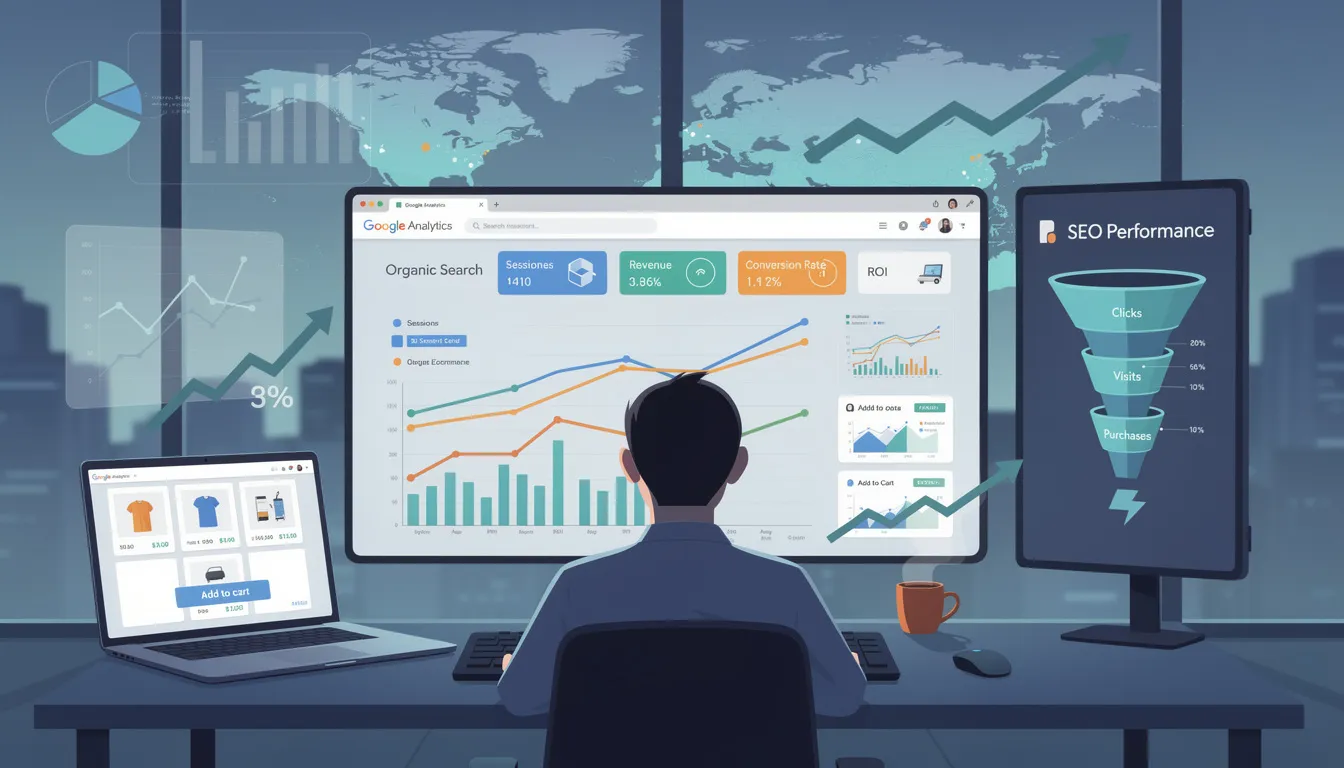
Ecommerce SEO must be measured in revenue terms, not just rankings or traffic. A keyword ranking improvement means nothing if it doesn’t eventually translate to sales. Setting up proper tracking from the start ensures you can demonstrate—and optimize for—real business outcomes.
Google Analytics 4 Configuration
Steps to configure Google Analytics 4 for ecommerce SEO:
-
Enable enhanced measurement in your GA4 property settings.
-
Implement ecommerce events: view_item, add_to_cart, begin_checkout, purchase.
-
Configure revenue, item data, and transaction IDs in your purchase events.
-
Set up conversion tracking for purchases as your primary goal.
-
Create segments for organic traffic to isolate SEO-driven behavior.
Monitoring organic sessions and non-brand traffic growth is essential for measuring the effectiveness of ecommerce SEO efforts. Tracking revenue attributed to organic traffic and organic conversion rates helps evaluate the true impact of your SEO campaigns.
Google Search Console Monitoring
Search Console provides search-level data that GA4 cannot:
-
Query-level impressions and clicks for your indexed pages
-
Average position tracking for product and category URLs
-
Index coverage reports showing crawl and indexing issues
-
Core Web Vitals performance data by page type
-
Manual actions or security issues affecting your site
Regular audits using tools like Ahrefs or Screaming Frog help maintain the technical health of an ecommerce site, which is crucial for SEO success.
Key metrics to track monthly:
|
Metric |
What It Tells You |
Where to Find It – See creative and content services for ad and SEO growth. |
|---|---|---|
|
Organic sessions |
Overall traffic from search |
GA4 |
|
Revenue from organic |
Direct SEO revenue impact |
GA4 ecommerce reports |
|
Organic conversion rate |
How well organic traffic converts |
GA4 with segments |
|
Clicks by query |
Which search terms drive traffic |
Search Console |
|
Indexed pages |
Catalog coverage in Google |
Search Console |
|
Average position |
Ranking trends for key pages |
Search Console |
Build monthly SEO reports that connect traffic metrics to revenue outcomes. This makes it easier to justify continued SEO investment and identify which optimizations deliver the strongest returns.
Common Ecommerce SEO Mistakes
Even the best ecommerce websites can fall victim to common SEO mistakes that undermine their visibility in search engine results pages and limit organic traffic. One of the most frequent issues is duplicate content, which often arises when product descriptions or category pages are copied across multiple URLs. This confuses search engines and can dilute your site’s authority, making it harder for your product and category pages to rank.
Poor site structure is another major pitfall. If your ecommerce site lacks a logical hierarchy or has disorganized category pages, search engines may struggle to crawl and index your web pages effectively. This can result in important product pages being overlooked, reducing your chances of appearing in relevant search results.
Failing to optimize product pages with relevant keywords, compelling meta descriptions, and descriptive title tags is a missed opportunity. Without these elements, your pages may not match the search queries your customers use, leading to lower search engine rankings and less organic traffic.
Another common mistake is neglecting internal links. Connecting related product and category pages with internal links helps search engines understand your site’s structure and distributes authority throughout your ecommerce site. This not only improves crawlability but also enhances the user experience by guiding shoppers to related products.
FAQs about Ecommerce SEO
What is ecommerce SEO?
Ecommerce SEO is the process of optimizing an online store's web pages—including product and category pages—to rank higher in search engine results pages (SERPs). This involves a combination of keyword research, content optimization, technical SEO, link building, and user experience improvements. The goal is to attract qualified, purchase-ready traffic from search engines like Google and Bing, ultimately increasing sales without relying solely on paid ads. Ecommerce SEO also addresses unique challenges such as managing multiple URLs for product variants and faceted navigation, which can create duplicate content if not handled properly.
Why is mobile optimization essential for ecommerce SEO?
Mobile optimization is critical because the majority of ecommerce traffic now comes from mobile devices. Google uses mobile-first indexing, meaning it predominantly evaluates the mobile version of your site when determining search rankings. A fast-loading, responsive, and easy-to-navigate mobile site improves user experience, reduces bounce rates, and enhances your visibility in organic search results. Without proper mobile optimization, your ecommerce site risks losing valuable traffic and revenue, especially as Google stopped indexing non-mobile-friendly websites as of late 2024.
How does technical SEO impact ecommerce SEO?
Technical SEO forms the foundation of your ecommerce SEO strategy by ensuring search engines can efficiently crawl, index, and understand your site. Key technical SEO tasks include optimizing site speed by compressing images and minimizing code, fixing broken links, managing duplicate content through canonical tags, implementing structured data markup for rich snippets, and maintaining a clean, logical site architecture. Additionally, leveraging Natural Language Processing (NLP) in your internal search functionality can handle synonyms and misspellings effectively, improving user experience and helping customers find the products they want more easily.
What role does content marketing play in ecommerce SEO?
Content marketing supports ecommerce SEO by attracting and engaging potential customers at various stages of the buying journey. Creating blog posts, buying guides, how-to articles, and FAQs helps build topical authority, answer common customer questions, and drive organic traffic to product and category pages. Well-crafted content also encourages backlinks from other websites, which further boosts your site’s authority and search rankings. Regularly publishing relevant content aligned with your target keywords ensures sustained organic growth and keeps your ecommerce store competitive.
How important is link building for ecommerce SEO?
Link building is a powerful way to build trust and authority for your ecommerce site. High-quality backlinks from reputable and relevant websites signal to search engines that your content is valuable and trustworthy. This improves your site’s credibility and search rankings more effectively than acquiring many low-quality or irrelevant links. Effective link building strategies include guest posting on authoritative sites, digital PR campaigns, influencer collaborations, and creating link-worthy content such as original research or comprehensive guides.
What are rich snippets, and why do they matter?
Rich snippets are enhanced search results that display additional information such as prices, star ratings, product availability, and reviews directly within Google’s organic search results. By using structured data markup on your product pages, you enable rich snippets, which make your listings more visually appealing and informative to shoppers. This increased visibility can significantly boost click-through rates, drive more qualified traffic to your ecommerce store, and ultimately lead to higher conversions.
How long does it take to see results from ecommerce SEO?
Ecommerce SEO requires a long-term mindset. Results often take several months to materialize because search engines need time to crawl, index, and rank your optimized pages. Consistent efforts in keyword research, content creation, technical SEO, and link building are essential for sustained growth. Unlike paid ads, which stop driving traffic once the budget ends, the organic traffic you build through SEO continues to generate sales over time, compounding your return on investment.
What tools can help with ecommerce SEO?
There are many ecommerce SEO tools available to assist with various aspects of optimization. Google Analytics tracks and reports website traffic, providing valuable insights to optimize your ecommerce store for SEO and improve marketing ROI. Google Search Console helps monitor search impressions, clicks, and indexing status. Tools like Ahrefs and Semrush offer keyword research, backlink analysis, and competitive insights. Screaming Frog and other site audit tools identify technical SEO issues such as broken links and duplicate content. Additionally, structured data validators ensure your rich snippets are correctly implemented, maximizing your visibility in Google’s organic search results.
The organic traffic you build this quarter will still be driving sales next year—and the year after that. That’s the real power of ecommerce SEO done right.

0 comments