

Introduction to SEO and High Google Rankings in Search Results
Search engine optimization (SEO) is crucial for improving your website’s visibility in search engine results. Achieving a high Google ranking means your web pages appear near the top of Google's search engine results pages (SERPs) for specific keywords or search queries. This increased visibility significantly boosts organic search traffic and enhances your site's authority. Understanding how search engines work, including other search engines beyond Google, is essential for developing an effective SEO strategy that drives relevant visitors to your own website. SEO helps website owners increase their site’s authority and ranking by creating quality content, optimizing technical aspects, and aligning with user intent. In 2026, Google emphasizes first-hand, human-led experiences to differentiate content quality, making authentic, authoritative content the number one driver of search engine rankings.
One of the core principles guiding Google’s evaluation of content quality is E-E-A-T — Experience, Expertise, Authoritativeness, and Trustworthiness. These factors are especially vital for sensitive topics such as health, finance, or legal advice, where users rely heavily on accurate and credible information. Demonstrating real-world experience and expertise in your content helps build trust with both users and search engines, signaling that your site is a reliable source. Authoritativeness is established through credentials, endorsements, and high-quality backlinks, while trustworthiness is reinforced by secure site protocols and transparent practices. Incorporating E-E-A-T principles into your SEO strategy ensures your content not only ranks well but also meets the high standards expected by Google and your audience.
Table of Contents
-
Developing an Effective SEO Strategy to Improve SEO Rankings
-
Understanding Ranking Factors and Search Intent for Better Search Results
-
Building Topical Authority by Creating Relevant Content to Publish Content That Ranks
-
Optimizing On-Page Elements: Page Title, Meta Title, and Meta Description for Better Rankings
-
Using Google Analytics to Track SEO Performance and Refine Your SEO Strategy
-
Targeting Specific Search Terms and Keywords to Improve SEO Rankings
-
Optimizing for Featured Snippets to Increase Visibility in Search Results
-
Using Header Tags and Concise URLs for Better Content Organization and SEO Rankings
-
Leveraging Technical SEO and Other Ranking Factors for Improved Google Rankings
-
Avoiding Black Hat Techniques and Penalties to Protect Your SEO Rankings
-
Creating a Content Marketing Strategy to Publish Content That Attracts Links
-
Building High-Quality Backlinks to Improve Your Site’s Authority and SEO Rankings
-
Measuring SEO Success and Tracking Progress with Google Analytics
-
Staying Up-to-Date with the Latest SEO Trends, Search Terms, and Best Practices
-
Using Local SEO and Google Maps to Target Specific Geographic Regions
-
Optimizing Images and Multimedia Content with Alt Text for Better Rankings
-
Using Internal Linking with Descriptive Anchor Text to Improve Website Navigation and SEO
-
Avoiding Duplicate Content and Ensuring Uniqueness to Protect Your Rankings
-
Using Social Media to Promote Content, Drive Traffic, and Boost SEO Rankings
-
Conclusion: Achieving High Google Rankings Through a Comprehensive SEO Strategy
-
Frequently Asked Questions (FAQs) About Ranking High on Google
Developing an Effective SEO Strategy to Improve SEO Rankings

A well-planned SEO strategy includes keyword research, on-page SEO, technical SEO, and continuous performance monitoring. Identifying your target keyword and understanding search intent are vital for creating relevant content that meets your audience’s needs. Tools like Google Keyword Planner help you find the right keywords, including low competition keywords, to target effectively. Incorporating keyword variations such as secondary keywords throughout your content adds depth and improves your organic Google rankings for more keywords. Additionally, creating clusters of content around main topics builds topical authority, signaling to Google that your site is an expert source. Ongoing analysis using tools like Google Analytics and Search Console allows you to track SEO rankings, dwell time, and user engagement metrics, guiding your strategy refinement.
Understanding Ranking Factors and Search Intent for Better Search Results
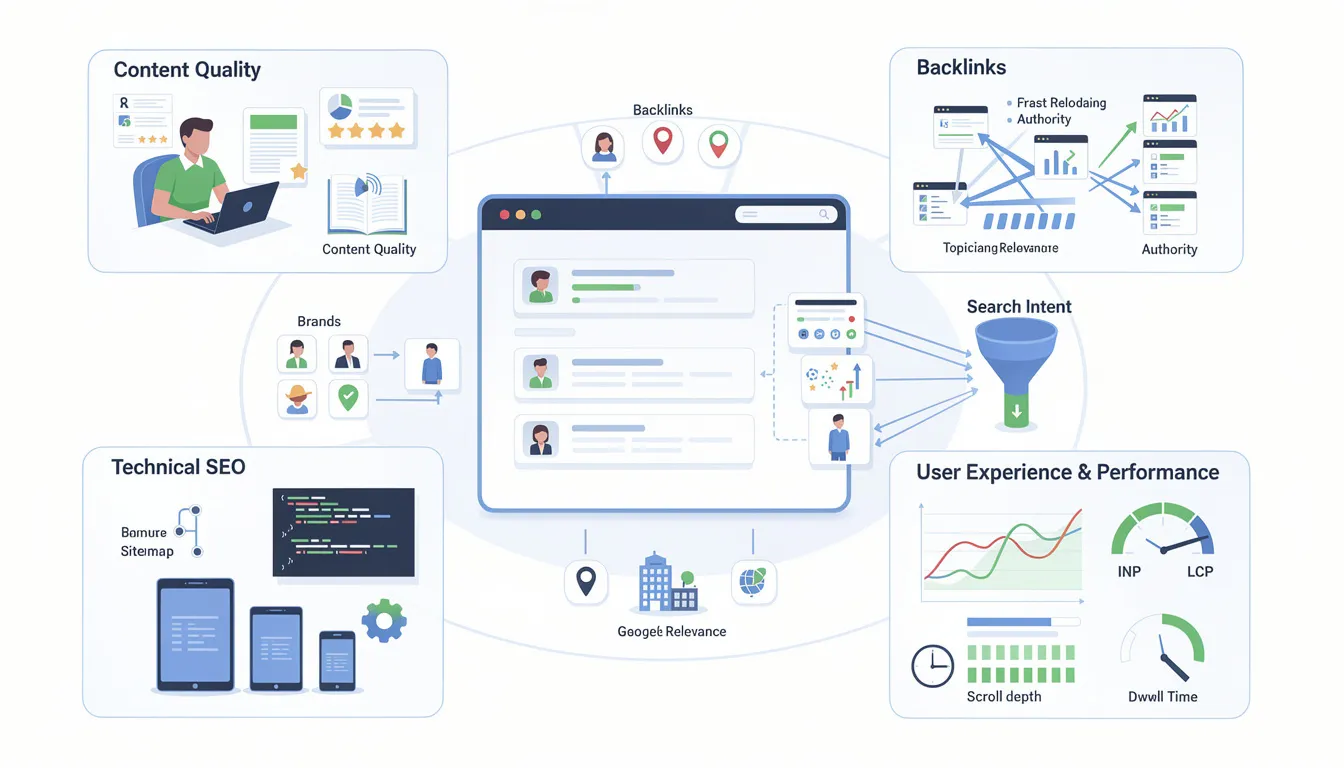
Google’s ranking algorithm considers multiple factors beyond keywords, including content quality, backlinks, technical SEO, and user experience metrics. Backlinks are judged by their topical relevance, making quality more critical than quantity. Backlinks from high-authority websites significantly influence your site’s authority and ranking. Google also recognizes entities such as brands, people, and locations across the web, which can impact rankings even without direct links. Search intent is crucial for creating content that satisfies user needs, and Google breaks your content into chunks to match specific search intents. Longer dwell time and deeper scroll depth indicate valuable content to Google, while user experience metrics like Interaction to Next Paint (INP) and Largest Contentful Paint (LCP) are core site performance measures in 2026.
Building Topical Authority by Creating Relevant Content to Publish Content That Ranks

Creating high-quality, relevant content is essential for building topical authority and improving search engine rankings. Your content must be unique, valuable, and comprehensive to rank well on Google. Google’s ranking algorithm emphasizes quality based on depth and utility rather than keyword density. Content that answers real questions and aligns with user intent establishes your brand as a trusted source, encouraging return visits and content sharing. Visuals such as images and video content help make your content easier to digest and provide a more valuable experience, which can increase dwell time and boost rankings. Using a table of contents enhances user experience by improving content navigation and is favored by search engines, often leading to links in meta descriptions.
Quality, authoritative, and authentic content remains the number one driver of your search engine rankings. There is no substitute for great content that genuinely serves your audience’s needs. By focusing on delivering well-researched, accurate, and engaging material, you create a foundation for lasting SEO success. This commitment to quality not only satisfies Google’s algorithm but also builds loyalty and trust among your users, which can lead to natural backlinks and increased brand recognition.
Optimizing On-Page Elements: Page Title, Meta Title, and Meta Description for Better Rankings
On-page SEO includes optimizing title tags, meta descriptions, header tags, and images. Using descriptive and keyword-rich page titles and meta titles helps improve your site’s visibility in search engine results. A good meta description provides a concise and compelling summary of your page content, appearing in search results snippets, which can influence click-through rates. Descriptive anchor text for internal and external links helps Google determine what the linked pages are about, improving crawlability and relevance. Optimizing images with alt tags not only improves SEO but also accessibility, allowing search engines and users with disabilities to understand your media content. Implementing schema markup (structured data) helps AI systems summarize and cite your content accurately, improving your visibility in search results and making your results more clickable.
Using Google Analytics to Track SEO Performance and Refine Your SEO Strategy
Google Analytics is a powerful tool to track your site’s organic traffic, search queries, user engagement, and conversion rates. Monitoring dwell time, bounce rates, and scroll depth provides insights into how well your content satisfies user intent. Google Search Console complements this by identifying crawl errors, indexing issues, and backlink profiles. Regularly reviewing these metrics helps you identify areas for improvement and adjust your SEO strategy accordingly. Setting goals and tracking conversions in Google Analytics enables you to measure the success of your SEO efforts and understand the impact on your business objectives.
Targeting Specific Search Terms and Keywords to Improve SEO Rankings
Identifying and targeting specific search terms and keywords is essential for improving your site’s visibility in search engine results. Use keyword research tools to find relevant keywords with appropriate search volume and competition levels. Long-tail keywords help target specific queries, reducing competition and increasing the likelihood of ranking. Incorporate keyword variations and synonyms naturally throughout your content to add depth and capture a broader range of search queries. Each authoritative content page should focus on a specific focus keyword phrase to maximize relevance and ranking potential.
Optimizing for Featured Snippets to Increase Visibility in Search Results
Featured snippets provide prime visibility in search results by directly answering user queries. To optimize for featured snippets, structure your content clearly using header tags and concise, informative paragraphs or lists. Use schema markup to help search engines understand the context and structure of your content. High-quality, relevant content that directly addresses common questions increases your chances of being featured. Additionally, organizing your content into easily scannable sections allows Google and AI tools to extract and display your information effectively.
Using Header Tags and Concise URLs for Better Content Organization and SEO Rankings
Header tags (H1, H2, H3, etc.) help organize your content, making it easier for both users and search engines to navigate. Use descriptive and keyword-rich headers to clearly indicate the topic of each section. Concise and descriptive URLs that include your target keyword improve your site’s organization and make it easier for search engines to crawl your pages. A clean URL structure enhances user experience and can contribute to better rankings in google search results.
Leveraging Technical SEO and Other Ranking Factors for Improved Google Rankings
Technical SEO focuses on optimizing the behind-the-scenes aspects of your website, such as page speed, mobile usability, site security, and crawlability. Website loading speed is a key ranking factor, with metrics like Interaction to Next Paint (INP) and Largest Contentful Paint (LCP) used to evaluate performance. Mobile-friendly pages provide better user experience and tie directly into satisfaction signals that matter for rankings. Implementing HTTPS with SSL certificates is mandatory for good rankings on Google, ensuring your site is secure and trustworthy. Maintaining good technical health by fixing broken links, optimizing images, and ensuring proper indexing helps your site rank higher and perform better.
Avoiding Black Hat Techniques and Penalties to Protect Your SEO Rankings
Black hat SEO techniques, such as keyword stuffing, link schemes, and duplicate content, can lead to penalties and decreased rankings. Google’s algorithm is increasingly sophisticated at detecting manipulative tactics. Instead, focus on white hat techniques like creating high-quality, unique content and building high-quality backlinks from relevant, authoritative sources. Regularly auditing your site with tools like Google Search Console helps identify and resolve issues that could harm your SEO.
Creating a Content Marketing Strategy to Publish Content That Attracts Links
A strong content marketing strategy attracts high-quality backlinks and improves your site’s authority. Use diverse content formats such as blog posts, videos, and infographics to appeal to different user preferences and increase engagement. Promote your content on social media and through email marketing to reach a wider audience and encourage natural link-building. Creating original research or unique insights can establish your site as a go-to resource, generating valuable backlinks from other websites.
Building High-Quality Backlinks to Improve Your Site’s Authority and SEO Rankings
Backlinks remain a critical ranking factor, especially those from high-authority, topically relevant websites. Quality outweighs quantity, as backlinks judged by their topical relevance carry more weight. Techniques like guest blogging, broken link building, and content partnerships can help you acquire valuable backlinks. Monitoring your backlink profile with tools like Ahrefs enables you to identify opportunities and maintain a healthy link profile that supports your SEO goals.
Measuring SEO Success and Tracking Progress with Google Analytics
Measuring SEO success involves tracking key metrics such as organic traffic, keyword rankings, backlink profiles, and user engagement. Use Google Analytics and Search Console to monitor how your site performs in google search results and identify areas needing improvement. Tracking conversions and setting goals helps quantify the business impact of your SEO efforts. Regular reporting and analysis allow you to adapt your strategy to stay ahead in the competitive search landscape.
Staying Up-to-Date with the Latest SEO Trends, Search Terms, and Best Practices
SEO is an ever-evolving field, and staying informed about the latest trends and best practices is essential for maintaining and improving your site’s visibility. Follow reputable SEO blogs, podcasts, and industry news to keep up with algorithm updates and emerging techniques. Use tools like Google Trends to identify trending topics and keywords. Engaging with the SEO community on social media can also provide valuable insights and support.
Using Local SEO and Google Maps to Target Specific Geographic Regions
Local SEO helps businesses [attract customers in specific geographic areas](https://smcww.co.uk/products/programmatic-dooh-for-smes-hyper-local-digital-billboards) by optimizing for local search results and local marketing strategies. Claim and optimize your Google My Business profile, use location-specific keywords, and build local citations to improve your local visibility. Positive reviews and active engagement with your community online further boost your credibility and ranking in local search results, helping you connect with nearby customers effectively.
Optimizing Images and Multimedia Content with Alt Text for Better Rankings
Optimizing images and multimedia content enhances your site’s visibility and user experience. Use descriptive image alt text and file names to help search engines understand your media. Incorporate videos and podcasts to increase engagement and dwell time, which are positive ranking signals. Properly optimized multimedia content can also appear in Google Image Search and video search results, expanding your reach.
Using Internal Linking with Descriptive Anchor Text to Improve Website Navigation and SEO
Internal linking improves your site’s navigation, distributes page authority, and helps search engines understand the relationship between your pages. Use descriptive anchor text that includes relevant keywords to link to your own pages strategically. This practice enhances user experience by guiding visitors to related content and supports SEO by signaling page relevance.
Avoiding Duplicate Content and Ensuring Uniqueness to Protect Your Rankings
Duplicate content can confuse search engines and dilute your rankings. Conduct regular content audits and use plagiarism checks to ensure your content is unique and valuable. High-quality, original content attracts natural backlinks and strengthens your site’s authority, contributing positively to your SEO performance.
Using Social Media to Promote Content, Drive Traffic, and Boost SEO Rankings
Social media platforms are powerful channels for promoting your content and driving traffic to your site. Utilize social media advertising, influencer marketing, and organic posting to increase content visibility and engagement. Building relationships with your target audience through social media can lead to natural backlinks and improved SEO.
Conclusion: Achieving High Google Rankings Through a Comprehensive SEO Strategy
Achieving high Google rankings is essential for boosting your website’s visibility, attracting organic traffic, and establishing a strong online presence. By implementing a comprehensive SEO strategy that includes keyword optimization, creating high-quality content, optimizing on-page elements, and maintaining technical SEO best practices, you can improve your site’s authority and relevance in search engine results. Remember, SEO is an ongoing process that requires regular monitoring, updating, and adapting to the latest trends and algorithm changes to stay ahead of the competition.
At Sterlong Media & Communications, we specialize in helping businesses like yours navigate the complexities of SEO to achieve sustainable growth and success online. Whether you need assistance with keyword research, content creation, technical SEO, or performance tracking, our expert team is here to support you every step of the way.
Ready to take your website to the next level and rank high on Google? Contact Sterlong Media & Communications today at smcww.co.uk and let us help you unlock your website’s full potential!
Frequently Asked Questions (FAQs) About Ranking High on Google
What does it mean to rank high on Google?
Ranking high on Google means that your web pages appear near the top of Google's search engine results pages (SERPs) for specific keywords or search queries. This visibility increases the likelihood that users will visit your site, boosting organic search traffic and enhancing your site's authority.
How important is mobile friendliness for ranking high on Google?
Mobile friendliness is a critical ranking factor. Since Google uses mobile-first indexing, it primarily evaluates the mobile version of your website when determining rankings. A mobile-friendly site provides a seamless user experience on smartphones and tablets, which improves user engagement and signals to Google that your site is valuable.
What role do backlinks play in improving my Google search ranking?
Backlinks from high-authority, topically relevant websites act as votes of confidence for your content. They help increase your site's authority and trustworthiness in Google's eyes, which can significantly boost your search engine ranking. However, the quality and relevance of backlinks matter more than the quantity.
How can I optimize my images for better SEO?
Optimizing images involves using descriptive image alt text that accurately reflects the content of the image. This helps search engines understand your media and improves accessibility for users with disabilities. Additionally, compressing images to reduce file size enhances page loading speed, which is a ranking factor.
What is search intent, and why is it important?
Search intent refers to the reason behind a user's search query — whether they are looking for information, wanting to make a purchase, or seeking a specific website. Understanding and aligning your content with the user's intent ensures your page satisfies their needs, improving your chances of ranking high on Google.
How often should I update my content to maintain high rankings?
Regularly updating your content is essential to maintain relevancy and signal to Google that your site is active. Depending on your industry and topic, auditing and refreshing your content every few months to a year can help keep your pages up to date and competitive in search results.
What is the significance of a good meta description?
A good meta description provides a concise and compelling summary of your page content. It appears in search engine results below the page title and can influence click-through rates. Including relevant keywords naturally in your meta description helps Google display it for appropriate searches, improving your page's visibility.
How can internal linking improve my website’s SEO?
Internal linking connects your own pages using descriptive anchor text, helping both users and search engines navigate your site more effectively. It distributes page authority across your website, reinforces topical relevance, and can improve the ranking of linked pages.
What technical SEO aspects should I focus on to rank higher?
Key technical SEO factors include ensuring fast page speed, mobile usability, secure HTTPS protocol, proper indexing, and fixing broken links. Maintaining good technical health helps search engines crawl and index your site efficiently, improving your site's performance and ranking.
Can video content help me rank higher on Google?
Yes, video content can increase user engagement and dwell time, both of which are positive ranking signals. Embedding relevant videos on your pages can enhance the user experience, reduce bounce rates, and help your content stand out in search results, including video-specific search features.
How do I target the right keywords to rank high on Google?
Use keyword research tools like Google Keyword Planner to identify relevant keywords with appropriate search volume and competition. Focus on targeting a primary keyword per page, incorporate keyword variations naturally, and align your content with the user's search intent for the best results.
What is the importance of domain authority in Google rankings?
Domain authority reflects your website's overall credibility and expertise on specific topics. Sites with higher domain authority generally rank better in search results. Building domain authority involves creating high-quality content, acquiring relevant backlinks, and maintaining a strong SEO strategy.
How can I avoid penalties from Google’s algorithm updates?
Avoid black hat SEO techniques such as keyword stuffing, buying links, and duplicating content. Focus on creating original, valuable content and building natural backlinks. Regularly audit your site for technical issues and ensure compliance with Google's Webmaster Guidelines to maintain a healthy ranking.
How do I measure the success of my SEO efforts?
Use tools like Google Analytics and Google Search Console to track organic search traffic, keyword rankings, user engagement metrics like dwell time and bounce rate, and conversion rates. Monitoring these metrics helps you understand the impact of your SEO strategy and identify areas for improvement.
Why is user experience important for SEO?
Google prioritizes content that provides a positive user experience. Factors such as fast loading times, mobile usability, clear navigation, and valuable content contribute to user satisfaction. A good user experience encourages longer visits and reduces bounce rates, which positively influence your search rankings.

0 comments