

Introduction to International SEO for Handmade Jewellery Brands
When we launched Saras Beads & Jewellery in 2021, we never imagined that an international SEO strategy would become essential for our handmade jewellery business. Our focus was simple: create beautiful, handmade pieces from our Harrow shop and sell them to customers across the UK. But something interesting started happening. Orders began trickling in from France. Emails arrived asking about shipping sterling silver earrings to California. Customers in Dubai enquired about our Evil Eye collection.
Expanding globally through international SEO is crucial for handmade jewellery brands seeking to reach new customers and grow revenue. International SEO is the practice of optimizing a website to make it more visible and rank higher in search engines in different countries and languages. For a UK-based handmade jewellery brand like ours, an international SEO strategy is the bridge between a curious overseas browser and a paying customer. It ensures that when someone in Berlin searches for “handmade beaded bracelet” or a shopper in Abu Dhabi looks for “copper turquoise ring UK shipping,” our products appear in their search results—not buried on page five, but right where they can find us.
Developing an international SEO strategy is crucial for businesses aiming to expand their global reach. A well-planned international SEO strategy helps you target the right audience, increase brand awareness, and drive more traffic to your website.
This guide is built for ecommerce jewellery brands with physical retail presence—the kind of operation where you’re managing both an online store and a brick-and-mortar shop. We’ll walk through how to structure your website for different countries, conduct keyword research that actually reflects how people search in their native language, and build the local authority needed to compete in international markets. Whether you’re eyeing expansion into Europe, North America, or the Middle East, this is your practical roadmap.

What Is International SEO?
International SEO is the practice of optimizing a website to make it more visible and rank higher in search engines in different countries and languages. International SEO refers to optimizing your website so search engines understand which country and language versions to serve to users worldwide. It’s the difference between Google showing your English UK product page to a London shopper and your French product page to someone browsing from Lyon.
International SEO is different from local SEO, which targets users in a specific locale, typically within a country. Think of it this way: standard search engine optimization helps you rank for “birthstone necklace January garnet” in the UK. International SEO ensures you also rank for that same product in the US (where customers expect prices in dollars and faster shipping estimates) and in Canada (where ring sizing follows a different standard). Each version needs to speak to its target audience in ways that feel native and trustworthy.
Here’s how international SEO differs from local SEO:
|
Aspect |
Local SEO |
International SEO |
|---|---|---|
|
Geographic focus |
Single location (e.g., our Harrow shop) |
Multiple countries and regions |
|
Language |
One language |
Multiple languages or language variants |
|
Currency/pricing |
Single currency (GBP) |
Multiple currencies (EUR, USD, AED) |
|
Shipping info |
Local delivery |
International duties, customs, timelines |
|
Search engines and local marketing solutions |
Primarily Google UK |
Google plus local search engines like Yandex, Baidu |
For our Harrow Greater London store, local SEO helps nearby customers find us when searching “jewellery shop near me.” International SEO helps someone in Munich find our sterling silver birthstone collection when searching “Geburtsstein Kette Silber.”
Once you understand the basics of international SEO, the next step is to determine if your jewellery store is ready to expand globally.
Do You Need an International SEO Strategy for Your Jewellery Store?
Not every jewellery brand needs to invest in international markets immediately. But certain signals suggest you’re ready to start reaching international audiences.
Consider implementing an international SEO strategy if you’re experiencing:
-
Regular orders from outside the UK – Even a handful of monthly orders from Ireland, Germany, or the US indicates existing demand
-
Rising overseas traffic in analytics – Google Analytics showing consistent sessions from countries you haven’t targeted
-
Email enquiries about international shipping – Questions like “Do you ship to Canada?” or “Can I order a custom Evil Eye piece to Dubai?”
-
Competitors successfully selling internationally – Brands like Missoma and Monica Vinader thriving in markets you haven’t touched
Before investing heavily in international SEO efforts, verify that your operations can support overseas orders. Duties, returns policies, and insured shipping for valuable sterling silver and 18K gold plated pieces must be sorted first.
Quick Self-Assessment Checklist
Before proceeding, run through these readiness indicators:
-
[ ] You have at least 6 months of order data showing international purchases
-
[ ] Your shipping provider can handle tracked, insured international delivery
-
[ ] You understand VAT implications for EU sales post-Brexit
-
[ ] You can commit budget for translation and localized content
-
[ ] Your customer service can handle basic queries in at least one additional language
-
[ ] Your product margins can absorb international shipping costs or pass them transparently to customers
Analyze Your Current International Traffic and Demand
Start with the data you already have. In Google Analytics 4, navigate to User attributes > Demographic details and filter by country. Look for patterns in your traffic from outside the UK.
Create segments for specific user groups:
-
Users from US searching terms like “evil eye necklace” or “hypoallergenic hoop earrings”
-
Users from Germany looking for “Mediterranean jewellery”
-
Users from UAE interested in “protection jewellery”
Compare engagement metrics between your UK visitors and visitors from potential target markets. Pay attention to:
-
Average session duration
-
Add-to-cart rate
-
Checkout initiation rate
-
Bounce rate on product pages
Next, open Google Search Console and navigate to Search results > Countries. Since 2023, this data reveals impressions and clicks for non-UK markets—often showing demand you didn’t know existed. If you’re seeing 500 monthly impressions from Germany but only 12 clicks, that’s a localization opportunity.
Assess Market Viability and Competition
Once you’ve identified traffic patterns, narrow down to 2-3 priority countries based on:
|
Factor |
How to Evaluate |
|---|---|
|
Search volume |
Use Google Keyword Planner or Semrush to check volume for terms like “handmade beaded bracelet,” “sterling silver birthstone necklace,” “Evil Eye jewellery” |
|
Competition |
Analyze how competitors like Missoma and Monica Vinader position themselves—price points, shipping policies, localized content |
|
Cultural fit |
Consider which of your collections resonate—Evil Eye and copper turquoise for Mediterranean and Middle Eastern markets; minimal sterling silver for Scandinavia |
|
Keyword difficulty |
Verify realistic ranking potential using Ahrefs or Semrush difficulty scores |
Conduct thorough market research to understand local preferences. In Germany, customers often prioritize materials and hallmarks (“sterling silver 925”). In the UAE, symbolism and protection themes drive purchases. Your keyword research must reflect these nuances.
Review Resources and Operational Readiness
International SEO success requires ongoing commitment beyond the initial setup. Before launching, ensure you have:
Budget allocation for:
-
Professional translation (not machine translation) at approximately £0.10-£0.20 per word
-
Localized photography showing products with region-appropriate styling
-
Legal page updates (returns, VAT, customs declarations)
-
International fulfilment partners or upgraded shipping accounts
Ongoing operational capacity for:
-
Maintaining multilingual product descriptions as collections change
-
Updating stock and prices in multiple currencies
-
Customer service in English plus at least one additional language by a target date (e.g., Q4 2026)
Start with 1-2 languages rather than attempting to cover a dozen at once. English plus French or German gives you access to significant markets without overwhelming your resources.
The risk of premature expansion is real. Targeting countries without stable shipping or transparent pricing leads to abandoned carts when unexpected customs fees appear at checkout—damaging both conversions and brand trust.
Once you've determined your readiness, the next step is to understand the core elements that make up an effective international SEO strategy.
Core Elements of an Effective International SEO Strategy
This section serves as your blueprint for structuring your website, choosing target languages, and planning content for each country. Every example uses jewellery categories relevant to our business: sterling silver, 18K gold plated, handmade beaded, birthstone, Evil Eye, copper turquoise, and bespoke pieces.
Whether you’re running a Shopify or WooCommerce store, the principles remain consistent. The technical implementation varies slightly, but the strategic approach stays the same: help search engines understand which version of your site to serve to which users, and make sure that version converts.
Choosing the Right URL Structure
Your URL structure tells search engines how you’ve organized content for different countries and languages. Three main options exist:
ccTLDs (Country Code Top Level Domains)
-
Example: sarasjewellery.fr, sarasjewellery.de
-
Strongest country targeting signal
-
Requires separate hosting and individual domain authority building
-
Best for enterprises with significant budget per market
Subdirectories
-
Example: sarasjewellery.co.uk/fr/, sarasjewellery.co.uk/de/
-
Inherits authority from main domain
-
Cost-effective for smaller expansions
-
Recommended for small to mid-sized ecommerce brands
Subdomains – Learn more about hyper-local programmatic DOOH advertising for SMEs.
-
Example: fr.sarasjewellery.co.uk, de.sarasjewellery.co.uk
-
Offers modularity for testing markets
-
Requires individual link-building efforts
-
Often underperforms without dedicated SEO attention
For a brand like ours, subdirectories offer the best balance. Our main domain has built authority over years—subdirectories let international pages inherit that strength while maintaining a clean, manageable structure.
Here’s how URLs might look for a gold plated Evil Eye necklace:
|
Market |
URL Example |
|---|---|
|
UK (default) |
sarasjewellery.co.uk/collections/evil-eye/gold-plated-necklace |
|
France |
sarasjewellery.co.uk/fr/collections/evil-eye/collier-plaque-or |
|
Germany |
sarasjewellery.co.uk/de/collections/evil-eye/vergoldete-halskette |
|
US |
sarasjewellery.co.uk/us/collections/evil-eye/gold-plated-necklace |
Maintain consistent URL hierarchy across all languages. If your UK site uses /collections/birthstones/, your French version should use /fr/collections/pierres-de-naissance/—same structure, localized terms.
At this point, you’ve chosen your URL structure. Next, you’ll need to ensure search engines serve the right language and region versions of your pages.
Language and Region Targeting with Hreflang
Hreflang tags are HTML attributes that tell search engines which version of your page to show users based on their language and location. Hreflang tags are HTML attributes that tell search engines which language and region each page targets. They prevent Google from showing your French Evil Eye necklace page to American shoppers who should see the English US version.
The tag uses a simple format: hreflang="language-region"
For example:
-
en-gb = English for UK
-
en-us = English for US
-
fr-fr = French for France
-
de-de = German for Germany
Here’s a concrete example for our Evil Eye necklace across three markets:
<link rel="alternate" hreflang="en-gb" href="https://sarasjewellery.co.uk/collections/evil-eye/necklace" /> <link rel="alternate" hreflang="fr-fr" href="https://sarasjewellery.co.uk/fr/collections/evil-eye/collier-oeil-de-fatma" /> <link rel="alternate" hreflang="de-de" href="https://sarasjewellery.co.uk/de/collections/evil-eye/nazar-auge-kette" /> <link rel="alternate" hreflang="x-default" href="https://sarasjewellery.co.uk/collections/evil-eye/necklace" />
Critical rules to follow:
-
Every page must include a self-referencing hreflang tag
-
All linked pages must have reciprocal tags pointing back
-
Use x-default to specify the fallback version for unspecified regions
-
Never conflict hreflang with canonical tags pointing elsewhere
Once your hreflang tags are in place, you’ll need to decide whether to target by language, country, or both. For businesses seeking optimal online growth, it can be helpful to review top digital marketing agencies in Brighton to find a partner that matches your goals.
Deciding Between Language vs Country Targeting
Language targeting serves content based on language preference alone—one French site serves France, Belgium, Switzerland, and French-speaking Canada. Country targeting creates separate versions for each nation, even when they share the same language.
For a jewellery brand starting international expansion, language targeting often makes sense initially:
-
One English version (potentially splitting UK/US later)
-
One French version serving all French-speaking markets
-
One German version serving Germany, Austria, and German-speaking Switzerland
Split into country-specific targeting when:
|
Scenario |
Why Country Targeting Matters for Sterling Silver Evil Eye Necklaces |
|---|---|
|
Ring sizes |
UK uses letters (L, M, N), US uses numbers (6, 7, 8) |
|
Shipping cut-offs |
Christmas 2026 delivery deadlines differ by country |
|
Tax/duties |
GCC countries have different import rules than EU |
|
Cultural marketing |
Evil Eye messaging may differ between French and Lebanese French-speaking audiences |
For our birthstone and Evil Eye lines, targeting GCC countries separately makes sense—the cultural significance of these pieces and gifting occasions like Eid differ substantially from European markets.
With your targeting approach set, the next step is to research and localize keywords for each market.
Researching and Localizing Keywords for Global Jewellery Buyers
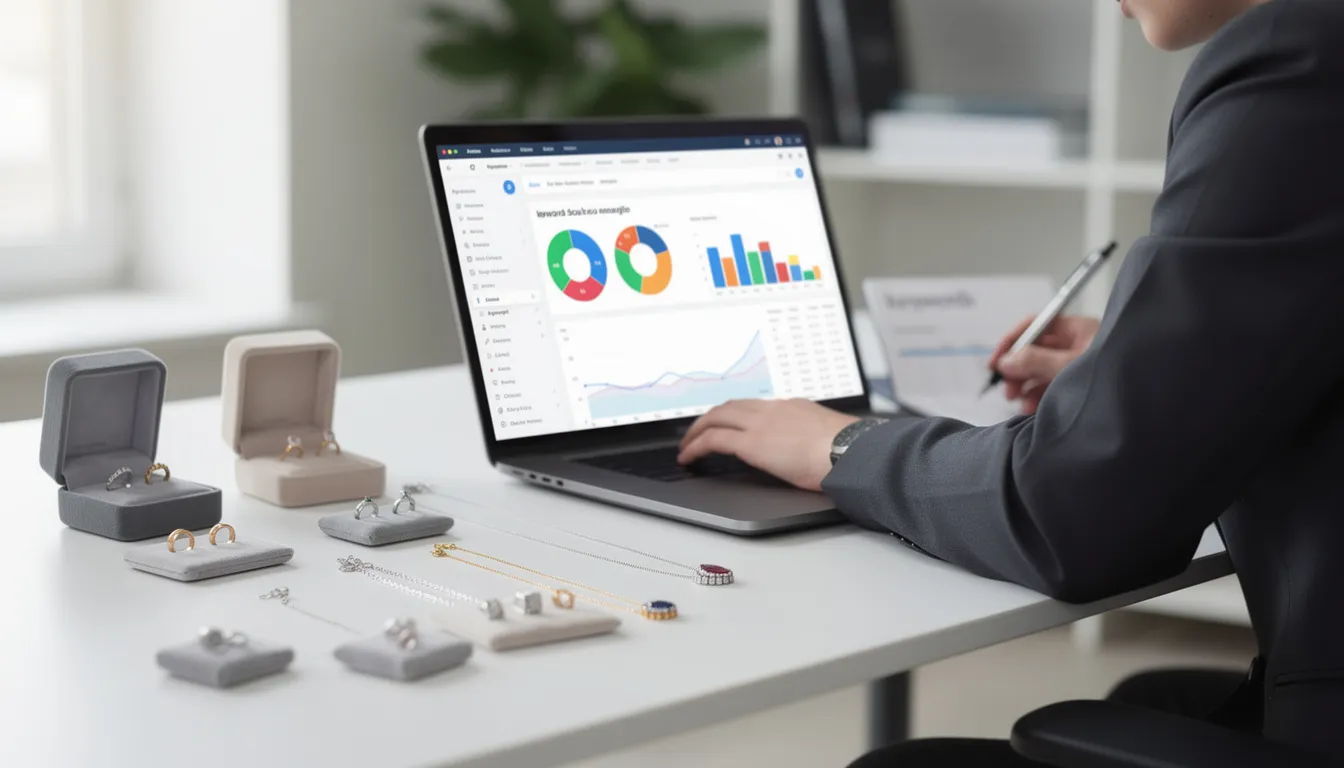
Direct translation of jewellery keywords fails almost every time. “Evil Eye bracelet” doesn’t simply become “bracelet mauvais œil” in French—people actually search for “collier œil porte-bonheur” or “bracelet œil grec” or “collier Nazar.”
According to research, 70% of international queries use local keywords rather than direct translations. Your international SEO success depends on understanding how people in each market actually search.
The Research Workflow
The research workflow looks like this:
-
Start with English base terms – Your core product keywords in English
-
Translate loosely – Get initial translations, but don’t stop there
-
Validate with native speakers – Have translators or local freelancers confirm actual search behaviour
-
Review SERPs with location tools – Use VPNs or localized search tools to see what actually ranks
-
Check search volume data – Verify with Google Keyword Planner, Semrush, or local tools like SISTRIX
Conduct Market-Specific Keyword Research
Build separate keyword sets for each target country. For the UK, US, France, Germany, and UAE, your core products need individual research:
|
Product |
UK Term |
US Term |
French Term |
German Term |
|---|---|---|---|---|
|
Sterling silver hoops |
sterling silver hoop earrings |
sterling silver hoops |
créoles argent massif |
silber creolen 925 |
|
Evil Eye necklace |
evil eye necklace |
evil eye pendant necklace |
collier œil grec |
nazar auge kette |
|
Birthstone ring |
birthstone ring January |
garnet birthstone ring |
bague pierre de naissance |
geburtsstein ring januar |
For the Evil Eye collection specifically, French-speaking markets use several variants:
-
“œil porte-bonheur” (lucky eye)
-
“collier œil grec” (Greek eye necklace)
-
“œil de Nazar” (Nazar eye)
-
“œil de Fatma” (Hand of Fatima—related but distinct)
Check which terms actually appear on top-ranking pages before committing to your content strategy, or explore the January Birthstone: Garnet Gemstone for inspiration on meaningful themes.
Identify search intent behind each term:
-
Informational: “what is evil eye jewellery meaning” → Blog content opportunity
-
Transactional: “buy evil eye necklace UK free shipping” → Product page optimization
Map priority keywords to specific collections and product templates. Don’t stuff everything onto one generic page—each collection and product should target relevant keywords for its category.
Adapting Keywords to Local Language and Culture
Mediterranean-inspired jewellery searches vary dramatically by country:
-
UK: “Mediterranean jewellery,” “Greek jewellery evil eye”
-
US: “Turkish Nazar necklace,” “protection jewellery”
-
France: “bijoux méditerranéens,” “collier mauvais œil”
-
Germany: “mediterraner schmuck,” “Nazar auge anhänger”
-
UAE: “evil eye protection necklace,” “hamsa jewellery”
Some markets focus on materials in their searches (“sterling silver 925 earrings Germany”), while others emphasize symbolism (“protection necklace evil eye Dubai”). Your keyword research must reflect these cultural nuances.
Consider birthstone keyword differences:
|
Concept |
French |
German |
|---|---|---|
|
Leo birthstone necklace |
collier pierre de naissance lion |
sternzeichen kette löwe |
|
January birthstone |
pierre de naissance janvier (garnet) |
geburtsstein januar (granat) |
Don’t forget seasonal and holiday variations. Include local currencies and holiday terms in content:
-
Mother’s Day UK: March (Mothering Sunday)
-
Mother’s Day US: May
-
Eid al-Fitr: Variable dates, major gifting occasion in GCC
With your keyword research in hand, the next step is to localize your content and on-site experience for each market.
Localizing Content and On-Site Experience
Localization goes beyond translation and adapts your entire messaging to match local preferences, values, and cultural context. Localization extends far beyond translation. It means adapting imagery, tone, sizing information, and trust signals for each target country. For a jewellery brand, SEO-optimised, localized product descriptions, care instructions, and allergy information (hypoallergenic, nickel-free) directly impact conversions.
This localization supports both SEO—through better relevance signals—and user experience through higher conversion rates and fewer returns.
Translating and Localizing Product Copy
Consider this English product description, created with conversion-ready websites, analytics, and SEO strategies in mind:
18K Gold Plated Evil Eye Bracelet – Copper Turquoise Handmade in our London studio using ethically sourced copper turquoise and 18K gold plating. This protective Evil Eye bracelet features Sarah’s signature Mediterranean design, inspired by her Lebanese heritage. Hypoallergenic and nickel-free. Adjustable length: 16-19cm.
A properly localized French version isn’t just translated—it’s adapted:
Bracelet Œil Grec Plaqué Or 18 Carats – Turquoise Cuivrée Fabriqué à la main dans notre atelier londonien avec turquoise cuivrée d’origine éthique et placage or 18 carats. Ce bracelet protecteur œil grec reflète le design méditerranéen signature de Sarah, inspiré par son héritage libanais. Hypoallergénique et sans nickel. Longueur ajustable : 16-19 cm.
Key localization elements:
-
“Evil Eye” becomes “Œil Grec” (more commonly searched in France)
-
Cultural context around Lebanese heritage resonates with French Mediterranean connections
-
Measurements stay in cm (appropriate for France)
-
“Hypoallergénique” is a recognized term French customers search for
For US versions, you’d adjust differently:
-
Length: 6.3-7.5 inches
-
Emphasis on “handmade in London” as a quality/origin signal
-
“Free shipping on orders over $45” instead of £35
Use professional translators or native freelancers for key markets—machine translation misses the cultural context that makes product copy compelling.
Local Currencies, Shipping, and Trust Signals
International landing pages must show prices in local currency with transparent shipping information:
|
Market |
Currency |
Free Shipping Threshold |
Estimated Delivery |
|---|---|---|---|
|
UK |
£ |
Orders over £35 |
2-3 working days |
|
EU |
€ |
Orders over €45 |
5-7 working days |
|
US |
$ |
Orders over $60 |
7-10 working days |
|
UAE |
$ or AED |
Orders over $75 |
10-14 working days |
Create market-specific FAQs addressing:
-
Customs duties and who pays them
-
Return policies for international orders
-
Gift packaging options for each region
-
Care instructions in local language
Display our Harrow shop details prominently—the physical address, opening hours (Monday-Saturday 9:00-18:00, Sunday 11:00-17:00), and photos of the store serve as powerful trust signals proving legitimacy.
Localize schema markup (Product, LocalBusiness, AggregateRating) for each language version. This supports rich results in local search results and helps search engines understand your content structure.
Highlighting Culturally Resonant Collections
Different collections perform differently across markets. Reposition existing pieces based on regional preferences:
|
Market |
Primary Collections to Emphasize |
|---|---|
|
Mediterranean/Middle East |
Evil Eye, copper turquoise, Mediterranean-inspired designs |
|
Northern Europe |
Minimalist sterling silver, hypoallergenic everyday jewellery |
|
US |
Birthstone collections, personalized/bespoke pieces |
|
UK |
Full range, emphasis on handmade British craftsmanship |
Create localized landing pages as content hubs:
-
France/Italy: “Mediterranean Protection Jewellery” featuring Evil Eye and Nazar pieces
-
Germany/Nordics: “Hypoallergenic Everyday Jewellery” emphasizing materials and wearability
-
GCC: “Symbolic Jewellery for Gifting” aligned with Eid and celebration occasions
Align content calendars with local festivals:
-
Ramadan and Eid: GCC gift guides
-
Valentine’s Day: Universal, but messaging varies
-
Mother’s Day: Different dates for UK (March) vs US (May)
-
Christmas: EU markets need earlier shipping cut-off messaging
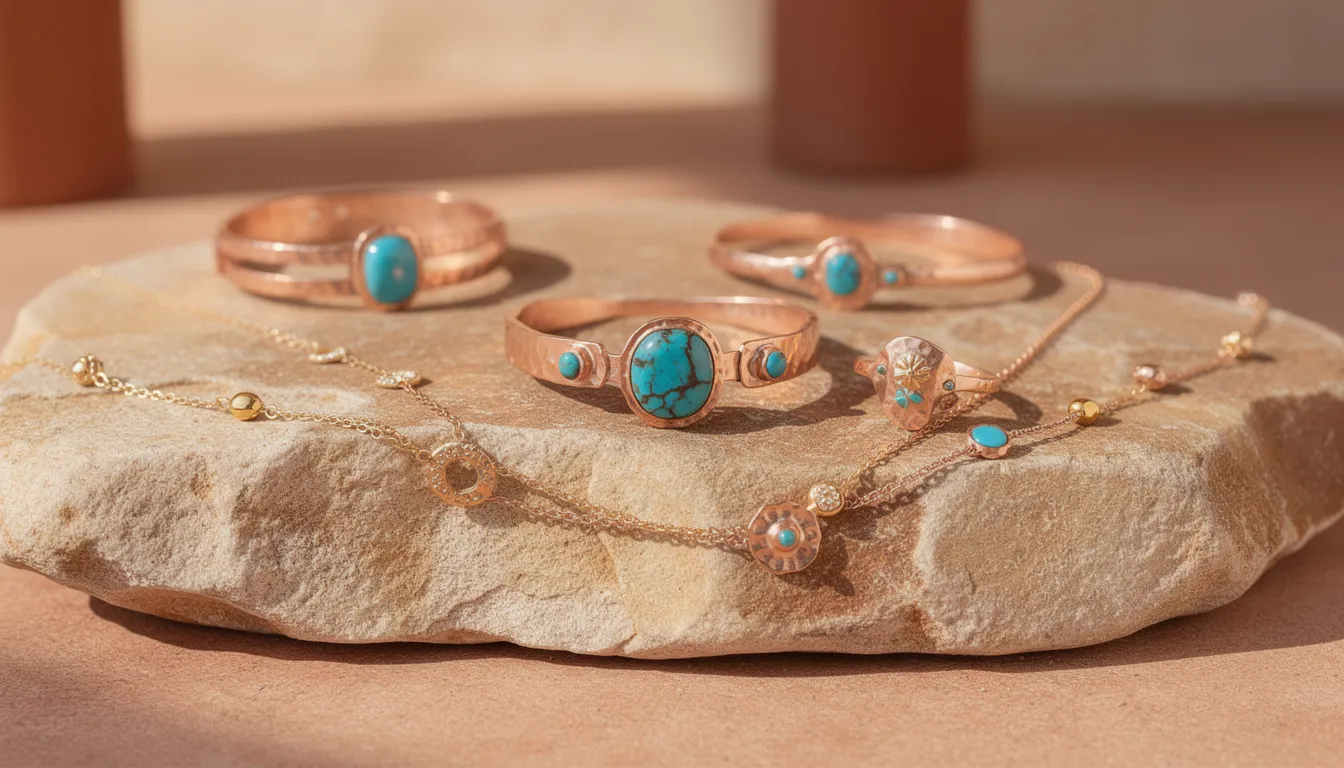
On-page content should blend storytelling—Sarah’s Lebanese heritage and artisan process—with clear buying prompts tailored to local gifting habits. German customers may want more technical details; French customers may respond to the romantic narrative.
With your content localized, the next step is to address the technical aspects that ensure your international SEO efforts are effective.
Technical Considerations for International SEO
Technical SEO forms the foundation that ensures search engines correctly find, index, and serve the right language and country pages. For an ecommerce site with multiple languages and currencies, issues like duplicate content, crawl budget, and page speed significantly affect international SEO performance.
Implementing Hreflang Tags Correctly
Revisiting hreflang with technical precision: for a “sterling silver evil eye necklace” page across three markets, your implementation needs to be flawless.
Placement options:
-
HTML <head> section (simplest for small catalogues)
-
XML sitemaps (recommended for large product catalogues)
-
HTTP headers (for non-HTML files like PDFs)
For a jewellery store with hundreds of products, sitemap implementation scales better:
<url> <loc>https://sarasjewellery.co.uk/products/sterling-silver-evil-eye-necklace</loc> <xhtml:link rel="alternate" hreflang="en-gb" href="https://sarasjewellery.co.uk/products/sterling-silver-evil-eye-necklace"/> <xhtml:link rel="alternate" hreflang="en-us" href="https://sarasjewellery.co.uk/us/products/sterling-silver-evil-eye-necklace"/> <xhtml:link rel="alternate" hreflang="fr-fr" href="https://sarasjewellery.co.uk/fr/products/collier-oeil-argent-massif"/> </url>
Common errors to avoid:
-
Missing return tags (French page doesn’t link back to English)
-
Wrong region codes (en-uk instead of correct en-gb)
-
Mismatched URLs (linking to pages that don’t exist)
-
Self-referential tags missing
Misconfigured hreflang tags can cause ranking drops of 30-50% in affected markets. Audit your implementation every 6-12 months using Google Search Console’s hreflang reports or tools like Screaming Frog.
Handling Duplicate Content and Canonicalization
Near-identical product pages across languages and currencies can trigger duplicate content concerns—especially when URL parameters handle currency selection. To maximize leads and sales while managing such digital challenges, consider expertly managed paid media campaigns on Google and Meta.
The challenge: your “18K gold plated hoop earrings” page on /en-gb/ and /en-us/ might have identical product copy but different prices and shipping information. How do you handle this?
Best practices:
-
Each language/country version should have its own canonical pointing to itself
-
Combine canonical tags correctly with hreflang—they’re not mutually exclusive
-
Avoid URL parameters for currency switching; use proper subdirectories instead
-
Don’t let automatic translation plugins generate thin variations without proper structure
If you’re using Shopify’s Markets feature or similar, ensure it generates proper canonical structures rather than creating parameter-based duplicates that confuse crawlers.
Site Speed, CDN, and Mobile Experience Across Countries
Page speed matters even more for international customers accessing a UK-hosted site from North America, Asia, or the Middle East. Research shows speeds over 3 seconds correlate with 53% higher bounce rates—a problem when customers are already further from your server.
Speed optimization priorities:
|
Action |
Impact |
|---|---|
|
Implement CDN (Cloudflare, Akamai) |
Reduces latency for distant users |
|
Compress images (JPEG/WEBP) |
Faster loads while preserving jewellery detail |
|
Enable lazy loading to improve the performance of your website, and consider exploring the benefits of digital OOH ads to enhance your advertising strategy. |
Prioritizes above-fold content |
|
Minimize third-party scripts |
Reduces render-blocking resources |
For jewellery specifically, image quality matters—close-ups showing stones, clasps, and hallmarks drive purchase confidence. Use modern formats (WEBP) with fallbacks, and ensure lazy loading doesn’t delay hero product images.
Test checkout flows on mobile devices popular in target regions. Android dominates in Germany and the Middle East; iOS has stronger presence in the US and UK. Ensure payment forms, size selectors, and shipping calculators work smoothly across both.
Target “Good” Core Web Vitals scores before major international launches. Use Google PageSpeed Insights and Lighthouse to identify bottlenecks, aiming for Largest Contentful Paint under 2.5 seconds globally.
With your technical SEO in place, the next step is to build local authority and earn links in your target markets.
Building Local Authority and Links in Target Markets
Off-page international SEO focuses on earning trust and authority signals from within each target country. Backlinks from respected local sites—bloggers, magazines, directories—in France, Germany, the US, and beyond help localized jewellery pages rank.
Social signals, PR features, and partnerships with local influencers all contribute indirectly to building local authority. Generic link-building won’t cut it; you need country-specific tactics.
Acquiring Country-Specific Backlinks and Citations
For each target market, you need local links from local sources. Research indicates that links from within your target country carry 2-3x more impact than generic international backlinks. For example, if you are targeting the UK market, consider sourcing links from local businesses or products such as the Adjustable Gold Plated Evil Eye Ring: Elegant Protection in a Timeless Design.
Tactics for jewellery brands:
-
Pitch local press – Fashion blogs and lifestyle magazines in each country want unique story angles. Sarah’s Lebanese-Mediterranean heritage and the Harrow-based atelier story resonates internationally, especially with signature pieces like the Gold Plated Evil Eye Necklace: A Stylish Statement of Protection.
-
Join local directories – Curated handmade platforms in Germany (like Etsy.de or specialized artisan directories) or French equivalents allow brand profiles with backlinks.
-
Collaborate with local boutiques – A weekend pop-up in Paris or Dubai in 2026 generates local press coverage and natural local links.
-
Guest on podcasts and blogs – Jewellery design, small business, and artisan craft publications in each market offer link opportunities.
Track backlinks by country using Ahrefs or Semrush. If your French pages have 3 referring domains while German pages have 47, you know where to focus link building strategy efforts next.
Working with International Influencers and Communities
Local influencers drive both traffic and trust signals. Focus on creators whose audiences align with symbolic, birthstone, or artisan jewellery interests.
Example collaborations:
-
German lifestyle blogger styling hypoallergenic silver hoops for everyday wear
-
Dubai-based influencer featuring Evil Eye necklaces for protection and style
-
US-based parent blogger showcasing birthstone gifts for children and mothers
-
French fashion influencer highlighting Mediterranean-inspired summer pieces
Encourage user-generated content and reviews on platform relevant to each market:
-
Google Reviews (universal)
-
Trustpilot (strong in UK and Europe)
-
Yelp (US-focused)
-
Local equivalents in target regions
Participate in region-specific online communities:
-
Facebook groups for handmade jewellery enthusiasts in France
-
Pinterest boards tagged with “Mediterranean jewellery” and “Evil Eye jewellery”
-
Instagram hashtags specific to each market (#bijouuxfaitmain, #handmadeschmuck)
Feature reviews from local users on localized landing pages—a German customer testimonial on your German pages carries more weight than a UK review translated awkwardly.
With your local authority building underway, the next step is to track, measure, and refine your international SEO strategy for ongoing success.
Tracking, Measuring, and Refining Your International SEO Strategy
International SEO must be monitored by country and language to understand what actually drives sales—not just traffic—in each region. Vanity metrics like total international sessions mean nothing if they don’t convert.
Treat the first 6-12 months as a learning period. You’ll adjust pricing, content emphasis, and priority collections based on real performance data from each market.
Defining International SEO KPIs and Dashboards
Track these key metrics by country:
|
KPI |
What It Measures |
Target Example |
|---|---|---|
|
Organic sessions by country |
Traffic volume from each market |
+30% YoY for priority markets with SEO for SMEs SEO-optimised content strategies designed to drive organic growth |
|
Conversion rate by country |
Purchase rate for international visitors – see our latest news and updates for more information. For those looking to establish or improve their online presence, consider exploring the top website builders in Manchester. |
2%+ for established markets |
|
Revenue per country |
Actual sales value |
Specific targets per market |
|
Top landing pages per market |
Which content drives entries |
Collection pages outperforming |
|
Keyword rankings by country |
Explore Gold Plated Evil Eye Stud Earrings: Subtle Glamour with Spiritual Significance for key terms visibility. |
Top 10 for “evil eye necklace” in US/UK |
Build GA4 reports that segment traffic and conversions by country and language. Compare month-on-month and year-on-year to spot trends.
Set specific, measurable goals:
-
“Increase organic orders from Germany by 50% by December 2026”
-
“Achieve top 5 ranking for ‘Evil Eye necklace UK’ and ‘Collier Nazar France’ within 9 months”
-
“Reduce bounce rate on French product pages from 65% to 50% by Q2 2026”
Conduct quarterly strategy reviews to decide whether to invest more in a market, translate new collections, or pause efforts in low-ROI regions. Not every market will perform—allocate resources where data shows potential.
Common International SEO Mistakes to Avoid
Learn from others’ failures:
Technical pitfalls:
|
Pitfall |
Description |
|---|---|
|
Auto-redirecting users based on IP without giving them a choice to switch |
Users may want to browse in a different language or region than their detected location. |
|
Mixing multiple languages on a single URL |
Confuses both users and search engines, leading to poor rankings. |
|
Inconsistent currencies between search engine results page snippets and actual product pages |
Causes confusion and reduces trust. |
|
Ignoring local legal requirements for returns and data protection (GDPR in EU) |
Can result in legal penalties and loss of customer trust. |
Content pitfalls:
|
Pitfall |
Description |
|---|---|
|
Forgetting to update localized pages when new collections launch |
Missing out on sales and SEO opportunities in other languages. |
|
Shallow translation where headings are translated but images, alt text, and meta descriptions remain in English |
Reduces relevance and ranking potential. For a unique combination of style and symbolic protection, consider the Adorable Turquoise Evil Eye Necklace in Sterling Silver – Protective in Style. |
|
Using machine translation for product copy without native speaker review |
Leads to awkward or incorrect messaging. |
|
Ignoring foreign language customer service emails |
Damages reputation and customer satisfaction. |
Operational pitfalls:
|
Pitfall |
Description |
|---|---|
|
Promising shipping times you can’t meet |
Leads to negative reviews and lost customers. |
|
Not updating international pages when stock runs low |
Causes frustration and lost sales. |
|
Different prices in Google Shopping feeds vs actual checkout |
Erodes trust and increases cart abandonment. |
Create an internal checklist for every new collection launch:
-
[ ] Product pages created in all active languages
-
[ ] Images uploaded with localized alt text
-
[ ] Hreflang tags verified across all versions
-
[ ] Prices set correctly in all currencies
-
[ ] Shipping calculator updated for all markets
-
[ ] Schema markup added for new products
With your tracking and refinement process in place, you’re ready to reap the benefits of a well-executed international SEO strategy.
Conclusion: Growing Saras Beads & Jewellery Through International SEO
A well-planned international SEO strategy transforms occasional overseas enquiries into consistent global revenue. For brands like ours—selling sterling silver, 18K gold plated, Evil Eye, birthstone, and copper turquoise collections—the demand already exists. International SEO simply makes sure local users in those markets can find us.
Developing an international SEO strategy is crucial for businesses aiming to expand their global reach. A well-planned international SEO strategy helps you target the right audience, increase brand awareness, and drive more traffic to your website.
The path forward is phased, not rushed:
-
Start with 1-2 priority markets based on existing traffic and operational readiness
-
Validate demand through proper tracking and conversion measurement
-
Expand language and country coverage as you prove ROI
Success comes from aligning four elements: technical setup (right URL structure and hreflang implementation), localized content (not just translated, but culturally adapted), deep understanding of each target market, and reliable shipping operations that deliver on promises.
The data to guide your next step already exists. This week, open Google Analytics and Google Search Console. Look at where your international traffic comes from. See which product pages international visitors view most. Identify which markets show demand you haven’t served.
Then outline a 12-18 month international SEO roadmap: choose your first target region, plan your URL structure, budget for localization, and set concrete goals. The global jewellery market won’t wait—but with the right strategy, you won’t need to wait either.
Partner with Sterling Media & Communications for Your International SEO Success
Just as Saras Beads & Jewellery transformed their global reach with a tailored international SEO strategy, your brand can achieve similar success with expert guidance. Sterling Media & Communications (SMC) specializes in crafting customized international SEO strategies that help businesses expand into new markets, connect with local audiences, and boost organic traffic across different countries and languages.
Whether you're looking to implement international SEO best practices, optimize your website’s visibility with the right URL structures and hreflang tags, or build authoritative local backlinks, SMC has the expertise to elevate your global presence.
Visit smcww.co.uk today to discover how Sterling Media & Communications can help you create content that resonates worldwide, improve your search engine rankings, and unlock new opportunities in diverse international markets. Let us guide your journey to international SEO success with proven SEO tactics tailored to your unique business needs.
Frequently Asked Questions (FAQs) About International SEO Strategy
What is the difference between domestic SEO and international SEO?
Domestic SEO focuses on dominating a single market using one language and local, location-specific keywords. In contrast, international SEO targets multiple countries and languages, requiring tailored strategies to address diverse audiences and search behaviors across different markets.
Why is technical SEO important for international websites?
Technical SEO is crucial for ensuring that your international sites load quickly, are mobile-friendly, and provide a seamless user experience. Key technical elements include fast load times, a user-friendly language switcher to help visitors easily select their preferred language or region, and the use of canonical tags to tell search engines which version of similar content is the main one to rank in each region. These practices help avoid duplicate content issues and improve overall search engine rankings.
What URL structure should I use for my international site?
Subdirectory structures (e.g., example.com/fr/) consolidate domain authority since all backlinks point to one main domain, making them easier to manage than other methods like subdomains or separate domains. However, country code top-level domains (ccTLDs) provide the strongest signal of local relevance but require managing separate domains, which can be more complex and resource-intensive.
How can I improve my website's load speed globally?
Using a content delivery network (CDN) can significantly enhance your website's load speed worldwide by distributing your content across servers closer to your users. This reduces latency, improves user experience, and positively impacts SEO rankings, especially important for international audiences accessing your site from various regions.
How important is professional translation in international SEO?
Professional, native translators are essential for creating content that resonates with local audiences. Proper localization goes beyond simple translation — it adapts your content to cultural nuances, dialects, and regional preferences, which can improve engagement, reduce bounce rates, and increase conversions in different markets.
How do I conduct effective market research for international SEO?
Thorough market research for different regions helps you understand who your competitors are and what your target audience wants. This insight allows you to tailor your SEO strategies, keyword research, and content localization to better meet the needs of each market and outperform competitors.
How can I track the performance of my international SEO efforts?
Tracking your performance in each target market is vital to identify which SEO tactics are working and where adjustments are needed. Use Google Analytics 4 (GA4) to find insights under the 'Reports' section in the left sidebar, segmenting traffic and engagement by country or region. Additionally, tools like Semrush's Position Tracking allow you to monitor how visible your content is in each market's search results.
What metrics should I monitor for international SEO success?
Create tables comparing your keyword positions across various countries, including key metrics such as average position, click-through rate (CTR), and search visibility. Monitoring these metrics regularly helps you understand your international SEO performance and make data-driven decisions.
What does a high bounce rate indicate in international markets?
A high bounce rate in a certain region might indicate cultural mismatches, translation issues, or a poor user experience for that specific audience. This signals the need to revisit your localization strategy, ensuring your content and site experience are appropriately tailored to local preferences and expectations.

0 comments