

Introduction to Keyword Research
Keyword research is the foundation of search engine optimization (SEO) and involves identifying the best keywords to target for effective ranking. This guide is designed for marketers, business owners, and content creators looking to improve their website's search engine rankings through effective keyword strategies. By understanding what your target audience is searching for and how search engines interpret these queries, you can create content that meets user needs and ranks higher in search engine results pages (SERPs).
SEO keywords are specific terms or phrases added strategically to your content to improve visibility and attract relevant traffic. Mastering keyword research and usage is essential for increasing organic traffic and staying competitive in search engine results. Keywords are vital for SEO as they connect user search queries to website content, boosting visibility and improving rankings. They signal to search engines what a page is about, helping categorize and index content accurately. Effective keyword use drives qualified visitors by aligning content with user intent and search behavior, ensuring your website attracts the right audience and achieves better results.
Understanding Keyword Metrics and Tools
Evaluating keyword performance requires analyzing key metrics such as search volume, competition level, and cost-per-click (CPC). Search volume indicates how often a keyword is searched, while competition reflects how difficult it is to rank for that keyword. CPC provides insight into the commercial value of a keyword, especially for paid advertising campaigns.
Leveraging powerful keyword research tools like Google Keyword Planner, Ahrefs, SEMrush, and Google Search Console allows marketers to gather comprehensive keyword data, uncover keyword difficulty, and identify opportunities to target the right SEO keywords. These SEO tools also help with tracking keyword performance over time. By enabling data-driven decisions, marketers can optimize their strategies and improve search engine rankings more effectively.
Types of Keywords and Long Tail
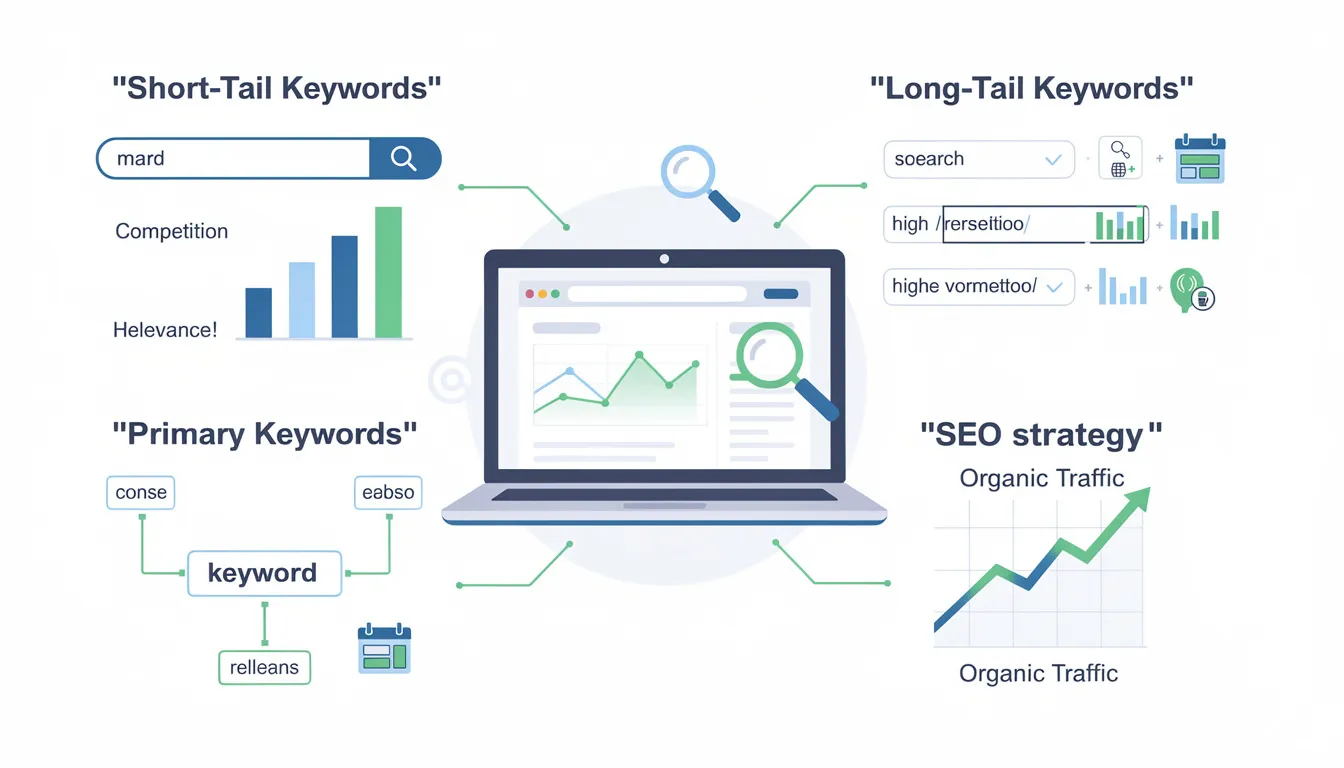
Keywords come in various forms, each serving distinct SEO purposes. Short-tail keywords are broad and typically consist of one or two words with high search volume but fierce competition. Long-tail keywords are longer, more specific phrases—usually three or more words—with lower search volume and competition, making them easier to rank for.
Targeting long-tail keywords helps smaller websites attract highly relevant traffic by matching specific search intent. Primary keywords represent the core topic of your content and should be the central focus of your SEO strategy. Understanding these keyword types and how to effectively use them is essential for building a successful SEO plan that drives organic traffic.
Discovering Popular Keywords with Google Search
Google Search is an invaluable resource for discovering popular keywords and understanding user search intent. Utilizing features like Google Autocomplete, Google Trends, and related SEO keywords from other search engines provides insight into trending topics and popular search terms.
By analyzing search results and identifying gaps in existing content, you can uncover new keyword opportunities that your competitors may have overlooked. This ongoing process of discovering popular keywords ensures your SEO strategy remains relevant and adaptive to changing search behaviors and trends. As a result, your web pages can attract more organic traffic.
Keyword Variations and Research
To broaden your content’s appeal and improve search engine rankings, incorporating keyword variations—including synonyms and related SEO keywords—is crucial. Keyword research tools help identify these variations, allowing you to create comprehensive content that addresses multiple search queries naturally.
Understanding the search intent behind user queries ensures that the right SEO keywords and variations are used effectively. This enhances content relevance and avoids keyword stuffing. Using keyword variations also improves content readability, providing a better user experience while signaling to search engines the comprehensive coverage of your topic.
Google Ads and Keyword Inspiration

Google Ads offers valuable insights into keyword performance that can complement your SEO keyword research. By analyzing competitor ads and their targeted keywords, you can identify new keyword ideas and opportunities to improve your organic search traffic.
Testing keywords through Google Ads campaigns helps determine which keywords have high search volume and conversion potential, informing your SEO keyword strategy. Combining Google Ads data with SEO efforts allows for a more holistic approach to driving relevant traffic and improving search engine rankings.
Best Practices for Keyword Usage and Meta Description
Strategic Keyword Placement
Effective keyword placement is critical for SEO success. Incorporate keywords naturally and strategically in key content elements such as title tags, meta descriptions, headers, image alt text, and body text. Placing keywords in these areas helps search engines understand the main topics of your pages and improves your chances of ranking higher.
Avoiding Keyword Stuffing
Avoid keyword stuffing, which can harm user experience and result in search engine penalties. Instead, focus on using keywords in a way that reads naturally and provides value to the reader. Overusing keywords can make your content less engaging and may negatively impact your rankings.
Craft compelling and informative meta descriptions that include target keywords to improve click-through rates from search engine results pages. Following best practices for keyword usage and meta description writing enhances your website's SEO, making it easier for search engines to understand your content and for users to engage with your pages.
Blog Post Optimization with Keywords
Using Keywords in Blog Content
Optimizing blog posts with carefully chosen keywords improves search engine rankings and attracts relevant traffic. Use keywords in titles, headings, and throughout the body content to signal topic relevance. Incorporate long-tail keywords and keyword variations to capture specific user queries and meet diverse search intents.
Understanding Audience Needs
Understanding your target audience’s needs and search behavior helps you create informative, engaging blog content that resonates with users. Ongoing monitoring and adjustment of keyword strategies through tools like Google Search Console ensure your blog remains competitive and continues to drive organic search traffic.
Understanding Search Intent and Keyword Targeting
Search intent—the reason behind a user’s query—is fundamental to effective keyword targeting. Identifying whether users seek information, navigation, commercial insights, or transactional opportunities helps tailor your content to meet their needs.
Analyzing search results and content gaps allows you to select the right keywords and keyword variations that align with user intent. Utilizing keyword research tools to understand search intent enhances your SEO keyword research, enabling you to create relevant, high-quality content that improves search engine rankings and user satisfaction.
Keyword Clustering and Mapping for Effective Ranking
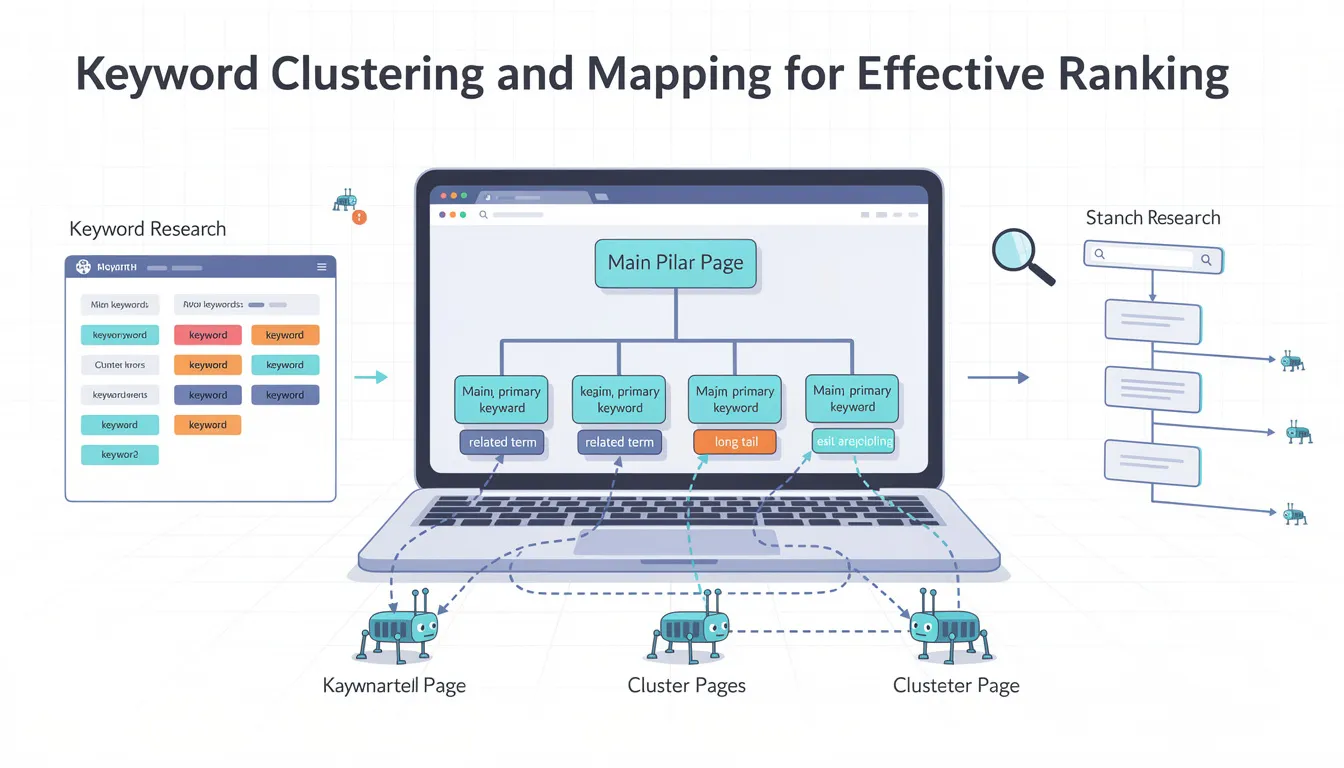
Keyword clustering involves grouping related keywords into thematic clusters, which helps organize your content strategy and improve SEO effectiveness. Using topic clusters helps build authority by linking a comprehensive 'pillar' page to several detailed 'cluster' pages, creating a well-structured network of content that signals expertise and relevance to search engines.
Keyword mapping assigns specific target keywords to relevant pages, ensuring each page focuses on unique primary keywords that align with user queries. Using keyword research tools to identify clusters and map content supports building a coherent site structure that helps search engines understand your website’s relevance. This approach improves internal links, enhances user navigation, and drives more targeted organic traffic to your site.
Local Business Keyword Targeting and Optimization
Local businesses benefit significantly from targeted keyword research and optimization focused on location-based keywords. Incorporating geographic terms and long-tail keywords relevant to the local area helps businesses rank higher in local search engine results pages (SERPs).
Understanding local search intent and user queries allows for creating content that addresses specific community needs and preferences. Ongoing monitoring and adjustment of keyword strategies ensure local businesses maintain visibility and attract more relevant traffic, leading to increased foot traffic and conversions.
What Are Long-Tail Keywords?
Long-tail keywords are specific, longer phrases that searchers use when they are closer to making a purchase or looking for detailed information. Unlike broad short-tail keywords, long-tail keywords typically consist of three or more words and often reflect more precise user intent.
For example, instead of targeting the broad keyword "shoes," a long-tail keyword might be "best running shoes for flat feet" or "affordable waterproof hiking boots for women." These phrases attract users who know exactly what they want, making long-tail keywords highly valuable for driving targeted traffic.
Benefits of Targeting Long-Tail Keywords
-
Lower Competition: Because long-tail keywords are more specific, fewer websites compete for these exact phrases, increasing your chances of ranking higher in search engine results.
-
Higher Conversion Rates: Visitors coming from long-tail keyword searches often have a clearer intent and are more likely to convert into customers, subscribers, or leads.
-
Better Match to User Intent: Long-tail keywords help you align your content closely with what users are searching for, improving relevance and user satisfaction.
-
Voice Search Optimization: With the rise of voice assistants, people tend to use more natural, conversational queries, which are often long-tail in nature. Optimizing for these can boost your visibility in voice search results.
How to Find and Use Long-Tail Keywords
-
Use keyword research tools like Google Keyword Planner, SEMrush, or Ahrefs to discover long-tail keyword variations related to your primary keywords.
-
Explore Google Autocomplete and "People Also Ask" sections in Google search results to identify common long-tail queries.
-
Incorporate long-tail keywords naturally into your content, including titles, headings, meta descriptions, image alt text, and body text, to improve SEO without keyword stuffing.
-
Create content that specifically answers detailed questions or addresses niche topics related to your industry or audience needs.
By strategically targeting long-tail keywords, you can capture more qualified traffic, improve your website’s SEO performance, and ultimately drive better business results.
App Store Optimization with Keyword Research Tools
App store optimization (ASO) requires strategic use of keyword research tools to identify relevant keywords that improve app visibility and downloads. Understanding search intent and user queries specific to app stores helps create optimized app titles, subtitles, and descriptions that resonate with potential users.
Selecting the best keywords for ASO enhances discoverability in Apple App Store and Google Play Store search results. Continuous monitoring and updating of keyword strategies are essential to maintain and improve app rankings, driving more downloads and user engagement.
Conclusion
As we move further into 2025, the role of keywords in search engine optimization has evolved significantly. The focus has shifted from simple word matching to a deeper understanding of search intent and semantic relevance. This means that SEO strategies now prioritize aligning content with the underlying needs and questions of users, rather than just targeting specific terms.
E-commerce sites, in particular, benefit greatly from using keywords that directly match the solutions their products provide. By targeting these relevant keywords, they can attract highly qualified traffic that is more likely to convert. Among these, long-tail keywords stand out as especially valuable. These longer, more specific phrases are generally easier to rank for than broad primary keywords, allowing smaller or newer sites to compete effectively. Additionally, question-based keywords—phrased as questions—play a crucial role in helping content appear in featured snippets and voice search results, both of which are increasingly important in modern search experiences.
For local businesses, effective use of SEO keywords can level the playing field against larger competitors. By focusing on keywords that reflect local search intent, businesses can improve their visibility and attract nearby customers more efficiently.
Effective keyword use drives qualified visitors by aligning content with user intent and search behavior. This approach ensures that your website attracts the right audience and achieves better results. Effective keyword research provides vital insights into consumer trends and the specific problems audiences are trying to solve. This research helps identify the primary keywords—the most important terms that define the core topic of your content—as well as secondary and related keywords that enhance content relevance.
Keywords can be broadly categorized into head, middle, and long-tail keywords. Head keywords are usually broad with high search volume but intense competition, while long-tail keywords are more specific and conversational. Optimizing for these long-tail and conversational keywords is critical for maintaining visibility, particularly in AI-generated overviews and voice search results, which favor natural language queries.
In summary, a successful SEO strategy in 2025 involves a balanced approach: targeting primary keywords to establish content focus, leveraging long-tail and question-based keywords to capture specific user intent, and continuously adapting to evolving search technologies and behaviors. By doing so, businesses of all sizes can enhance their search engine rankings, attract more relevant traffic, and ultimately achieve better online success.
Frequently Asked Questions (FAQs) About Keywords in Search Engine Optimization
What are keywords in search engine optimization?
Keywords in search engine optimization (SEO) are specific words or phrases that users type into search engines when looking for information, products, or services. Keywords are vital for SEO as they connect user search queries to website content, boosting visibility and improving rankings. They signal to search engines what a page is about, helping categorize and index content accurately. SEO keywords are terms added to online content to improve search engine rankings for those terms. Using the right keywords strategically in your content increases the chances of your website ranking higher in search engine results pages (SERPs).
What are the best keywords for SEO?
The best keywords for SEO are those that align closely with your target audience's search intent, have a good balance of search volume and competition, and are relevant to your content or business. Long-tail keywords, which are longer and more specific phrases, often perform well because they attract highly targeted traffic and typically have lower competition. Using a mix of primary keywords, secondary keywords, and question-based keywords can enhance your SEO strategy.
What are the four types of keywords in SEO?
The four main types of keywords in SEO are:
-
Short-tail keywords: Broad, one or two-word phrases with high search volume but high competition (e.g., "shoes").
-
Long-tail keywords: More specific phrases of three or more words with lower search volume and competition (e.g., "best running shoes for women").
-
Primary keywords: The main focus keywords that represent the core topic of your content.
-
Secondary keywords: Related keywords that provide additional context and support the primary keyword.
What are keywords in a search engine?
In the context of a search engine, keywords are the terms or phrases that users enter into the search box to find relevant content. Search engines use these keywords to crawl, index, and rank web pages based on their relevance to the user's query.
What is an example of SEO keywords?
An example of SEO keywords could be for a website selling eco-friendly water bottles:
-
Primary keyword: "eco-friendly water bottles"
-
Secondary keywords: "reusable water bottles," "sustainable water bottles," "best eco water bottles 2024"
-
Long-tail keyword: "best eco-friendly water bottles for hiking"
What does SEO keyword mean?
An SEO keyword is a specific word or phrase that is incorporated into website content to improve its visibility on search engines. It signals to search engines what the page is about and helps match the page with relevant search queries, driving organic traffic to the site.
How to create SEO keywords?
Creating SEO keywords involves several steps:
-
Understand your target audience and their search behavior.
-
Use keyword research tools like Google Keyword Planner, Keyword Explorer, or SEMrush to find relevant keywords.
-
Analyze keyword metrics such as search volume, competition, and intent.
-
Select a mix of primary, secondary, and long-tail keywords that align with your content goals.
-
Incorporate these keywords naturally into your content, meta tags, headings, image alt text, and URLs.
What is SEO and examples?
SEO, or search engine optimization, is the process of optimizing a website to improve its visibility and ranking on search engines like Google. Examples of SEO practices include keyword research, optimizing title tags and meta descriptions, improving website speed, creating quality content, and building backlinks.
What are good SEO keywords?
Good SEO keywords are those that are relevant to your content and audience, have sufficient search volume, manageable competition, and clear user intent. They help attract qualified visitors who are more likely to engage with your content or convert into customers.
What is a keyword in SEO with an example?
A keyword in SEO is a term or phrase that describes the main topic of a web page. For example, if you have a blog post about healthy smoothie recipes, the keyword might be "healthy smoothie recipes." Using this keyword in the title, headings, and content helps search engines understand the page’s topic.
What is the 80/20 rule for SEO?
The 80/20 rule in SEO suggests that roughly 80% of your traffic and conversions come from 20% of your keywords. This means focusing on high-performing keywords that drive the most value can be more effective than trying to rank for many low-impact keywords.
What are the 3 C's of SEO?
The 3 C's of SEO are:
-
Content: High-quality, relevant, and engaging content that satisfies user intent.
-
Code: The technical aspects of your website, including site structure, mobile-friendliness, and page speed.
-
Credibility: The trustworthiness and authority of your website, often built through backlinks and positive user signals.
These elements work together to improve your website’s search engine rankings and user experience.

0 comments