

Introduction to Local SEO
Local citations are mentions of a business's name, address, and phone number (NAP) on various online platforms. SEO local citations are crucial for businesses aiming to appear prominently in local search results and connect with potential customers within their area. This guide is designed for local business owners, marketers, and SEO professionals who want to improve their local search visibility and attract more customers through effective citation management. One of the most effective strategies in local SEO is building and managing local citations—online mentions of a business’s name, address, and phone number (NAP) across various platforms. Local SEO citations play a vital role in improving local search rankings, trust, and visibility. Local search citations are a key part of any local SEO strategy, as they help establish a business’s presence and credibility in its geographic area.
Accurate and consistent citations, including the business's NAP details and business's name address, send strong signals to search engines, helping them recognize a business as legitimate and relevant to local search queries. It is essential to maintain the same business information across all platforms to ensure consistency and build trust with local customers. Search engines view consistent citation data as a sign of credibility and use it to evaluate the legitimacy and accuracy of a business, directly impacting local search rankings. As of 2026, local citations remain a foundational element of local SEO, accounting for approximately 7–10% of local pack ranking factors. Local citations are important for enhancing local search visibility and increasing the chances of being found by potential customers. Moreover, modern AI systems and voice assistants increasingly rely on citation data to answer local queries, underscoring the importance of maintaining a robust citation profile. Inconsistent data in a citation profile can lead to incorrect AI-generated business summaries, which may misinform potential customers and harm your business’s reputation.
Building Local Presence
Consistent NAP Details
For local businesses, building local citations is a comprehensive process that starts with creating listings in local business directories and citations. This involves ensuring your business name, address, and phone number (NAP) are included and consistent across all platforms. Consistency in your business’s name, address, and phone number online (NAP) details across these listings is vital. Even minor discrepancies in NAP can confuse search engines, diluting your business’s credibility and negatively impacting your rankings.
Physical Address vs. PO Box
Businesses should prioritize using a physical address rather than a PO Box, as search algorithms view physical locations as more legitimate and trustworthy.
Regional and Industry-Specific Directories
Additionally, citations from regional sites provide strong signals about a business’s physical location, further enhancing local relevance.
Building citations in relevant local directories, industry specific directories, local business listings, local listings, local sites, and various websites—including health or legal directories—helps strengthen your business's online presence and leads to increased online visibility. Each online mention of your business on these platforms, including local blogs and news sites, can serve as a valuable citation, even if they do not provide extensive business details, by introducing your business to a broader local audience. Featuring the business owner in local association member spotlights or testimonials can further enhance your citations and credibility.
Transitioning from building your local presence, the next section explores why local citations are so important for your business’s success.
Importance of Local Citations
Why Citations Matter
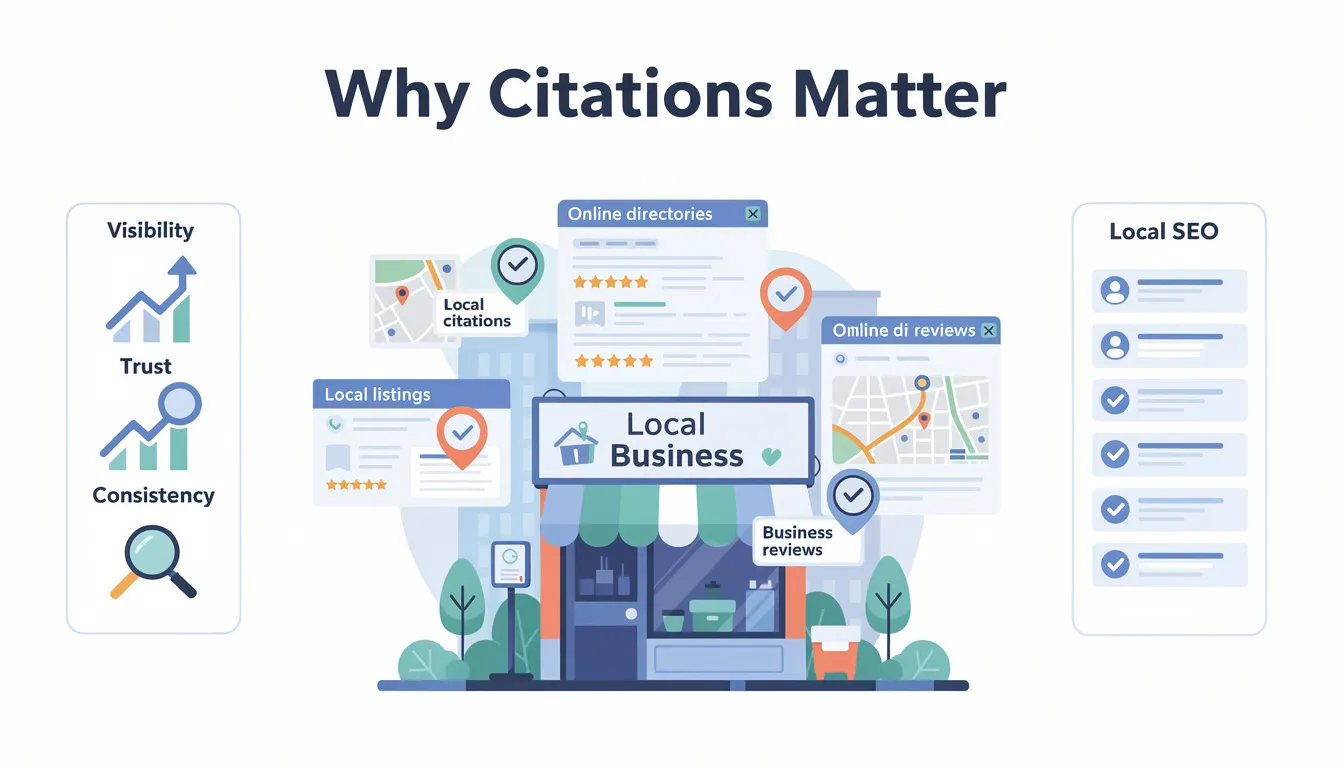
Local citations are a foundational element of any successful local SEO strategy, directly influencing how a local business appears in local search results. When your business’s name, address, and phone number (NAP) are accurately listed across a variety of online directories, it sends strong trust signals to search engines. This consistency helps search engines verify that your business exists at a particular location, making your business more likely to appear in local search engine results when potential customers are searching for services you offer.
Customer Visibility and Trust
Accurate local citations not only improve your local search rankings but also make it easier for customers to find essential business information, such as your address and phone number, across the web. This increased visibility in local search results means more opportunities for potential customers to discover and contact your business. Since local citations are a key ranking factor in local search, maintaining up-to-date and consistent business information across all platforms is critical for standing out in competitive local markets.
Building Credibility
By building and managing local citations in reputable online directories, you enhance your business’s credibility and ensure that both search engines and customers can trust the information they find. This trust translates into higher local search rankings, more website visits, and ultimately, more foot traffic and sales for your local business.
Now that you understand the importance of local citations, let’s move on to how you can effectively manage and maintain them.
Citation Management
What is Citation Management?

Citation management involves creating, updating, and maintaining local citations across various online directories and platforms. To streamline this process and ensure accuracy, businesses should leverage tools like Moz Local and Uberall. These tools automate citation management, saving significant time compared to manual updates and reducing the risk of errors.
Regular Audits and Updates
Regular audits of your top citations, ideally every 90 days, are essential to identify and fix inconsistencies, especially after operational changes such as moving locations or updating contact information. Duplicate listings and inconsistent citations can harm your local search rankings and should be promptly addressed.
Structured vs. Unstructured Citations
Structured citations contain standardized business information in an easy-to-consume format, facilitating search engines' ability to verify your business details. In contrast, unstructured citations are mentions of your business that do not follow a strict format, such as casual mentions on blogs or news sites. Both types contribute to your local SEO but require different management approaches.
Next, let's look at the most important platforms and data sources for building your citation profile.
Core Sites and Data Aggregators

Core Sites
Core sites are critical platforms where businesses should claim and fully optimize their listings. These include:
-
Google Business Profile
-
Apple Maps
-
Bing Places
-
Facebook
-
Yelp
A complete and accurate profile on these sites improves local search rankings and enhances your business's online presence.
Data Aggregators
Data aggregators collect and distribute business information to numerous online directories and platforms. Key data aggregators include:
-
Neustar Localeze
-
Data Axle
-
InfoGroup
Getting listed with these aggregators is a crucial step in building local citations, as they amplify your data's reach across the web, ensuring consistency and broad visibility.
With your core sites and data aggregators in place, let’s focus on optimizing your Google Business Profile for maximum impact.
Google Business Profile
Google Business Profile (GBP) remains a cornerstone of local SEO strategies. Claiming and verifying your GBP allows you to manage your business information directly, ensuring accuracy and completeness. Profiles with high-quality photos can increase leads by up to 16%, making it essential to include appealing images alongside your business details.
Keep your Google Business Profile updated with accurate operating hours, services offered, and other relevant information. Regularly optimizing your profile helps maintain high local search rankings and attracts more potential customers.
After optimizing your Google Business Profile, the next step is to ensure your business is listed in other relevant directories.
Business Listings
Business listings in local directories and citations play a vital role in boosting online visibility and attracting customers. Ensuring consistent business information across all listings is essential for effective local SEO and citation building.
Focus on building high-quality listings in relevant local directories and industry-specific websites. Local business associations and Chamber of Commerce websites are also valuable platforms for business listings, offering additional citation opportunities that enhance your business's credibility and local relevance.
Once your business listings are established, it’s time to develop a strategic approach to citation building.
Citation Building Strategies
To maximize reach, businesses should employ a combination of manual and automated citation building strategies. Here’s how to approach citation building:
Step 1: Identify and submit to relevant local directories and industry-specific websites to improve local SEO.
Step 2: Build citations at a natural pace of 5–10 per month to avoid appearing spammy to search algorithms.
Step 3: Analyze competitors’ citations to uncover industry- and location-specific citation opportunities that your business can leverage.
Step 4: Prioritize building citations in high-authority directories and social media platforms to maximize impact.
Step 5: Update any changes to your business information promptly to maintain consistency across all platforms.
With your citation building strategy in place, managing these citations efficiently is the next challenge.
Tools for Effective Citation Management
Managing local citations across numerous online directories can be a complex and time-consuming task, but leveraging the right tools can make citation management far more efficient and effective. Citation management tools are designed to help businesses automate the process of building, updating, and monitoring local citations, ensuring that your business information remains accurate and consistent everywhere it appears online.
Popular tools for citation management include:
-
Moz Local
-
BrightLocal
These platforms offer comprehensive features such as citation tracking, listing management, and integration with major data aggregators. They allow you to update your business details in one place and push those changes to multiple online directories, reducing the risk of errors and duplicate listings. By streamlining the citation management process, these tools help you maintain a strong local SEO strategy and improve your business’s visibility in local search results.
Utilizing citation management software not only saves time but also ensures that your local citations are always up to date, which is essential for maintaining high local search rankings. With automated alerts and regular reporting, you can quickly identify and resolve any inconsistencies, keeping your local SEO efforts on track and maximizing your business’s online presence.
After setting up your citation management tools, it’s important to focus on the uniqueness and quality of your listings.
The Importance of Unique Listings
Unique listings are a powerful way for local businesses to stand out in local search and boost their online visibility. A unique listing is a distinct entry for your business on a specific online directory, local business directory, industry-specific website, or social media platform, featuring accurate and up-to-date business information such as your name, address, phone number, and operating hours.
Having unique listings across a variety of relevant business directories and industry-specific websites increases your local search visibility and helps you reach a broader audience. Each unique listing acts as a new opportunity for potential customers to discover your business, learn about your services, and find essential business details. This not only improves your local rankings but also enhances your overall online visibility, making it easier for customers to engage with your business.
By focusing on building unique listings in reputable local business directories and on social media platforms, you ensure that your business information is widely accessible and consistent. This approach supports your local SEO efforts, drives more traffic to your website, and helps establish your business as a trusted local resource. In today’s competitive landscape, unique listings are essential for maximizing your local search presence and supporting long-term business growth.
With unique listings in place, it’s crucial to avoid common pitfalls that can undermine your local SEO efforts.
Avoiding Common Pitfalls
Inconsistent or inaccurate citations can severely harm local search rankings. Duplicate listings and outdated business information confuse search engines and potential customers alike, leading to lost opportunities.
Regular audits are essential to identify and fix inconsistencies. Focus on building high-quality citations in relevant directories rather than pursuing quantity alone, as not all citations carry equal weight.
Now that you know what to avoid, let’s discuss how to measure the success of your citation efforts.
Measuring Success
Tracking key performance indicators such as local search rankings and online visibility helps measure the success of your local SEO efforts. Monitoring citation growth and accuracy across various online directories provides insights into the effectiveness of your citation building strategy.
Increased local rankings and improved online visibility indicate a successful local SEO strategy. Use data from these metrics to refine your citation building efforts continually.
As you track your progress, it’s important to stay updated on the latest trends in local SEO.
Trends in Local SEO
Local SEO is an ever-evolving field. Voice search and mobile-friendliness are becoming increasingly important, requiring businesses to adapt their citation strategies accordingly.
Building citations in local directories and industry-specific websites relevant to your target audience remains a priority. Additionally, structured data markup (schema) can help search engines better understand your business details, further enhancing local search performance.
To stay ahead, follow best practices for citation building and local SEO.
Best Practices
Follow best practices for local SEO and citation building by creating accurate and consistent citations. Regular audits and updates of existing citations are crucial for maintaining a strong online presence.
Build high-quality citations in relevant local directories and industry-specific websites. Integrate your local SEO efforts with broader marketing strategies to maximize reach and impact.
In addition to best practices, leveraging customer reviews can further boost your local SEO.
Leveraging Customer Reviews
Customer reviews are a critical component of local SEO that can boost online visibility and attract potential customers. Encourage satisfied customers to leave reviews on your Google Business Profile, Yelp, and other relevant platforms.
Responding to customer reviews and feedback builds trust and credibility, which are essential for converting prospects into loyal customers. Reviews also provide valuable insights for improving your local SEO and citation building strategies.
With reviews in place, ensure your business is submitted to the most important platforms.
Core Site Submission
Submitting business data to core sites such as Google Business Profile is essential for local SEO. These platforms play a crucial role in local citation building and online visibility.
Ensure your profiles on core sites are complete and accurate, with up-to-date business hours, contact information, and photos. Regularly review and optimize these listings to maintain high local search rankings.
After core site submission, expand your reach with business directory submissions.
Business Directory Submission
Submitting business listings to local directories and industry-specific websites is a vital step in local SEO. Prioritize building high-quality listings in relevant directories and websites.
Local business associations and Chamber of Commerce websites offer valuable platforms for business listings, increasing your local visibility and credibility.
Call to Action
Ready to elevate your local SEO and maximize your business's online presence? Sterling Media & Communications (SMC) specializes in comprehensive local citation management and SEO strategies tailored to your unique needs. Visit smcww.co.uk today to learn how SMC can help you build accurate, consistent local citations, effective creative and content that drive more traffic, improve search rankings, and grow your business successfully.
Summary
Building local citations is a crucial step in improving a business's local SEO. Maintaining consistent NAP (Name, Address, Phone number) information across citations is crucial for credibility. Building a robust portfolio of accurate and consistent citations is indispensable for enhancing local visibility.
Frequently Asked Questions (FAQs) About SEO Local Citations
What are local citations in SEO?
Local citations are mentions of a business's name, address, and phone number (NAP) on various online platforms. Local citations are online mentions of your business’s name, address, and phone number (NAP) on various websites, directories, social media platforms, and apps. They help search engines verify your business’s existence and location, which improves your visibility in local search results.
Why are local citations important for my business?
Local citations are important because they increase your business’s online presence, improve local search rankings, and build credibility with both search engines and potential customers. Consistent and accurate citations make it easier for customers to find your business and trust the information they see.
How do local citations affect local SEO?
Local citations contribute to local SEO by signaling to search engines that your business is legitimate and relevant to a specific geographic area. They form part of the ranking factors used by search engines to determine which businesses to show in local search queries, especially in the local pack.
What is the difference between structured and unstructured citations?
Structured citations contain standard business information in an easy-to-consume format, while unstructured citations are mentions of a business that do not follow a strict format. Structured citations are listings that include your business’s NAP and other details in a standardized format on platforms like local business directories and review sites. Unstructured citations are mentions of your business on blogs, news articles, or social media posts that may not follow a specific format but still help with local SEO.
How can I build local citations effectively?
To build local citations effectively, start by claiming and optimizing your profiles on core sites like Google Business Profile, Yelp, and Bing Places. Then, submit your business information to relevant local directories, industry-specific websites, and local business associations such as the local chamber. Using citation management tools can help automate and monitor this process.
How often should I audit my local citations?
It’s best to audit your local citations every 90 days or after any significant changes to your business information, such as moving locations or changing phone numbers. Regular audits help identify and fix inconsistencies or duplicate listings that could harm your local SEO.
Can incorrect citations hurt my business?
Yes, incorrect or inconsistent citations can confuse search engines and customers, damaging your credibility and local search rankings. It’s important to maintain accurate and consistent business information across all online platforms to avoid this issue.
What role do data aggregators play in local citations?
Data aggregators collect your business information and distribute it to numerous online directories and platforms, amplifying your citation reach. Getting listed with major aggregators like Neustar Localeze, Data Axle, and InfoGroup is a crucial step in building a comprehensive citation profile.
Are local citations relevant for businesses in all industries?
Yes, local citations benefit businesses across all industries, especially those serving customers in specific geographic locations. Industry-specific directories and local business associations are particularly valuable for niche markets.
How do local citations impact online reviews?
Local citations often appear alongside customer reviews on directories and platforms. Accurate citations help ensure your business profile is trustworthy, encouraging more customers to leave positive reviews, which further boosts your local SEO.
Can I automate local citation management?
Yes, tools like Moz Local, BrightLocal, and Uberall can automate citation building, updating, and monitoring. Automation saves time, reduces errors, and helps maintain consistent business information across multiple platforms.
How do local citations relate to competitor’s business listings?
Analyzing your competitor’s business citations can reveal valuable opportunities for your own citation building. Identifying where competitors are listed helps you target relevant directories and industry-specific websites to enhance your local SEO presence.
Is it better to use a physical address or a PO Box for citations?
Using a physical address is recommended over a PO Box because search engines view physical locations as more legitimate and relevant for local search rankings. A physical address also helps customers find your business more easily.
How do local chambers and better business bureau listings affect citations?
Listings on local chambers of commerce and the Better Business Bureau add credibility and trustworthiness to your business profile. These authoritative citations can positively influence search engines and potential customers, enhancing your local SEO efforts.
What is the impact of photos and operating hours on local citations?
Including high-quality photos and accurate operating hours in your local citations, especially on platforms like Google Business Profile, can increase customer engagement and leads. Profiles with photos can see up to a 16% increase in customer inquiries.
How can I maintain citation consistency across multiple locations?
For businesses with multiple locations, using citation management tools and data aggregators is essential to maintain consistent and accurate business information across all listings. Regular audits and centralized updates help avoid discrepancies that can harm local SEO.
How do voice search and AI assistants use local citations?
Voice search and AI assistants rely heavily on citation data to provide accurate local business information in response to user queries. Maintaining a strong and consistent citation profile ensures your business is correctly represented in these emerging search technologies.
What are the best practices for citation building in 2026?
Best practices include maintaining accurate and consistent NAP details, claiming and optimizing core site listings, building citations in relevant local and industry-specific directories, leveraging citation management tools, regularly auditing citations, and integrating customer reviews and localized content into your local SEO strategy.
Where can I find citation opportunities in my industry?
Explore industry-specific directories, local business associations, chamber of commerce websites, and competitor’s business listings to uncover citation opportunities tailored to your niche. Using local citation finder tools can also help identify relevant platforms for your business.
How do I measure the success of my local citation efforts?
Measure success by tracking improvements in local search rankings, increases in online visibility, growth in website traffic, and the consistency and accuracy of your citations across platforms. Regular reporting from citation management tools can provide valuable insights for ongoing optimization.

0 comments