

Introduction to Digital Marketing: Leveraging SEO SEM Marketing for Maximum Impact
Digital marketing is an ever-evolving landscape that encompasses a variety of strategies to increase a business’s online presence. Among these, search engine marketing (SEM) and search engine optimization (SEO) remain foundational pillars. In 2026, the most effective digital marketing strategies adopt a hybrid approach, combining SEO and SEM to harness the strengths of both organic search and paid traffic.
This guide is designed for business owners, marketers, and digital strategists looking to maximize their online presence through integrated SEO and SEM marketing. Mastering these strategies is crucial for digital growth, as they enable businesses to reach wider audiences, build authority, and drive both immediate and long-term results in an increasingly competitive online environment.
Definitions
SEO (Search Engine Optimization) involves on-page, off-page, and technical techniques to improve organic ranking without paying for clicks. SEM (Search Engine Marketing) encompasses both paid search (PPC) and organic SEO for visibility. Search engine marketing (SEM) is a digital marketing strategy used to increase the visibility of a website in search engine results pages (SERPs). SEM uses both organic and paid search to boost web traffic, while SEO focuses on organic traffic.
Search engines like Google and Bing use complex algorithms that prioritize Expertise, Experience, Authoritativeness, and Trustworthiness (E-E-A-T) to deliver the most relevant results. Understanding how these algorithms work and aligning your marketing strategies accordingly is essential for success.
Understanding Search Engines and the Role of SEO in Organic Search Growth
SEO focuses on improving your website’s rankings in organic search results on search engines. This involves a combination of on page SEO, off page SEO, and technical SEO techniques designed to enhance site indexing, page speed, mobile-friendliness, and user experience.
On Page, Off Page, and Technical SEO
-
On Page SEO: Optimizing individual web pages, including title tags, meta descriptions, headers, and content to improve relevance and user experience.
-
Off Page SEO: Building authority through backlinks, digital PR, and social signals.
-
Technical SEO: Enhancing site structure, improving page speed, ensuring mobile-friendliness, and facilitating proper indexing by search engines.
Because SEO is a free but time-consuming effort, it builds lasting authority and digital equity over time. Higher organic ranks not only increase visibility but also build trust with users. In 2026, search algorithms prioritize the underlying intent behind search queries over specific keywords, making it crucial to create relevant content that aligns with user needs.
SEO requires continuous investment in keyword research, content marketing, and link building. It complements paid search efforts by driving high-quality, qualified leads sustainably.
Paid Search Advertising and PPC Campaigns: Driving Immediate Results with Google Ads
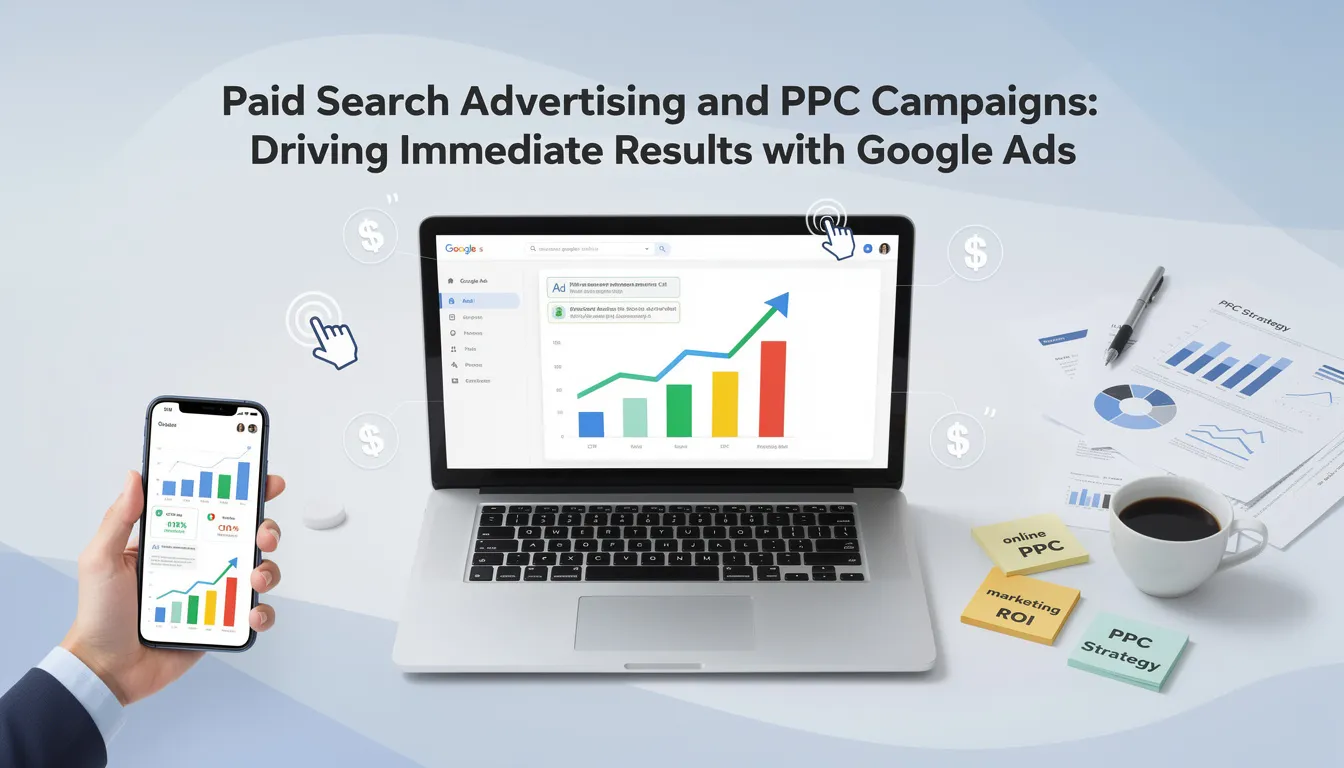
Paid search marketing, often executed through PPC campaigns on platforms like Google Ads and Bing Ads, offers businesses immediate visibility by placing targeted ads in sponsored search results. Unlike SEO, SEM leverages paid advertising to drive traffic quickly, making it ideal for product launches, promotions, or capturing high-intent shoppers.
AI and Automation in Paid Search
AI-powered systems now optimize paid search campaigns in real-time, adjusting bids based on numerous signals such as device, location, and user behavior. Performance Max campaigns use AI to dynamically place ads across Google’s inventory, leveraging first-party data to create personalized and relevant ads.
Effective paid search advertising requires:
-
Compelling ad copy
-
Keyword targeting
-
Ongoing campaign management, including bid adjustments and landing page optimization
Managing your marketing budget wisely ensures funds are allocated to the most profitable keywords and ad groups.
Keyword Research: The Backbone of SEO and SEM Strategies
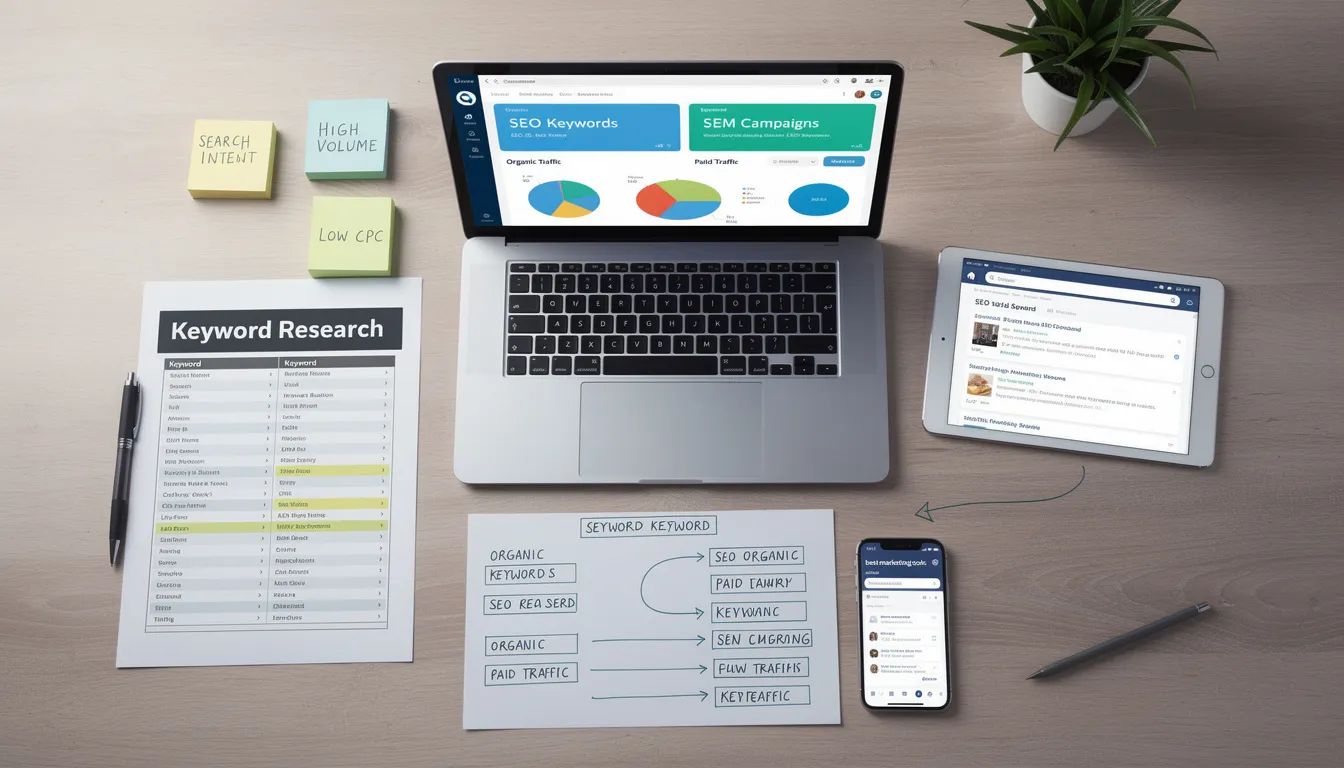
Keyword research is critical for both SEO and SEM. Combining organic SEO keyword insights with data from paid traffic campaigns helps identify the right keywords to target. This integrated approach ensures your content and ads align with what your audience is searching for.
Tools like Google Keyword Planner and Google Search Console provide valuable data on search volume, competition, and user intent. In 2026, structured data further helps search engines and AI platforms understand and display your content effectively.
Creating Effective Ad Copy and Optimizing Landing Pages for Conversion
Ad copy is a vital component of paid search advertising. It must be compelling, relevant, and aligned with the target audience’s search intent. Including clear calls-to-action and unique selling propositions differentiates your ads from competitors.
To optimize landing pages for conversion:
-
Ensure consistency between SEM ad copy and SEO-optimized landing pages to build trust and improve user experience.
-
Make sure landing pages load quickly and are mobile-friendly.
-
Provide relevant content that matches both organic search bots and paid visitors’ expectations.
-
Continuously test and optimize ad copy and landing pages to improve conversion rates and quality score, which in turn lowers cost-per-click in PPC campaigns.
Managing PPC Campaigns and Integrating On Page SEO and Off Page SEO for Holistic Digital Marketing
Effective PPC campaign management involves several key steps:
-
Conduct keyword research to identify high-performing and relevant keywords.
-
Manage bids to optimize ad spend and maximize ROI.
-
Optimize ad copy for relevance and engagement.
-
Improve landing pages for better conversion rates.
-
Monitor and adjust campaigns based on performance data.
A holistic digital marketing approach integrates:
-
On Page SEO: Title tags, meta descriptions, and content optimization.
-
Off Page SEO: Link building and digital PR to enhance authority.
Using data from PPC campaigns can inform SEO keyword strategies, while SEO insights can refine paid search targeting. This synergy maximizes your presence on search engine results pages (SERPs) by appearing in both paid listings and organic results, increasing brand authority and click-through rates.
Understanding Search Engine Ranking and Measuring Success in SEO SEM Marketing
Search engine ranking is determined by complex search algorithms that evaluate keyword relevance, link equity, user experience, and more. SEO and SEM efforts combined provide a more comprehensive approach to improving your website’s visibility.
To measure and track success:
-
Use tools like Google Analytics and Google Ads dashboards to monitor organic and paid traffic side-by-side.
-
Set up conversion tracking for both SEM campaigns and SEO efforts to gather valuable data.
-
Optimize your marketing strategies based on performance metrics to maximize ROI.
Future of Digital Marketing: The Growing Role of AI and Voice Search in SEO SEM Marketing
AI is transforming SEO and SEM by enabling smarter bid strategies, automated ad creation, and deeper understanding of user intent. By 2025 and beyond, AI-powered tools will be essential to optimizing search marketing campaigns.
Voice assistants and AI chat interfaces are driving longer, conversational search queries, requiring marketers to optimize content and ads for natural language. The future of SEM will focus on leveraging first-party data to create highly personalized and relevant paid ads.
Conclusion: Why Choose Sterling Media & Communications for Your SEO SEM Marketing Needs?
Navigating the complexities of SEO SEM marketing requires expertise, experience, and a strategic approach. Sterling Media & Communications (smcww.co.uk) offers comprehensive digital marketing services designed to boost your online presence through integrated SEO and SEM strategies.
From keyword research and PPC campaign management to landing page optimization and compelling ad copy creation, SMC helps businesses drive both organic and paid traffic effectively. Their data-driven approach ensures your marketing budget is invested wisely to achieve measurable results.
Ready to elevate your digital marketing strategy? Visit smcww.co.uk to learn how Sterling Media & Communications can help you master SEO SEM marketing and accelerate your business growth today.
Frequently Asked Questions (FAQs) About SEO and SEM Marketing
Quick FAQ Navigation
-
Why is a hybrid SEO and SEM strategy considered most effective in 2026?
-
What is the advantage of adopting a holistic view of search performance?
-
Why is integrating SEO and SEM essential for dominating SERPs?
-
What is the benefit of using SEM to test new keywords or messaging?
-
How does improving site speed and content relevance affect SEM?
Why is a hybrid SEO and SEM strategy considered most effective in 2026?
In 2026, combining SEO and SEM into a hybrid strategy is often the most effective approach for digital marketing success. SEO builds long-term digital equity by improving organic rankings through on-page, off-page, and technical techniques without paying for clicks, while SEM delivers immediate leads and visibility through paid search advertising. Together, they allow businesses to dominate search engine results pages (SERPs) by capturing traffic from both organic and paid channels.
How do Performance Max campaigns use AI in SEM?
Performance Max campaigns leverage AI to optimize ad placements dynamically across Google's entire advertising inventory. By analyzing audience signals such as demographics, behaviors, and first-party data, AI automatically tests multiple combinations of creative assets and targeting options to maximize conversions and return on investment. This automation allows marketers to efficiently reach relevant users with personalized ads.
What is the advantage of adopting a holistic view of search performance?
Moving away from separate reports for SEO and SEM to a holistic view enables marketers to track combined metrics and better understand the overall impact of their integrated search marketing strategy. This approach helps identify how paid and organic efforts complement each other, informing smarter budget allocation and optimization decisions.
Does SEO require a marketing budget?
While SEO does not require a budget in the same way paid advertising does, it still demands investment in tools, quality content creation, and ongoing optimization. These investments are essential to maintain site indexing, improve site speed, enhance user experience, and build authoritative backlinks that drive sustainable organic traffic.
How can local SEO and localized SEM ads work together?
Integrating local SEO with localized SEM ads drives traffic to both digital platforms and physical storefronts. Local SEO optimizes your website and content for location-specific searches, while SEM ads can target users in specific geographic areas with relevant offers. This combination increases visibility in local search results and helps convert nearby customers.
How does SEO build value over time?
SEO builds digital equity by improving your website’s authority and relevance, which leads to qualified leads and organic traffic that can sustain your business growth for years. Unlike paid ads, which stop generating traffic once the budget ends, SEO efforts create lasting results that compound over time.
Why is integrating SEO and SEM essential for dominating SERPs?
Integrating SEO and SEM allows businesses to appear in both organic search results and paid listings on the search results page, increasing brand authority and click-through rates. This dual presence captures a wider audience and maximizes overall web traffic, making it easier to outperform competitors.
How can SEM retargeting enhance conversions?
SEM retargeting lets you re-engage users who initially found your site through organic search but did not convert. By showing targeted ads to these users as they browse other sites or search again, you increase the chances of bringing them back to complete a purchase or desired action.
Can organic content be repurposed for paid campaigns?
Yes, repurposing successful organic content for SEM campaigns can improve conversion rates. Using content that already resonates with your audience ensures consistency in messaging and leverages proven keywords and topics to attract high-quality traffic through paid ads.
How does user experience impact SEO and SEM?
An enhanced user experience improves site usability and content relevance, which benefits both SEO rankings and SEM Quality Scores. Faster site speed, mobile-friendly design, and intuitive navigation contribute to better engagement, lower bounce rates, and higher conversion rates.
How can PPC campaign data inform SEO strategies?
Data from PPC campaigns provides immediate feedback on which keywords and ad copy perform best, allowing SEO teams to refine their keyword targeting and content strategies. Conversely, SEO insights help improve SEM campaigns by identifying relevant keywords and optimizing landing pages.
What role does structured data play in 2026?
Structured data helps search engines and AI-driven platforms better understand and display your content in both organic search results and paid listings. Implementing structured data enhances your chances of appearing in rich results and voice search, improving visibility and click-through rates.
Why should SEM feedback inform long-term SEO investments?
SEM campaigns provide immediate, measurable results that reveal which keywords and messaging drive conversions. This valuable feedback guides long-term SEO investments by highlighting areas to focus on for organic growth, ensuring marketing efforts are aligned and efficient.
How should marketers measure SEO and SEM performance?
Instead of measuring each channel in isolation, marketers should track combined metrics to understand the true impact of their integrated strategy. Tools like Google Analytics and Google Ads dashboards allow side-by-side analysis of organic and paid web traffic, providing a comprehensive view of performance.
How can SEM complement SEO for competitive keywords?
SEM allows you to bid on competitive keywords that are difficult to rank for organically, while SEO focuses on capturing long-tail traffic with lower competition. This complementary approach maximizes your reach across various search queries and audience segments.
What is the benefit of using SEM to test new keywords or messaging?
SEM campaigns offer a quick and cost-effective way to test new keywords and ad copy. By analyzing which combinations yield the highest conversions, marketers can make data-driven decisions to refine both paid and organic marketing strategies.
How does improving site speed and content relevance affect SEM?
Improving site speed and ensuring content relevance enhances your Google Ads Quality Score, which can lower cost-per-click and improve ad placement. These factors also contribute positively to SEO rankings, creating synergy between paid and organic efforts.
Is SEO cost-effective compared to paid advertising?
SEO is generally considered cost-effective because, despite requiring investments in content and tools, it generates sustainable organic traffic without ongoing ad spend. Paid advertising, while delivering immediate results, requires continuous budget allocation.
Why is ad copy critical in SEM?
Ad copy directly influences whether users click on your search ads. Compelling, relevant, and clear ad copy aligned with target keywords and user intent increases click-through rates and drives high-quality traffic to your website.
What is PPC and how does it work in SEM?
Pay-Per-Click (PPC) is a common SEM model where advertisers pay only when users click on their ads. This ensures that marketing budgets are spent efficiently by targeting users who show interest in the advertised products or services.

0 comments