

Introduction to Website Authority
A website authority checker is an SEO tool that estimates a website’s credibility and potential to rank on search engine results pages (SERPs) using a typically 1-100 scale. This guide is for website owners, marketers, and SEO professionals looking to evaluate and improve their domain’s authority. Website authority is a crucial metric in SEO that measures a domain’s trustworthiness and ranking potential. Authority matters because it influences search engine trustworthiness, ranking ability, and overall site credibility, which ultimately affects visibility, traffic, and credibility. It reflects how likely a website is to appear prominently in search engine results pages (SERPs)—also known as search engine result pages and Google search results—thereby influencing organic traffic and overall online visibility. Authority is just one of multiple factors in SEO success, but it plays a significant role in how sites are ranked in Google search results.
A website authority checker is an SEO tool that estimates a website’s credibility and ranking potential using a 1-100 scale. Understanding website authority is essential for improving a site’s visibility and attracting more organic traffic. This metric, often referred to as domain authority, is typically scored on a scale from 1 to 100, with higher scores indicating stronger credibility, trust, and SEO strength. Domain authority is important because it serves as a key metric for evaluating a website's credibility and ranking potential, playing a crucial role in search engine optimization and overall site performance.
Why Authority Matters
A high website authority score signals a strong online presence and increases the chances of ranking for relevant keywords. Domains with higher authority typically see stronger keyword rankings, demonstrating the close relationship between these scores and organic performance. It is influenced by several factors, including backlink quality, content quality, and domain ownership. These elements work together to establish a website’s reputation and reliability in the eyes of search engines alike.
How Authority is Measured
Website authority is measured using third-party metrics that evaluate a site’s reputation, trustworthiness, and SEO strength. The most common method is through a website authority checker, which provides a score based on factors such as backlinks, content quality, and domain age.
Understanding Domain Authority
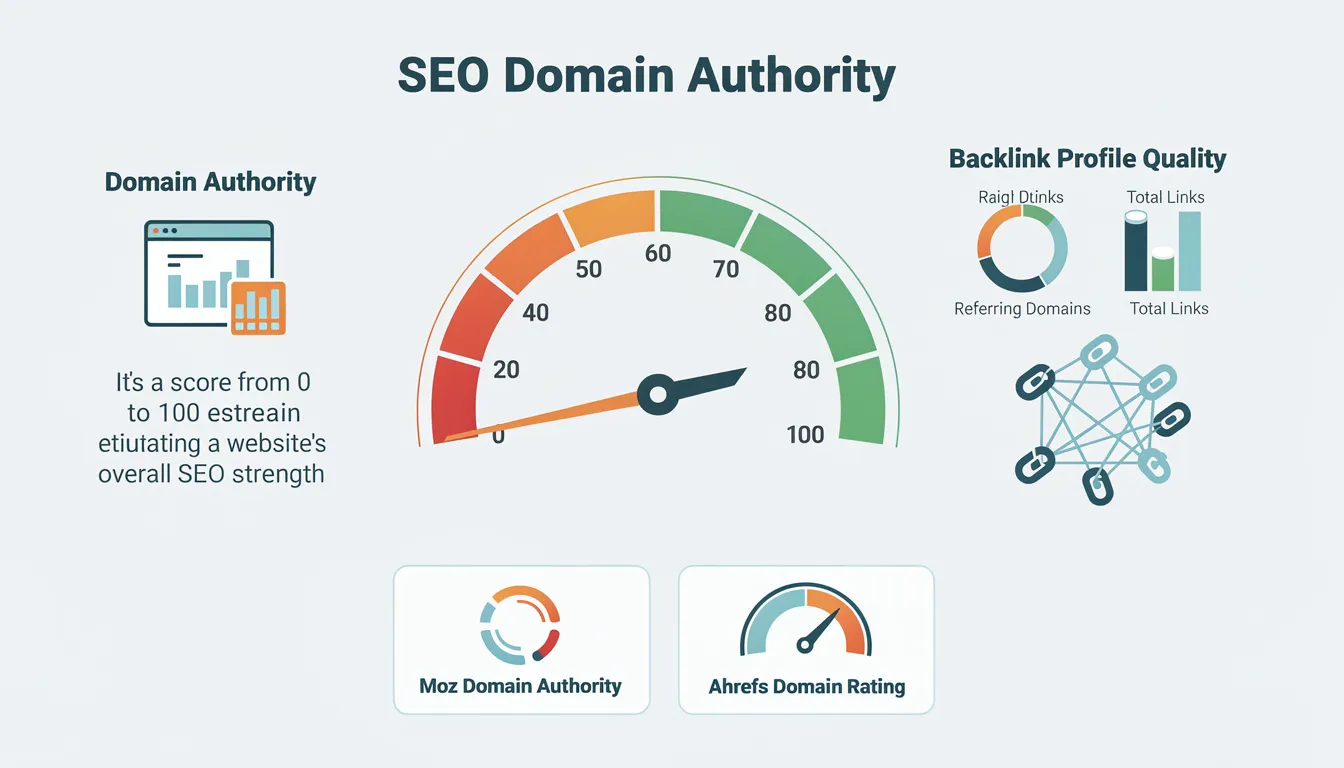
Domain authority is a score ranging from 0 to 100 that estimates a website’s overall SEO strength. It is calculated based on multiple factors, with backlink profile quality being one of the most significant. Referring domains—unique websites linking to the target site—are often more important than the total number of links, as they indicate diverse and reputable endorsements. Website authority metrics, such as Moz Domain Authority and Ahrefs Domain Rating (called domain rating), are used to assess a website's domain authority and strength.
Key Factors Influencing Domain Authority
-
Backlink profile quality
-
Number and diversity of referring domains
-
Content quality and relevance
-
Domain age and history
-
Performance metrics such as Core Web Vitals (user experience quality and stability)
-
Secure, encrypted connection (HTTPS/SSL certification)
-
Author transparency and credentials
Older, established domains typically hold higher and more stable authority scores, benefiting from long-term trust and consistent content updates.
A secure, encrypted connection (HTTPS) is also essential for credibility. SSL certification ensures that a website is secure, which search engines recognize as a trust signal. Moreover, verifying author transparency and including author credentials within articles help establish content credibility, further boosting domain authority.
Domain authority is an important SEO metric because it helps search engines determine the credibility and trustworthiness of a website. A DA checker can be used to evaluate a website's domain authority and trustworthiness. A good domain authority score can improve search engine rankings and drive more organic traffic, especially when benchmarked against competitors within the same niche. A higher authority score improves a website’s ability to attract organic traffic and rank for competitive keywords.
Domain Authority DA and Moz Domain Authority
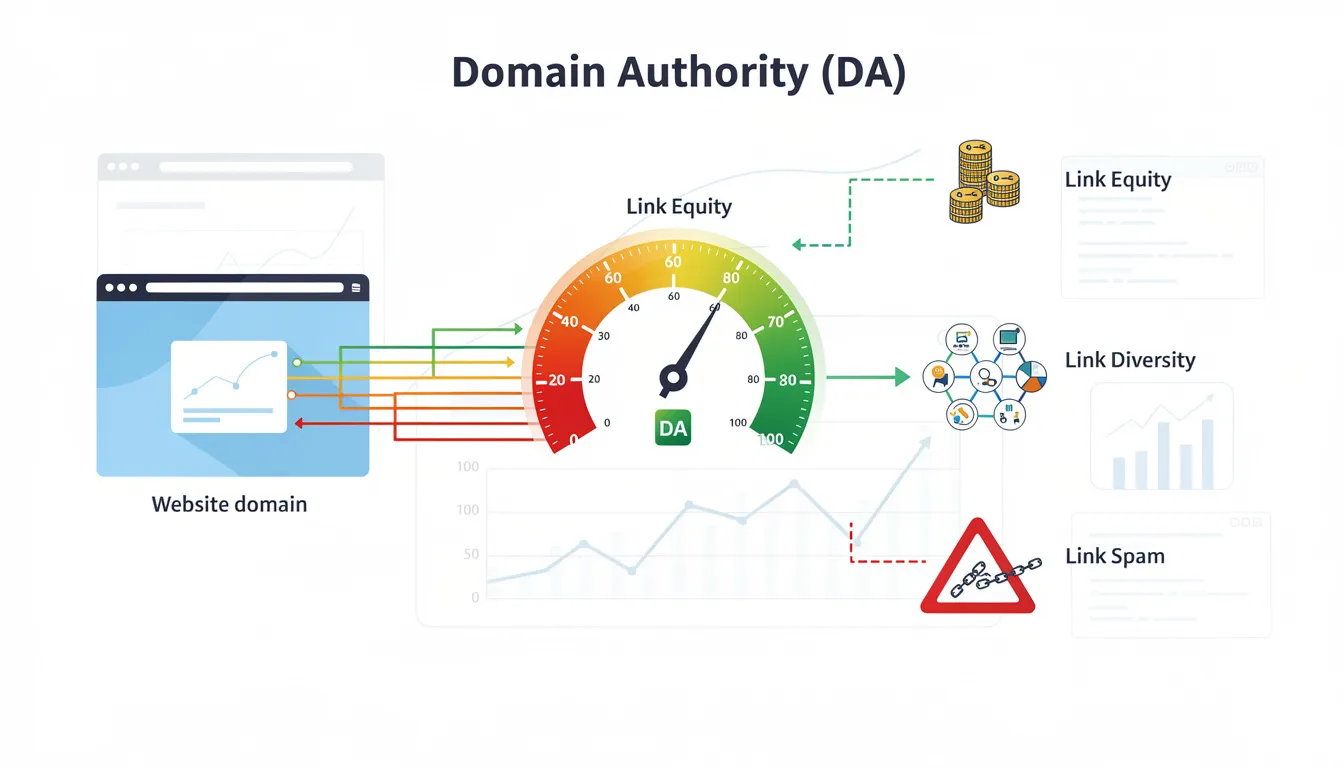
Moz Domain Authority (DA) is a widely used metric to measure website authority, scoring domains from 0 to 100. DA is calculated based on factors such as link equity, link diversity, and link spam, providing a reliable indication of a website’s authority and ranking potential.
However, Moz DA is not the only metric available. Other popular metrics include Ahrefs Domain Rating (DR), which focuses on the strength of a website’s backlink profile and link popularity, and SEMrush Authority Score, which combines backlink data, organic traffic, and spam factors to evaluate domain reputation.
The core metric for most authority checkers assesses the number of unique, reputable websites linking to the domain, emphasizing the importance of quality over quantity. Backlink profiles of high-authority sites typically contain links from many unique, high-quality domains, demonstrating broad trust and influence.
Link Building and Link Prospects
Link building is a fundamental SEO practice that involves acquiring high-quality backlinks from reputable websites. These backlinks serve as endorsements, signaling to search engines that your website is trustworthy and authoritative. Acquiring high authority links from reputable sites, or partnering with specialist website builders and SEO-focused digital agencies in Manchester, is especially important, as these can significantly boost your website's authority.
Identifying Link Prospects
Identifying link prospects—potential websites that can provide valuable backlinks—is crucial. Targeting link prospects relevant to your niche and with high authority scores can significantly improve your website’s authority and ranking potential. High quality links from authoritative sources can also drive more search traffic and improve your site's trustworthiness.
Building high-quality backlinks from reputable sites enhances your backlink profile, which is a key factor in calculating domain authority. High-volume organic traffic indicates that search engines trust a website, reflecting its authority. Avoiding manipulative link-building tactics, such as link schemes or acquiring low-quality links, helps maintain a clean link profile and protects your website’s authority.
Free Website Authority Checker
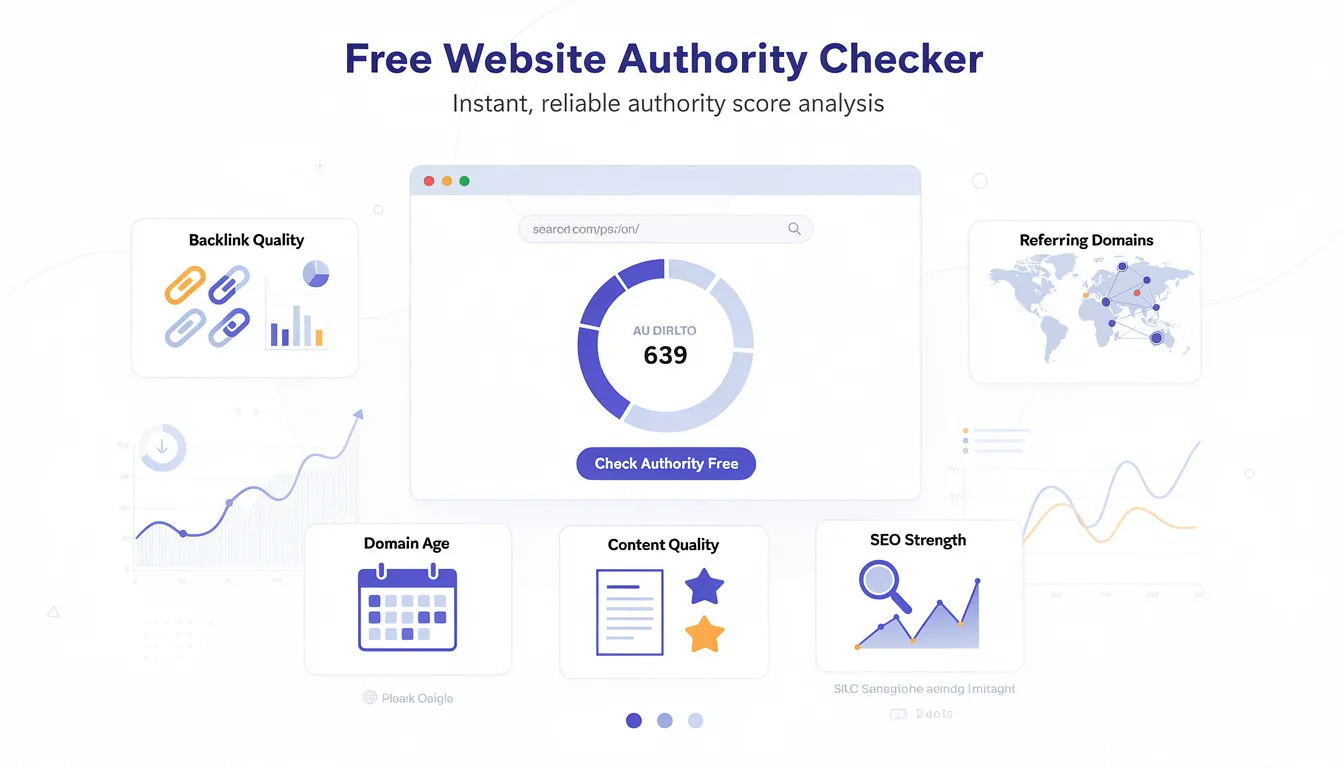
A free tool, such as a website authority checker, allows users to measure or analyze their website authority at no cost and provides an instant assessment of a website’s authority score. Reliable and accurate authority checkers analyze:
-
Backlink quality
-
Referring domains
-
Domain age
-
Content quality
-
Other SEO strength indicators
Users can use the authority checker enter feature by entering their domain or URL into the tool to receive metrics such as:
-
Domain score
-
Number of backlinks
-
Number of referring domains
Using a free website authority tool regularly allows website owners to monitor their authority score, benchmark against competitors, and identify areas for improvement. This proactive approach helps prioritize link building and content strategies to boost the website’s domain authority metric over time.
Website Authority Metric and Domain and Page Authority
The website authority metric measures a domain’s trustworthiness and ranking potential. Domain authority assesses the overall strength of a website, while page authority focuses on the ranking potential of individual pages.
Both metrics are essential for SEO success. Monitoring and improving domain and page authority can increase a website’s visibility and organic traffic. Search engines prioritize sites that demonstrate depth within specific subject areas, with high-quality, interlinked articles enhancing both domain and page authority.
SEO Strategy and Spam Score
A well-rounded SEO strategy is vital for improving a website’s authority score and ranking potential. For local businesses, integrating geo-fenced local marketing and footfall ad campaigns with on-site SEO can also strengthen brand signals and engagement. This includes:
-
Building more high quality backlinks
-
Creating valuable content
-
Optimizing for relevant keywords
-
Enhancing user experience
Spam score is a metric that measures the likelihood of a website being penalized by search engines for spammy practices. Maintaining a low spam score by avoiding link spam, link schemes, and low-quality backlinks is critical to protecting and improving your website’s authority. Be cautious of having too many referring domains, especially when multiple referring domains originate from the same IP address, as this can be a red flag for manipulative link practices. Too many referring domains from the same IP address may negatively impact your website's authority score and should be avoided.
Assessing Link Profile and Quality
Assessing your link profile involves analyzing the quantity and quality of inbound links pointing to your website. A high-quality link profile consists of backlinks from reputable sites with strong domain authority, diverse linking domains, and relevant content, and can be complemented by hyper-local geo-fenced advertising and DOOH campaigns that build brand visibility in the locations that matter most.
Regularly auditing your backlink profile helps identify toxic or low-quality links that could harm your authority score. Focusing on acquiring more quality backlinks from reputable sites and conducting competitor research to discover link building opportunities, alongside hyper-local programmatic DOOH campaigns on digital billboards, can significantly enhance your website’s authority.
Using a Domain Authority Checker
Using a domain authority checker is essential for assessing your website’s authority score and SEO strength. These tools provide instant insights into your backlink profile, referring domains, domain age, and other factors influencing your ranking potential.
Regular use of a domain authority checker helps monitor progress, benchmark against competitors, and guide your SEO strategy. Scores from authority checkers are best used comparatively within your niche, as absolute numbers can vary depending on industry competitiveness.
Advanced Features and Metrics
The Website Authority Checker tool is designed with advanced features and metrics to give users a comprehensive view of their website’s authority and ranking potential. One standout feature is the ability to analyze both domain authority and page authority, offering insights into not just the overall strength of a website, but also the performance of individual pages. This dual analysis helps users identify which parts of their site are driving organic traffic and which may need further optimization.
For those managing multiple websites or conducting competitor research, the bulk domain authority checker streamlines the process by allowing users to evaluate several domains at once. This feature is especially useful for agencies, SEO professionals, and businesses looking to benchmark their sites against others in their industry. Additionally, the free domain authority checker makes it easy for anyone to assess their website authority without upfront costs, making these insights accessible to all.
By leveraging these advanced metrics, users can refine their SEO strategy, prioritize link building efforts, and focus on areas that will have the greatest impact on their search engine results. The authority checker empowers users to make data-driven decisions, ultimately improving their website’s visibility and ranking potential.
Improving Website Authority
Boosting your website authority requires a strategic approach that combines several key SEO tactics.
Steps to Improve Website Authority
-
Targeted Link Building
-
Acquire high quality backlinks from reputable sites within your niche.
-
Guest post on authoritative blogs.
-
Get listed in relevant resource directories.
-
Earn review links from trusted sources.
-
Avoid link schemes and focus on building a natural, diverse link profile.
-
-
Optimize Internal Links
-
Distribute authority throughout your site with strategic internal linking.
-
Enhance both user experience and SEO performance.
-
-
On-Page SEO Optimization
-
Optimize meta tags.
-
Improve site speed.
-
Ensure mobile-friendliness.
-
-
Create Valuable Content
-
Address your audience’s needs.
-
Encourage sharing to naturally attract more high quality backlinks.
-
Remember, a good domain authority score is relative to your industry and competition, but consistently working to gain more high quality backlinks, improve your link profile, and enhance your site’s performance will increase your ranking potential in search engine results.
Common Mistakes to Avoid
Common link building mistakes include spamming, buying backlinks, and using low-quality links. Such practices can lead to penalties from search engines, increase your spam score, and decrease your domain authority score.
Avoiding these mistakes and focusing on ethical, high-quality link building is essential for long-term SEO success and maintaining a strong website authority.
Measuring Success and Progress
Measuring success involves tracking key SEO metrics such as authority score, organic traffic, and keyword rankings. Tools like Google Analytics and SEMrush provide valuable insights into your website’s performance and online presence.
Benchmarking your website’s authority against competitors offers insights into your site’s relative strength and identifies backlink gaps and opportunities. Regularly publishing helpful and engaging content naturally attracts backlinks, contributing to steady improvements in your website’s authority.
If you want to elevate your website’s authority and SEO performance, consider partnering with Sterling Media & Communications. Visit smcww.co.uk to learn how their expert SEO services can help you build a strong backlink profile, with fresh creative, optimize your content, and improve your domain authority for better search engine rankings. You can also grow your SME with Meta ads across Facebook, Instagram & Threads to reach a wider audience effectively. Take the first step towards dominating your niche today!
Conclusion
In summary, website authority is a vital metric for any site aiming to improve its ranking potential and attract more organic traffic. Utilizing a website authority tool, such as the Website Authority Checker, provides actionable insights into your authority score and highlights opportunities for growth. With advanced features like domain authority and page authority metrics, as well as bulk and free domain authority checker options, users can develop a more effective SEO strategy and boost their visibility in search engine results.
Improving your website authority involves a commitment to ethical link building, creating valuable content, and optimizing on-page elements for both users and search engines. By focusing on acquiring high quality backlinks, enhancing your link profile, and consistently delivering valuable content, you can achieve a higher authority score and strengthen your site’s position in search results. While authority score is just one piece of the SEO puzzle, it remains an essential metric for anyone serious about growing their online presence and achieving long-term success.
Frequently Asked Questions (FAQs)
What is a website authority checker?
A website authority checker is an SEO tool that estimates a website’s credibility and potential to rank on search engine results pages (SERPs) using a typically 1-100 scale. Checking a website's authority involves evaluating its reputation, trustworthiness, and SEO strength using third-party metrics. It typically provides a score—often on a scale from 1 to 100—that reflects the website's overall SEO strength based on factors such as backlink quality, referring domains, domain age, and content quality. This score helps website owners and marketers benchmark their site against competitors and identify opportunities to improve their search engine rankings.
Why is domain authority important?
Domain authority is important because it serves as a predictive metric for how well a website is likely to rank in search engine results pages (SERPs). A higher domain authority score indicates a stronger backlink profile, better content quality, and overall site trustworthiness, which can lead to improved search rankings, more organic traffic, and greater online visibility.
How is domain authority calculated?
Domain authority is calculated using a combination of factors, primarily focusing on the quantity and quality of inbound links pointing to the website. Key metrics include:
-
Number of unique referring root domains
-
Authority of those linking domains
-
Diversity of the backlink profile
-
Domain age
-
Content quality
-
Spam scores
Some tools also consider domain age, content quality, and spam scores to provide a comprehensive authority metric.
What is a good domain authority score?
A good domain authority score varies depending on your industry and competitors. Generally, scores above 50 are considered strong, but it’s more useful to compare your score against similar websites in your niche. The goal is to have a domain authority score that is higher or comparable to your direct competitors to improve your site’s ability to rank well in search results.
Can website authority be a direct ranking factor?
While Google does not officially confirm domain authority as a direct ranking factor, it is widely accepted that a website’s authority correlates strongly with search rankings. Higher authority sites tend to rank better because they have more high-quality backlinks and better overall SEO strength, which search engines interpret as trust signals.
How can I improve my website authority?
Improving website authority involves:
-
Building more high quality backlinks from reputable and relevant websites
-
Creating valuable and shareable content
-
Optimizing for relevant keywords
-
Maintaining a clean link profile by avoiding link spam and manipulative link schemes
-
Regularly auditing your backlink profile
-
Conducting competitor research to identify link building opportunities
These steps can help improve your site’s authority over time.
What is the difference between domain authority and page authority?
Domain authority measures the overall strength and ranking potential of an entire domain or website, while page authority focuses on the ranking potential of individual pages within that domain. Both metrics are important for SEO, as a strong domain authority can help pages rank better, but individual pages also need to have good SEO factors to perform well in search results.
How do referring domains affect website authority?
Referring domains are unique websites that link to your site. They are crucial because search engines value links from diverse, reputable domains more than a large number of links from the same domain or low-quality sites. Having many high-quality referring root domains can significantly boost your website’s authority and improve your search rankings.
What role does spam score play in website authority?
Spam score is a metric that indicates the likelihood of a website being penalized by search engines due to spammy or manipulative SEO practices. A high spam score can negatively impact your website’s authority and ranking potential. Maintaining a low spam score by avoiding link schemes, excessive linking from the same IP network, and low-quality backlinks is essential for preserving your site’s credibility.
Is domain age important for website authority?
Domain age can contribute to website authority because older, well-established domains often have a longer history of quality content and backlink acquisition, which builds trust with search engines. However, domain age alone is not a major ranking factor; it must be combined with strong SEO practices and quality backlinks to positively influence authority.
Can I check multiple domains at once?
Yes, many website authority checkers offer bulk domain authority checker features that allow users to analyze multiple domains simultaneously. This is especially useful for SEO professionals and agencies managing several websites or conducting competitor analysis to benchmark authority scores efficiently.
How often should I check my website authority?
It’s recommended to check your website authority regularly, such as monthly or quarterly, to monitor progress, identify potential issues with your backlink profile, and adjust your SEO strategy accordingly. Frequent monitoring helps ensure your site maintains or improves its authority and ranking potential over time.
Can internal links affect my website’s authority?
Yes, internal links help distribute authority throughout your website by passing link equity from high-authority pages to other pages within your site. A well-structured internal linking strategy can improve user experience, help search engines crawl your site more effectively, and boost the authority of important pages.
What is the impact of links from the same IP address or same IP network?
Having too many referring domains from the same IP address or the same IP network can raise red flags for search engines, as it may indicate manipulative link-building tactics or link schemes. Diversifying your backlink sources across different IP addresses and networks is important to maintain a natural and healthy link profile that supports your website’s authority.
Are all backlinks equally valuable for website authority?
No, not all backlinks carry the same value. High-quality backlinks from reputable, authoritative, and relevant websites have a much greater positive impact on your website’s authority than low-quality or spammy links. Search engines prioritize links from trusted sources, so focusing on acquiring quality backlinks is essential for improving your domain authority score.
What tools can I use to check my website’s authority?
Popular tools to check website authority include:
-
Moz’s Domain Authority checker
-
Ahrefs Domain Rating
-
SEMrush Authority Score
-
SE Ranking’s Domain Trust score
Many of these tools offer free versions or trials that provide instant insights into your website’s authority metrics, backlink profile, and referring domains.
How does website authority affect organic traffic?
Higher website authority generally correlates with better search engine rankings, which leads to increased visibility and more organic traffic. Websites with strong authority are more likely to rank for competitive keywords and attract visitors without paid advertising, making authority a key factor in long-term SEO success.
Can website authority fluctuate over time?
Yes, website authority can fluctuate due to changes in your backlink profile, content updates, competitor activity, and search engine algorithm updates. Regular SEO maintenance, link building, and content optimization are necessary to maintain or improve your authority score consistently.
Is website authority the only factor for SEO success?
No, while website authority is an important metric, SEO success depends on multiple factors including content relevance, keyword optimization, user experience, site speed, mobile-friendliness, and technical SEO. Authority should be considered as part of a holistic SEO strategy focused on providing value to users and meeting search engine guidelines.

0 comments